Search for a PrimeBiome review and you’ll find hundreds. Many are written by people paid to sell it, and many link to lookalike websites with different labels and prices.
That’s why this PrimeBiome review does something different. It separates what we could confirm from what we couldn’t. It also avoids testimonials and trial claims that can’t be verified.
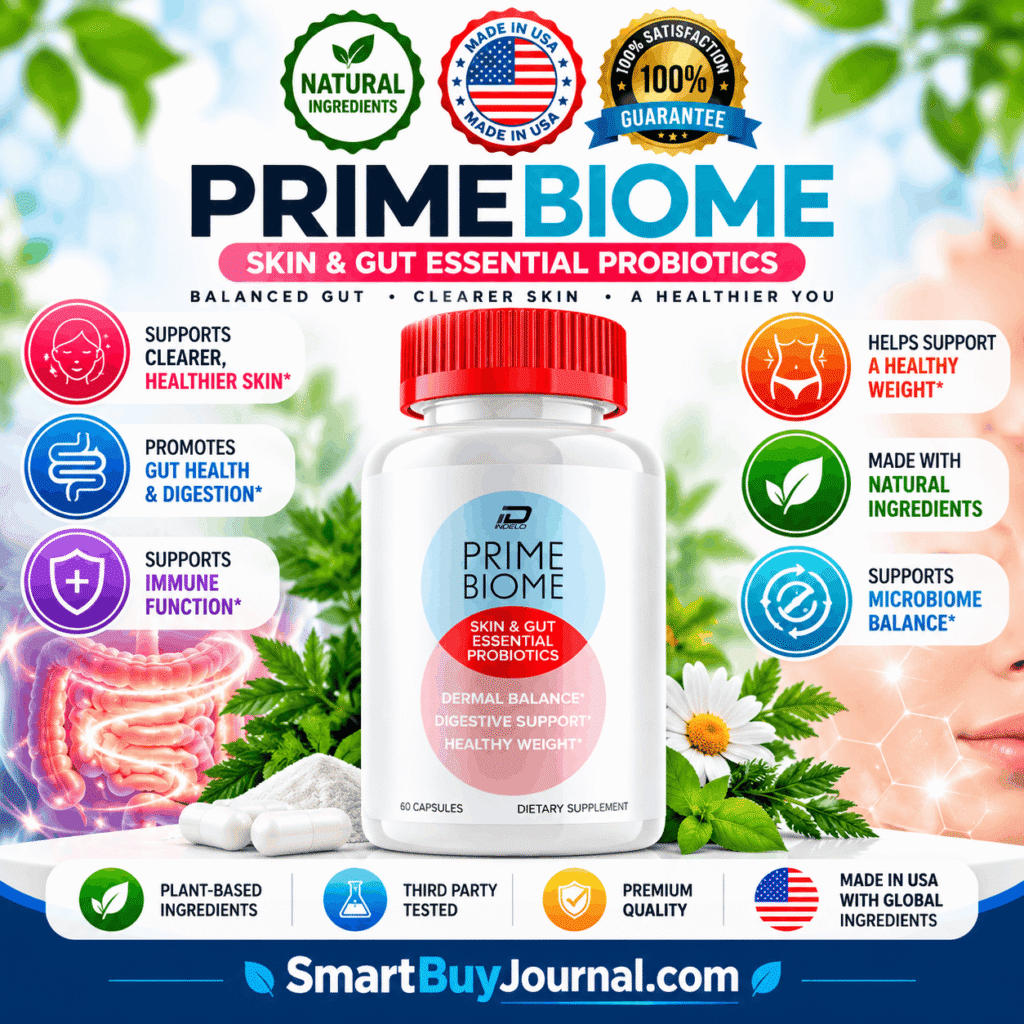
The short version: PrimeBiome is a once-daily probiotic gummy built around Bacillus coagulans and inulin. The core idea is reasonable. But I found no published trial of the finished gummy, and several details change depending on which website you read.
Affiliate disclosure: SmartBuyJournal.com participates in affiliate programs. We may earn a commission if you buy through links on this site, at no extra cost to you. This never changes our conclusions.
Medical disclaimer: This article is for education only and is not medical advice. These statements have not been evaluated by the FDA, and supplements are not intended to diagnose, treat, cure, or prevent any disease. Talk to your doctor or pharmacist before using any probiotic, especially if you are pregnant, immunocompromised, taking medication, or have a digestive or liver condition.
PrimeBiome Review: The Quick Verdict
| Product | PrimeBiome, a chewable probiotic gummy |
| Core ingredients | Bacillus coagulans (probiotic) and inulin (prebiotic fiber), plus botanicals |
| Directions | One gummy daily |
| Evidence on the finished gummy | None found |
| Refund | Sellers advertise a 60-day money-back guarantee |
| Our verdict | Reasonable idea, unproven product. Treat it as a low-expectation trial, not a treatment |
In plain terms:
- Our PrimeBiome review found that the probiotic and prebiotic pairing makes sense on paper.
- The evidence for Bacillus coagulans is strain-specific, and the strain isn’t named on the pages I found.
- Dose details are unclear, so you can’t compare it to research.
- Lookalike sites and conflicting labels are a real buying risk.
What We Verified (and What We Couldn’t) in This PrimeBiome Review
Here’s an honest scorecard.
| Item | Status | Notes |
|---|---|---|
| Bacillus coagulans and inulin are core ingredients | Consistent | Appears on every version I saw |
| One gummy a day | Consistent | Matches all seller pages |
| 60-day money-back guarantee | Advertised everywhere | Exact terms not verified |
| Botanical list | Conflicting | Our page lists four botanicals. Other sites list eight |
| CFU count and inulin amount | Not confirmed | One site claims 2 billion CFU and 100 mg. Most give no amounts |
| Probiotic strain name | Not found | Matters a lot for evidence |
| Price | Varies by site | See the pricing section |
| Clinical trial on the finished gummy | None found | Our product page says the same |
| Reliable independent customer ratings | Not found | The review space is flooded with spam and affiliate content |
Because of this, any PrimeBiome review should tell you to check the Supplement Facts panel on the product page you’re buying from before you pay.
What Is PrimeBiome?
PrimeBiome is sold as a chewable gummy for “gut and skin” support. The idea is that a healthier gut may influence skin, often called the gut-skin axis.
Sellers describe it as a synbiotic: a probiotic (Bacillus coagulans) plus a prebiotic (inulin) plus plant extracts. Our product page also describes it as vegetarian, non-GMO, gluten-free, and sold online only.
Every honest PrimeBiome review should look at what each part actually has behind it. So let’s do that.
PrimeBiome Ingredients: What the Research Says
Bacillus coagulans (the Probiotic)
Bacillus coagulans is a spore-forming bacterium. Its spores are tougher than many probiotic strains, which helps with shelf stability and stomach acid.
The research has a catch. Probiotic effects are strain-specific, meaning one strain’s results don’t carry over to another (NCCIH; EClinicalMedicine, 2021). Most of the human trials on B. coagulans were done in people with irritable bowel syndrome (IBS), using named strains.
Here’s what those reviews show:
- A network meta-analysis of 43 randomized trials with 5,531 IBS patients ranked B. coagulans among the most effective probiotics, particularly for abdominal pain and straining at around 8 weeks (Zhang et al., 2022).
- Another network meta-analysis found that specific strains, such as B. coagulans MTCC 5856, ranked among the best for abdominal pain. The authors said further studies were needed (Xie et al., 2023).
Now the limits. These trials tested specific strains and doses in people with IBS, not a general gummy in healthy adults. The pages I found don’t name PrimeBiome’s strain or confirm its dose. And the American Gastroenterological Association (AGA) recommends probiotics for IBS only within clinical trials (AGA guideline, 2020).
So the strongest ingredient has real research behind it, but as this PrimeBiome review shows, that research doesn’t transfer automatically to this product.
Inulin (the Prebiotic)
Inulin is a fermentable fiber from chicory root. Prebiotics are defined as substrates that host microbes selectively use to produce a health benefit (ISAPP). Inulin is among the better-known examples.
The amount in PrimeBiome isn’t confirmed, which limits any PrimeBiome review of its prebiotic effect. That matters because fermentable fibers can cause gas and bloating in some people, especially at higher doses or when you start.
Babchi (Psoralea corylifolia)
Babchi, also called bakuchi, is the skin-focused ingredient. It’s used in traditional medicine for skin conditions. I found no human trials showing that swallowing it improves skin through the gut.
It also has a safety flag the sales pages skip. The NIH’s LiverTox database notes that psoralen, a compound in the seeds, has been linked to liver injury in case reports. These involved seeds, powders, and teas of P. corylifolia. A published case report describes fatal liver failure after a herbal formula containing the seeds, and another describes liver injury linked to a Bakuchi supplement.
Context matters in any PrimeBiome review of safety. Those cases involve medicinal preparations at unknown doses, and PrimeBiome’s amount isn’t disclosed. The risk at gummy doses is unknown. But anyone with liver disease, or who takes liver-affecting medication, should ask a doctor first.
Dandelion, Fennel, and Slippery Elm (and Others on Longer Labels)
These are traditional digestive herbs. Some longer label versions also list ginger, lemon balm, lion’s mane, and fenugreek.
I found no human trials showing that these improve gut or skin outcomes at the small amounts a gummy can hold. They’re best seen as supporting ingredients with traditional use, not proven drivers of results.
Does PrimeBiome Work? What the Evidence Can and Can’t Say
Here’s the honest breakdown from this PrimeBiome review.
Ingredient level: One ingredient, B. coagulans, has some human research, mostly strain-specific and in IBS. Inulin is a recognized prebiotic. The botanicals have limited evidence.
Product level: I found no published clinical trial of the PrimeBiome gummy. So no one can tell you it improves bloating, regularity, or skin.
Gut-skin claims: The gut-skin connection is an active research area. But I found no trial showing that a probiotic gummy clears skin.
So, does PrimeBiome work? Some people may feel better, but the evidence doesn’t show it. In short, this PrimeBiome review treats any benefit as possible, not promised.
PrimeBiome Benefits: Plausible vs. Unproven
| Claim | What we can say |
|---|---|
| Better digestive comfort | Plausible for some people. Strain and dose unknown |
| Less bloating | Mixed. Inulin can also cause gas |
| More regular bowel movements | Possible with prebiotic fiber, but unproven for this gummy |
| Clearer skin | Unproven. Evidence for oral babchi and gut-skin effects is thin |
| More energy | No solid evidence |
None of this means PrimeBiome treats digestive disease. According to the AGA guideline, probiotics are recommended for IBS, Crohn’s disease, and ulcerative colitis only within clinical trials. Our PrimeBiome review can’t offer more than the research does.
PrimeBiome Side Effects and Safety
Most people tolerate probiotics and prebiotic fiber well, and that’s the good news in this PrimeBiome review. Common effects are gas, bloating, or loose stools, especially in the first week.
NCCIH notes that long-term safety data on probiotics are limited, and risk may be higher in people with underlying health conditions. Other cautions for PrimeBiome:
- Liver: babchi has case reports of liver injury, so people with liver disease should be careful.
- Immune system: people with weakened immunity or serious illness should ask a doctor before using any live probiotic.
- Sensitive digestion: inulin may worsen symptoms in people with IBS or SIBO.
- Allergies: botanical ingredients can trigger reactions in some people.
- Skin sensitivity: psoralens can increase sun sensitivity, so watch for unusual rashes or burning.
Stop using it and contact a doctor if you notice yellowing of the skin or eyes, dark urine, severe stomach pain, a rash, trouble breathing, or fever.
Who Should Avoid It or Ask a Doctor First
Check with a healthcare professional if you:
- Are pregnant or breastfeeding
- Have liver, kidney, or autoimmune disease
- Take immunosuppressants or other long-term medication
- Have a central venous catheter or are seriously ill
- Have IBD, Crohn’s disease, or ulcerative colitis
- Have surgery scheduled
- Are giving it to a child (and never give probiotics to a premature infant)
PrimeBiome Price, Guarantee, and Where to Buy
Prices are the least consistent detail I found while researching this PrimeBiome review.
- Our product page lists $69, $59, and $49 per bottle for 1, 3, and 6 bottles.
- Other sites advertise ranges such as $49–$79 per bottle, and some list package totals of $158–$294.
I couldn’t confirm which, if any, matches today’s official checkout. Prices and bonuses change, so read the order summary before you pay. Our page also mentions bonus digital guides on larger packages, which you should confirm at checkout.
The 60-Day Guarantee
Every seller page I found advertises a 60-day money-back guarantee. Before ordering:
- Read the refund terms. Check whether you must return bottles, and how to contact support.
- Screenshot the order page, including price and guarantee text.
- Check for auto-renewal. Scam-warning blogs report “free trial” and recurring-charge complaints. I couldn’t verify those reports, but the advice is sound.
- Pay with a credit card so you can dispute a charge if needed.
- Set a reminder a week before the guarantee ends.
Avoid Lookalike Sites
Because so many sites call themselves “official,” buy only through the checkout link on our product page, and confirm the Supplement Facts panel matches what you expect. Avoid marketplaces and “90% off” coupon sites.
You can see our current product page here: PrimeBiome product page.
PrimeBiome Customer Reviews: What We Can and Can’t Tell You
I’m not including testimonials in this PrimeBiome review, and here’s why.
The comment section on our own product page is overwhelmingly spam, including casino and gambling links and foreign-language ads. It tells you nothing about the product. Across the wider web, much of what’s labeled “reviews” is affiliate marketing or promotional copy. I couldn’t find a reliable, independent source of verified PrimeBiome ratings.
So I’d treat any star rating or “thousands of happy customers” claim in a PrimeBiome review with caution, including ones on other affiliate sites and ours. Check Trustpilot and the Better Business Bureau yourself, and read the most recent reviews.
Pros and Cons: A Fair PrimeBiome Review
What Works in Its Favor
- A sensible probiotic and prebiotic pairing
- A spore-forming probiotic that doesn’t need refrigeration
- An easy once-daily gummy
- A 60-day money-back guarantee advertised by sellers
What to Keep in Mind
- No published trials on the finished product
- Strain, CFU, and inulin amounts aren’t confirmed
- Botanical lists differ between sites
- Babchi carries a liver-safety flag
- Pricing and “official” sites are inconsistent
- Gummies may contain sweeteners or sugars, so check the label
- It can’t replace diet, sleep, and medical care
PrimeBiome vs. Getting Probiotics and Prebiotics From Food
No PrimeBiome review should skip this point: you don’t need a supplement to feed your gut. Fiber-rich plants (garlic, onions, oats, beans) supply prebiotic fibers, and yogurt with live cultures or kimchi supply live microbes.
Our guide on probiotics vs prebiotics explains the difference, and our how to improve gut health guide covers everyday habits.
If you want to compare supplements, see our roundup of the best gut health supplements and our Gut Drops review.
How to Try PrimeBiome Sensibly
If you decide to test it after reading this PrimeBiome review, use a clear plan:
- Talk to your doctor or pharmacist, especially about the babchi flagged in this PrimeBiome review.
- Confirm the label before you pay.
- Take one gummy daily, as directed.
- Track symptoms weekly: bloating, bowel habits, energy, and skin.
- Give it four to eight weeks, then decide.
- Request a refund within the guarantee window if nothing changes.
Frequently Asked Questions
Does PrimeBiome work?
There’s no published clinical trial of the finished gummy, so no PrimeBiome review can honestly say it works. Its main ingredient, Bacillus coagulans, has strain-specific research, but PrimeBiome’s strain and dose aren’t confirmed.
What are the PrimeBiome ingredients?
Bacillus coagulans and inulin are consistent across sources. Our page lists babchi, dandelion, fennel, and slippery elm bark, and other sites add fenugreek, lemon balm, ginger, and lion’s mane. Check the label you receive.
What are the PrimeBiome side effects?
Common effects are gas, bloating, or loose stools. Babchi has case reports of liver injury, so people with liver conditions should ask a doctor first.
What is the PrimeBiome price?
Our page lists $69, $59, and $49 per bottle for 1, 3, and 6 bottles, but other sites show different prices. Confirm at checkout.
Is PrimeBiome FDA approved?
No. The FDA doesn’t approve dietary supplements before they’re sold, and NCCIH notes it hasn’t approved health claims for probiotics.
Is PrimeBiome a scam?
In researching this PrimeBiome review, I found no evidence the product itself is fake, but many lookalike “official” sites and scam-style ads exist. Buy only through a verified link, read the refund terms, and use a credit card.
Is this PrimeBiome review sponsored?
We earn a commission if you buy through our links, which is why we show our limits and what we couldn’t verify. The conclusions don’t depend on whether you buy.
Conclusion
This PrimeBiome review comes down to one idea: it’s a sensible-looking formula without proof. The probiotic and prebiotic pairing is reasonable, and B. coagulans has real research, but only for specific strains and mostly in IBS.
The details that matter most, such as strain, dose, and botanical list, vary by website, and no trial tests the finished gummy. Babchi adds a liver-safety question mark that deserves a doctor’s input.
If you try it, follow this PrimeBiome review’s checklist: buy through a verified link, read the label, track your results, and use the refund window. Start with food and habits first, because they matter more than any gummy.