

Oral Probiotics: Can They Really Support Gum Health and Fresh Breath? (ProDentim Review)
You brush twice a day. You floss most nights. Yet your breath still isn’t great, or your gums feel tender and look a little puffy.
That frustration is exactly why oral probiotics have become such a hot topic lately. People are tired of products that promise a lot and deliver very little.
Instead of wiping out bacteria, oral probiotics aim to add the good kind to your mouth and let them do some of the work. It’s a different way of thinking about dental care.
In this guide, I’ll explain how oral probiotics work and what the research really says. Then we’ll take an honest look at ProDentim, a product many readers ask about.
Disclosure: this article contains an affiliate link. If you buy through it, we may earn a commission at no extra cost to you.
What Are Oral Probiotics and How Do They Work?
Your mouth is home to hundreds of bacterial species. Most are harmless or even helpful. A few can cause trouble when they take over, leading to plaque, bad breath, and irritated gums.
Oral probiotics are supplements that deliver beneficial bacteria. The idea is that these bacteria settle in your mouth and keep the troublemakers in check.
Think of a garden. You can’t remove every weed, but you can plant enough healthy growth that weeds struggle to spread.
How Oral Probiotics May Help
Researchers believe beneficial strains may work in a few ways:
- They compete with harmful bacteria for space and food
- They produce substances that limit the growth of unwanted microbes
- They may help calm inflammation in the gums
The science here is still young. The strain, the dose, and your own mouth all matter, which is why results from oral probiotics vary so much from person to person.
Why Brushing and Flossing Sometimes Aren’t Enough
Good hygiene is the foundation of oral health. But the balance of bacteria in your mouth can shift even when you’re careful.
Common triggers include:
- Frequent sugary snacks and drinks
- Dry mouth from medications or mouth breathing
- Smoking or vaping
- A recent course of antibiotics
- Stress and poor sleep
When several of these pile up, people often look for extra support. That’s where oral probiotics come into the conversation.
Let me be clear about one thing. Oral probiotics are an add-on, not a shortcut. Dentists still put brushing, flossing, and regular checkups first.
Which Strains Are Common in Oral Probiotics?
Not every probiotic suits the mouth. Strains chosen for gut health may not behave the same way in the oral environment. That’s why most oral probiotics feature a small group of specific strains.
Lactobacillus reuteri
This strain is often discussed for gum comfort and plaque control. Small studies have explored it, though results aren’t identical across trials.
Lactobacillus paracasei
This one is looked at for its role in gum health and bacterial balance. The evidence base is smaller than for some other strains.
Bifidobacterium lactis BL-04
BL-04 is best known for immune support. It has also been explored in oral health research.
One honest note here. Most studies on oral probiotics are short and use small groups of people. The findings are promising, but they aren’t conclusive.
ProDentim Review: What Is It and What’s Inside?
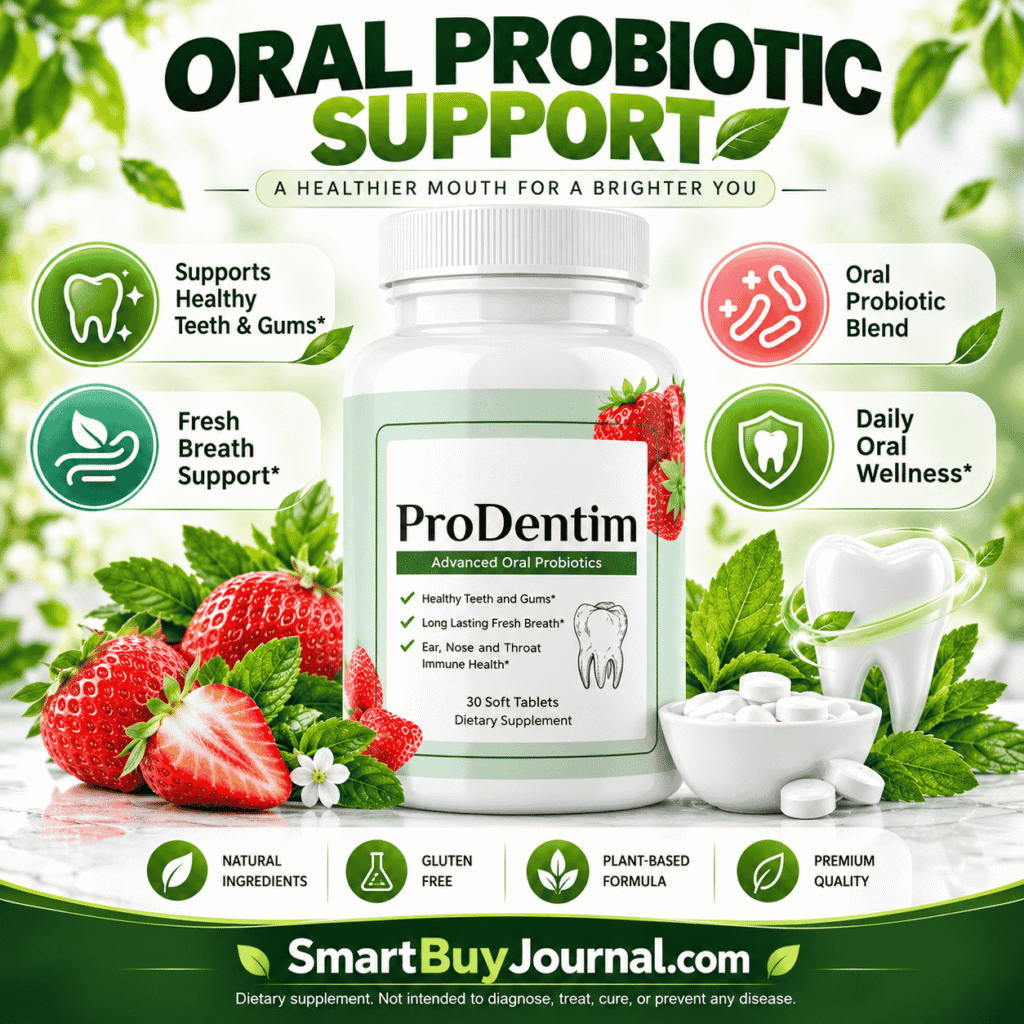
ProDentim is a dissolvable chewable tablet sold as one of the oral probiotics made for daily use. You take one a day and let it dissolve in your mouth.
According to the product page, the formula includes:
- Lactobacillus paracasei
- Lactobacillus reuteri
- B. lactis BL-04
- Inulin, a prebiotic fiber that feeds beneficial bacteria
- Malic acid
- Tricalcium phosphate
- Peppermint
It’s also described as plant-based, non-GMO, gluten-free, soy-free, and dairy-free. A 60-day money-back guarantee comes with it.
Among oral probiotics, the dissolving-tablet format is a bit unusual. The thinking is that it lingers in your mouth instead of being swallowed whole like a capsule.
What About the Supporting Ingredients?
The probiotic strains get most of the attention, but the other ingredients have roles too:
- Inulin: a well-known prebiotic that acts as food for beneficial bacteria.
- Malic acid: a fruit acid often linked to a fresher taste and mild surface-whitening claims.
- Tricalcium phosphate: a calcium source sometimes associated with enamel support.
- Peppermint: adds a fresh sensation and has mild antibacterial properties.
Keep in mind that the effect of these extras at the small amounts in a tablet isn’t well documented.
What the Research Says About ProDentim and Oral Probiotics
When you read about ProDentim, it helps to separate two different questions.
First, do the individual strains have research behind them? Some do, and that’s a point in the product’s favor.
Second, has the finished ProDentim formula been tested in published clinical trials? According to the product page, no. The benefits described come from ingredient-level studies and user testimonials.
That gap matters. A strain working in a study doesn’t guarantee that a specific tablet will do the same thing.
What Remains Uncertain
Here are the questions nobody can answer yet:
- Whether each strain is present at the same amounts used in studies
- Whether the bacteria survive and settle in the mouth long term
- How the strains behave when combined in one tablet
- Whether any benefit comes from the probiotics or from supporting ingredients like peppermint
None of this means the product is useless. It simply means the claims deserve a healthy dose of skepticism, just as with most oral probiotics on the market today.
ProDentim Pros and Cons
Here’s a fair snapshot so you can judge for yourself. If you’re comparing oral probiotics, these are the points worth weighing.
What Works in Its Favor
- Includes strains that have some published research behind them
- Contains a prebiotic (inulin) alongside the probiotics
- Easy daily routine: one tablet that dissolves in your mouth
- Free from gluten, soy, and dairy
- A 60-day money-back guarantee lowers your financial risk
What to Keep in Mind
- No published clinical trials on the finished product
- Per-strain amounts aren’t clearly broken down
- Results vary widely between people
- Sold online only, so you can’t pick it up at a local store
- Costs more than many basic probiotic supplements
- It can’t replace brushing, flossing, or professional care
User feedback on the product page follows a familiar pattern. People who paired the tablets with good hygiene and gave them several weeks tended to be happier. People expecting fast results were more often disappointed.
Who Should Try Oral Probiotics (and Who Should Wait)?
Oral probiotics may be worth exploring if you:
- Are an adult with good brushing and flossing habits
- Deal with occasional bad breath that mouthwash doesn’t solve
- Notice mild gum sensitivity from time to time
- Are happy to stay consistent for several weeks
Check with your dentist or doctor first if you:
- Are pregnant or breastfeeding
- Take immunosuppressant medication or have a weakened immune system
- Have a known allergy to any ingredient
- Have active gum disease or recent oral surgery
When to See a Dentist Instead
No supplement should delay proper care. Book a dental visit if you notice:
- Gums that bleed regularly
- Loose teeth
- Persistent pain or swelling
- A bad taste or breath that never goes away
These can signal gum disease or infection. For trusted guidance on keeping your mouth healthy, the American Dental Association’s consumer site is a good place to start: Mouth Healthy by the ADA.
How to Use ProDentim and Get the Most From Oral Probiotics
If you decide to try it, a simple routine helps you judge fairly.
- Follow the label. The directions call for one tablet daily, usually in the morning.
- Let it dissolve. Don’t chew it up and swallow it right away.
- Be consistent. Take oral probiotics at the same time each day so it becomes a habit.
- Be patient. Give oral probiotics four to eight weeks before deciding whether they help you.
- Track changes. Jot down breath, gum comfort, and bleeding once a week.
- Use the guarantee. If you see no difference, you can ask for a refund within the window.
Some people notice mild digestive adjustment in the first few days. If anything feels off, stop and talk to a healthcare professional.
You can check current pricing and guarantee details on our product page: ProDentim Review.
Habits That Support Oral Probiotics
The tablets work best when your daily habits don’t undo their effort. These steps make a real difference:
- Cut back on sugary snacks and drinks
- Drink plenty of water through the day
- Brush gently twice a day and floss daily
- Visit your dentist at least twice a year
- Skip tobacco
Remember, oral probiotics support a healthy routine. They don’t replace one.
Frequently Asked Questions
What are oral probiotics good for?
Oral probiotics are mainly used to support the balance of bacteria in the mouth. People take them hoping for fresher breath and more comfortable gums, though research is still developing.
Are oral probiotics safe to take every day?
For most healthy adults, daily use of oral probiotics is considered low risk. Supplements aren’t FDA-approved, so check with a professional if you have a medical condition or take medication.
How long do oral probiotics take to work?
Most people who report benefits mention a window of about four to eight weeks. Oral probiotics work gradually, so quick results are unlikely.
Can oral probiotics replace brushing and flossing?
No. Oral probiotics only add beneficial bacteria. They don’t remove plaque or food debris the way brushing and flossing do.
Do oral probiotics help with bad breath?
They may help some people, since certain bacteria produce odor-causing compounds. But bad breath has many causes, including gum disease and dry mouth, so persistent cases need a dental check.
Is ProDentim worth trying?
It’s a reasonable option if you want to test oral probiotics with a refund window to protect you. Just remember the finished product hasn’t been clinically tested, so keep your expectations realistic.
Do oral probiotics have side effects?
Side effects are usually mild, such as temporary digestive changes. People with weakened immune systems should speak with a doctor before using oral probiotics.
Conclusion
Oral probiotics offer an interesting new angle on dental care. Instead of fighting bacteria, they try to support the good ones. The idea makes sense, but the research is still growing.
ProDentim is a reasonable product to consider. It includes strains with some published research, a prebiotic, and a 60-day guarantee. The catch is that the finished tablet hasn’t been tested in clinical trials, so results will vary.
The smartest plan is simple. Keep brushing, keep flossing, see your dentist, and treat oral probiotics as a helpful extra. Try a routine for a few weeks and see how your mouth responds.
This article is for informational purposes only and is not medical or dental advice. These statements have not been evaluated by the FDA, and this product is not intended to diagnose, treat, cure, or prevent any disease. Individual results vary.