

How to Improve Gut Health: 7 Simple Steps (Plus an Honest PrimeBiome Review)
Ever felt bloated after an ordinary meal and typed “how to improve gut health” into Google at midnight? You’re not alone. Millions of people deal with gas, irregular digestion, and low energy.
The internet makes it harder. One site says to cut gluten, another pushes celery juice, and a third sells an expensive supplement.
Here’s the honest version. Small daily habits do most of the work, and supplements play a supporting role at best.
In this guide, I’ll show you how to improve gut health with steps you can start this week. Then we’ll take a fair look at PrimeBiome, a probiotic gummy many readers ask about.
Disclosure: this article contains an affiliate link. If you buy through it, we may earn a commission at no extra cost to you.
What Is Gut Health, and Why Does It Matter?
Your gut is home to trillions of microorganisms, known as the gut microbiome. Some help you, some are neutral, and a few cause trouble when the balance tips.
A healthy microbiome helps you break down food and absorb nutrients. It also interacts with your immune system. Research on links to mood and skin is still developing.
When the balance slips, you may notice:
- Frequent bloating or gas
- Constipation or loose stools
- Feeling sluggish after meals
- Food sensitivities that seem to appear out of nowhere
These signs don’t always mean something serious. But they do show your digestion needs attention.
The good news is that your microbiome responds to daily choices. That makes learning how to improve gut health one of the most practical wellness goals you can set.
How to Improve Gut Health With Everyday Food Choices
When people ask how to improve gut health, food is the first answer. Your gut bacteria eat what you eat, so your plate shapes your microbiome more than any pill can.
Eat More Fiber and Plant Variety
Fiber is the favorite fuel of beneficial bacteria. Most adults eat less than recommended, so even small increases help. This is the foundation of how to improve gut health naturally.
Aim for variety, not just volume. Try to include:
- Vegetables like onions, garlic, leeks, and leafy greens
- Fruits such as bananas, apples, and berries
- Legumes like lentils, chickpeas, and beans
- Whole grains such as oats and brown rice
- Nuts and seeds
Add fiber slowly. Jumping from low fiber to high fiber overnight can cause more gas, not less.
Add Fermented Foods
Fermented foods bring live microbes to your plate. Yogurt with live cultures, kefir, sauerkraut, kimchi, and miso are all good options.
You don’t need big portions. A few spoonfuls a day is a realistic start.
Cut Back on Ultra-Processed Foods
Highly processed snacks, sugary drinks, and refined carbs tend to feed the bacteria you’d rather not encourage. They also crowd out the whole foods your gut likes.
You don’t have to be perfect. If you’re serious about how to improve gut health, start by swapping one processed item a day for a whole-food option.
Lifestyle Habits That Support How to Improve Gut Health
Diet gets the spotlight, but your routine matters just as much for how to improve gut health. Many people skip this part and wonder why nothing changes.
Sleep and Stress
Poor sleep and chronic stress can both affect digestion. Your gut and brain talk constantly, which is why nerves can upset your stomach.
Try these simple resets:
- Keep a regular sleep schedule, even on weekends
- Take a 10-minute walk after dinner
- Practice slow breathing for five minutes before bed
Movement and Hydration
Regular activity helps food move through your digestive system. You don’t need intense workouts. Walking, stretching, or cycling is enough.
Water matters too, especially when you eat more fiber. Fiber needs fluid to do its job.
Be Smart About Antibiotics
Antibiotics save lives, and you should take them when prescribed. But they can disrupt gut bacteria, so don’t ask for them when you don’t need them. If you finish a course, ask your doctor about gut support afterward.
Probiotics and Prebiotics: Do They Help With How to Improve Gut Health?
Probiotics are live microorganisms that may offer a health benefit when taken in adequate amounts. Prebiotics are fibers that feed beneficial bacteria. Together, they’re sometimes called a synbiotic approach.
Evidence varies a lot by strain, dose, and condition. A strain that helps one problem may do nothing for another. Anyone researching how to improve gut health will see probiotics promoted everywhere, so it pays to stay skeptical.
That’s why the best answer to how to improve gut health always starts with food and lifestyle, not a bottle. Supplements are a small boost on top of a solid foundation.
For a plain-language overview of probiotics and their safety, see the National Center for Complementary and Integrative Health: NCCIH: Probiotics.
PrimeBiome Review: What Is Inside the Gummy?
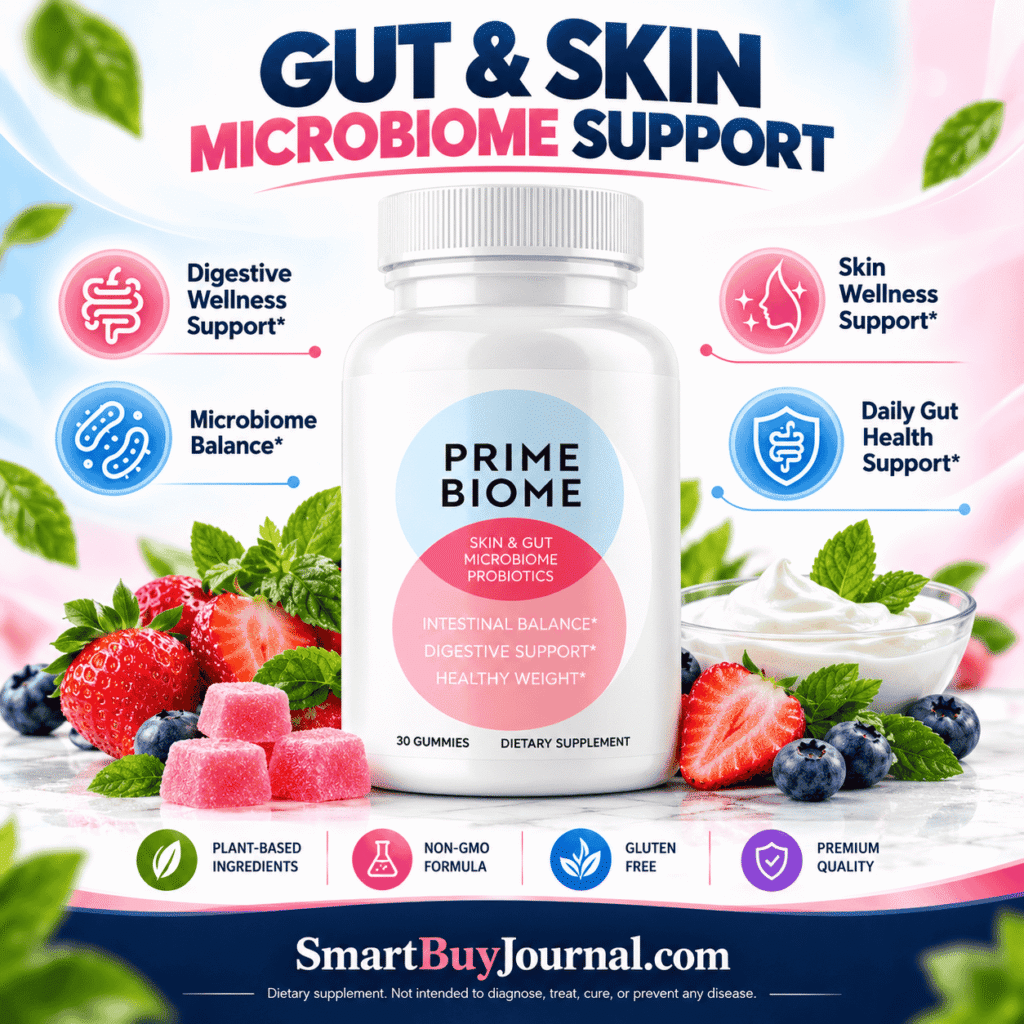
PrimeBiome is a once-daily chewable gummy marketed as a convenient tool for how to improve gut health. It combines a probiotic, a prebiotic, and several botanicals in one product.
The Core Pair: Bacillus Coagulans and Inulin
Bacillus coagulans is a spore-forming probiotic. Its spore form is designed to survive stomach acid better than many fragile strains. Some studies on this species have looked at bloating and abdominal discomfort, though results depend on the strain and dose.
Inulin is a prebiotic fiber from chicory root. It feeds beneficial bacteria like Bifidobacteria and is one of the better-studied prebiotics.
Pairing the two makes logical sense. The bacteria get something to eat right away.
The Supporting Botanicals
The formula also includes:
- Babchi extract: traditionally linked to skin support, but human evidence for the gut-skin link is limited
- Dandelion extract: traditionally used as a digestive bitter
- Fennel extract: commonly used for gas and cramping
- Slippery elm bark: forms a soothing, gel-like mucilage
These ingredients have a history of traditional use. Their effect at the amounts found in a gummy is less clear.
The Honest Caveat
Here’s what matters most. The product page notes that no published clinical trials test the finished PrimeBiome gummy. The exact amounts of each ingredient, including the probiotic count and inulin dose, aren’t disclosed either.
So the ingredients are reasonable, but the idea that this gummy alone solves how to improve gut health isn’t proven. Keep your expectations realistic.
Pros and Cons
Here’s a fair summary for anyone weighing how to improve gut health with a supplement.
What works in its favor:
- Clear ingredient list with no hidden proprietary blend
- Spore-forming probiotic that doesn’t need refrigeration
- Prebiotic and probiotic in one daily gummy
- Easy to take if you dislike swallowing capsules
- A 60-day money-back guarantee, so you have time to judge for yourself
What to keep in mind:
- Ingredient amounts aren’t listed, so you can’t compare doses to research
- No clinical trials on the finished product
- Sold online only
- Costs more per serving than many basic probiotics
- Customer ratings are mixed, so results clearly vary
Who Should Check With a Doctor First
Talk to a healthcare professional before using any probiotic if you:
- Are pregnant or breastfeeding
- Take immunosuppressant medication
- Have IBD, Crohn’s disease, or SIBO
- Have a weakened immune system
- Are allergic to any botanical in the formula
Inulin can also worsen symptoms for some people with sensitive digestion, especially at first.
How to Use PrimeBiome as Part of Your Plan for How to Improve Gut Health
If you decide to try it, treat it as a helper, not a hero. Here’s a sensible approach.
- Follow the label. The directions call for one gummy daily.
- Take it consistently. Gut changes are gradual, so give it several weeks before judging.
- Keep your diet working for you. A supplement can’t replace the basics of how to improve gut health.
- Track how you feel. Note bloating, bowel habits, and energy once a week.
- Use the guarantee wisely. If you notice no difference within the refund window, you can ask for your money back.
Mild gas or loose stools can appear in the first week or two as your gut adjusts. If symptoms are strong or don’t settle, stop and talk to your doctor.
You can check current pricing and guarantee details on our product page: PrimeBiome Reviews 2025.
When to See a Doctor Instead of Trying Another Fix
No guide on how to improve gut health should replace medical advice. Some symptoms need proper testing.
See a healthcare professional if you notice:
- Blood in your stool
- Unexplained weight loss
- Persistent abdominal pain
- Diarrhea or constipation lasting more than a few weeks
- Trouble swallowing or frequent vomiting
These can signal conditions that diet and supplements won’t solve. For reliable background, see the National Institute of Diabetes and Digestive and Kidney Diseases: NIDDK Digestive Diseases.
The 7-Step Checklist for How to Improve Gut Health
Here’s a quick recap of how to improve gut health in seven steps:
- Eat more fiber and a wider variety of plants
- Add one fermented food to your day
- Swap one ultra-processed item for whole food
- Sleep on a steady schedule
- Manage stress with short daily breaks
- Move your body and drink enough water
- Use supplements only as a small extra, if at all
Pick two steps and start today. That’s how to improve gut health without feeling overwhelmed.
Frequently Asked Questions
How to improve gut health fast?
There’s no instant fix. The quickest wins are more fiber, more water, better sleep, and fewer ultra-processed foods. Many people notice gentler digestion within a couple of weeks.
How to improve gut health naturally at home?
The core steps for how to improve gut health at home are a fiber-rich diet, fermented foods, steady sleep, stress control, and daily movement. None of them requires special equipment.
Can supplements help with how to improve gut health?
They can help some people, but results depend on the strain, dose, and your starting point. Supplements work best alongside healthy habits, not instead of them.
Is PrimeBiome safe to take every day?
It’s designed for once-daily use, and its ingredients are generally well tolerated by healthy adults. Supplements aren’t FDA-approved, so check with your doctor if you have a medical condition or take medication.
What are the signs of an unhealthy gut?
Common signs include bloating, gas, irregular bowel movements, fatigue, and food sensitivities. These have many possible causes, so persistent symptoms deserve a medical check.
Do probiotic gummies work as well as capsules?
The format mainly affects convenience. What matters more is the strain, how many live organisms survive, and whether you take it consistently.
What foods are best for how to improve gut health?
Fiber-rich plants, legumes, whole grains, and fermented foods like yogurt, kefir, and kimchi are great starting points. Variety is the key, so aim for many different plants each week.
Conclusion
Learning how to improve gut health doesn’t require a complicated plan. Eat more plants, add a few fermented foods, sleep well, manage stress, and move every day. Those basics matter far more than any single product.
If you want extra support, PrimeBiome is a reasonable option to consider. It has a sensible ingredient pairing and a 60-day guarantee. But the finished gummy hasn’t been clinically tested, so go in with realistic expectations.
Choose one or two habits from this guide and start today. Your gut responds to steady, small changes, and that is the real answer to how to improve gut health for the long run.
This article is for informational purposes only and is not medical advice. These statements have not been evaluated by the FDA, and this product is not intended to diagnose, treat, cure, or prevent any disease. Individual results vary.