

Introduction
If you’ve searched for hearing health supplements, you’ve probably landed on a dozen pages promising a bottle of drops or capsules will “restore” your hearing or silence tinnitus for good. It’s a tempting idea, especially if ringing ears or muffled conversations have started disrupting your daily life.
Here’s the honest truth: the science on supplements for hearing is much more limited than the marketing suggests. Some nutrients do play a real role in how your ears and auditory nerves function. But no pill, drop, or capsule reverses hearing loss or cures tinnitus on its own.
This guide walks through what’s actually backed by research, what red flags to watch for in supplement marketing, and what genuinely helps protect your hearing over the long run.
What Causes Hearing Decline in the First Place?
Before looking at any supplement, it helps to understand why hearing changes happen. Most hearing loss falls into a few main categories:
- Age-related hearing loss (presbycusis) — gradual damage to inner ear structures over decades
- Noise-induced hearing loss — from concerts, machinery, headphones, or occupational exposure
- Circulatory issues — reduced blood flow can affect the tiny hair cells in the inner ear
- Ototoxic medications — certain antibiotics, chemotherapy drugs, and high-dose aspirin
- Tinnitus — often a symptom of underlying nerve or circulation changes, not a standalone condition
Because the causes vary so much, no single ingredient or supplement could realistically address all of them. That’s worth keeping in mind every time you see a product claiming to “target the root cause” of hearing problems.
Nutrients With Real (Though Limited) Research Behind Them
A handful of nutrients show up in actual clinical literature related to hearing and inner ear function. None of them are miracle cures, but they’re worth knowing about.
Vitamin B12
Low B12 levels have been associated with tinnitus and hearing loss in several observational studies, particularly in older adults. If you’re deficient, supplementing can help — but taking extra B12 when you’re not deficient hasn’t been shown to improve hearing.
Zinc
Some small studies link zinc deficiency to tinnitus severity. Results are mixed, and zinc supplementation isn’t a guaranteed fix, but it’s a nutrient your body genuinely needs for normal cell function, including in the inner ear.
Magnesium
Research suggests magnesium may help protect against noise-induced hearing damage when taken before or during loud noise exposure, according to a few controlled studies. This is one of the more promising areas, though it’s not a substitute for hearing protection.
Folic Acid
A few long-term studies have connected folate levels with age-related hearing decline, especially in populations with low dietary folate intake.
Antioxidants (CoQ10, Vitamin C, Vitamin E)
Oxidative stress is believed to contribute to inner ear cell damage. Antioxidants are commonly included in hearing supplements for this reason, but human trials showing a direct hearing benefit are still limited.
Why “Hearing Health Supplements” Marketing Deserves Skepticism
Search for almost any hearing supplement brand and you’ll find a nearly identical pattern:
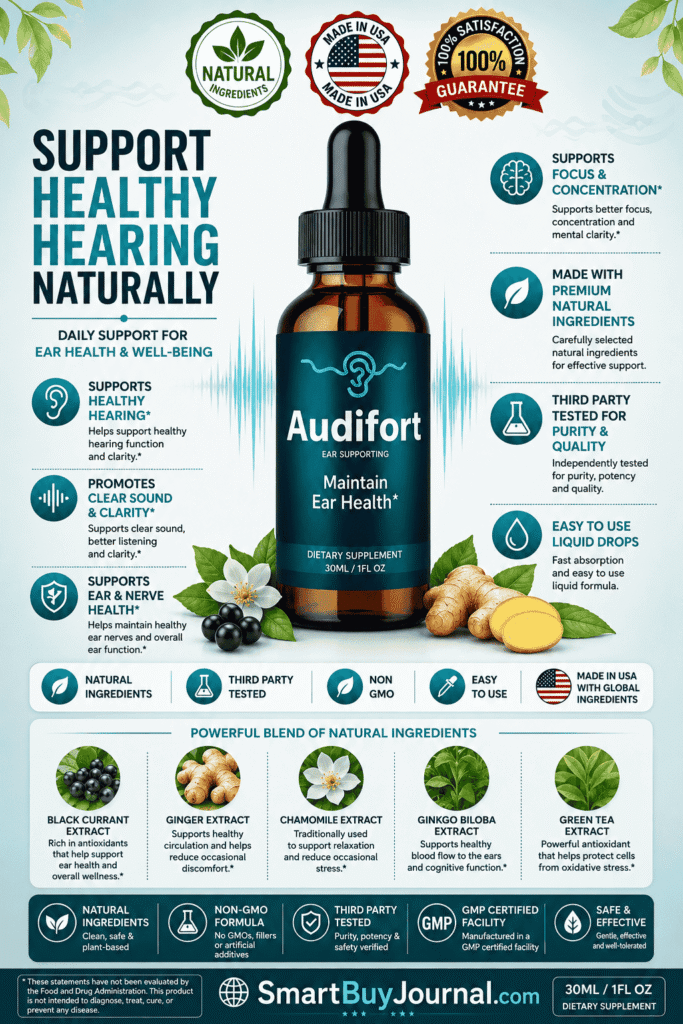
- A “revolutionary” liquid or capsule formula with 20+ plant ingredients
- Claims of thousands of five-star reviews and “zero complaints”
- Vague science-sounding language like “supports auditory wellness pathways”
- A 60-day money-back guarantee
- No peer-reviewed clinical trial on the actual finished product — only citations of studies on individual ingredients in unrelated contexts
That last point matters most. A study showing zinc might help tinnitus in a deficient population is not the same as evidence that a specific commercial blend works. Reputable supplement companies publish, or at least reference, trials on their actual formula. Most hearing supplement marketing pages don’t.
Red Flags to Watch For
- Claims to “reverse” hearing loss or “cure” tinnitus
- Testimonials presented as proof instead of clinical data
- Pressure tactics like countdown timers or “limited stock” banners
- No listed manufacturer, only a sales page
- Refusal to name a specific clinical trial you can look up independently
If a product hits several of these, treat the claims with real caution — regardless of how professional the website looks.
What Genuinely Helps Protect Your Hearing
Supplements aside, these are the interventions with the strongest evidence behind them.
1. Get a Proper Hearing Test
An audiologist can identify whether your symptoms stem from noise damage, wax buildup, medication side effects, or age-related changes. This single step does more than any supplement, because it tells you what you’re actually dealing with.
2. Protect Your Ears From Loud Noise
- Use earplugs at concerts, on job sites, or when using power tools
- Keep headphone volume below 60% of max for extended listening
- Give your ears recovery time after loud events
3. Manage Cardiovascular Health
Because the inner ear relies on tiny, delicate blood vessels, anything that supports healthy circulation — regular exercise, blood pressure control, not smoking — indirectly supports hearing health too.
4. Review Your Medications
Some common drugs are ototoxic at high doses. If you’re on long-term medication and notice hearing changes, ask your doctor or pharmacist whether it could be a contributing factor.
5. Address Tinnitus Triggers
Caffeine, alcohol, high sodium intake, and poor sleep can all worsen tinnitus for some people. Tracking your symptoms alongside lifestyle factors can reveal patterns worth adjusting.
Should You Try a Hearing Supplement at All?
If you’re considering a supplement, treat it the way you’d treat any other health product:
- Talk to your doctor first, especially if you take other medications
- Look for products with third-party testing (USP, NSF, or similar certification)
- Be wary of anything promising fast or dramatic results
- Understand that at best, supplements may support general nutritional gaps — they are not a treatment for hearing loss or tinnitus
A supplement addressing a genuine nutrient deficiency can be reasonable, ideally under medical guidance. A supplement marketed as a cure-all should be a hard pass.
Frequently Asked Questions
Do hearing health supplements actually work? Some individual nutrients (like B12, zinc, and magnesium) have limited research support, mainly for people who are deficient. Most commercial hearing supplement blends haven’t been clinically tested as finished products.
Can supplements reverse hearing loss? No. Once inner ear hair cells are damaged, current research doesn’t support any supplement reversing that damage. Hearing aids and medical treatment remain the proven options.
What vitamins are good for tinnitus? B12, zinc, and magnesium have the most research behind them, particularly in people with existing deficiencies. Results vary significantly between individuals.
Are liquid hearing drops more effective than capsules? There’s no strong evidence that liquid formulations absorb better for hearing-specific outcomes. Delivery format matters far less than whether the ingredients and dosages are actually effective.
How do I know if a hearing supplement is a scam? Watch for cure-all language, no listed clinical trials on the actual product, testimonial-heavy pages, and pressure-based sales tactics like countdown timers.
What’s the fastest way to protect my hearing long-term? Get a baseline hearing test, wear hearing protection around loud noise, and manage cardiovascular health — these have the strongest evidence of any intervention discussed here.
Should I stop taking a hearing supplement I already bought? Not necessarily, but check the ingredient list against your other medications and mention it to your doctor, especially if you’re not seeing results after a few months.
Conclusion
Hearing health supplements aren’t inherently useless, but they’re also not the breakthrough that most marketing pages claim. The nutrients with real research behind them — B12, zinc, magnesium, folate — matter most for people who are actually deficient, and even then, the effect is modest.
If you’re dealing with hearing changes or tinnitus, the most effective first step isn’t a supplement — it’s a proper hearing evaluation. From there, noise protection, cardiovascular health, and medication review will do far more for your long-term hearing than any bottle on a sales page.