

Introduction
Standing in the supplement aisle, overwhelmed by bottles promising “heart transformation” and “artery cleansing,” you ask the right question: what supplements are actually good for heart health? The honest answer isn’t found in flashy marketing—it’s in clinical trials showing modest but real benefits from specific ingredients like CoQ10, magnesium, and garlic extract, only when combined with proven lifestyle foundations. This guide cuts through the noise to reveal what evidence truly supports, explains critical safety considerations (especially regarding vitamin K2 and blood thinners), and helps you determine whether a product like Cardio Shield aligns with your cardiovascular goals—without overpromising or ignoring scientific nuance. Understanding which healthy heart supplements have real science behind them is essential for making informed decisions about your cardiovascular wellness journey.
What Does “Good for Heart Health” Really Mean According to Science?
When evaluating whether a supplement supports heart health, researchers look for measurable impacts on clinically relevant endpoints: blood pressure readings, cholesterol levels, inflammatory markers, endothelial function, or hard outcomes like heart attack or stroke risk in long-term studies. Crucially, no supplement replaces core cardiovascular pillars—consistent physical activity, a nutrient-dense diet low in processed foods and added sugars, stress management, quality sleep, and adherence to prescribed medications when indicated. The most evidence-backed supplements offer complementary support, typically producing modest effect sizes (think single-digit mmHg blood pressure reductions or percentage-point cholesterol improvements) that accumulate meaningfully over time alongside foundational habits. This section establishes the scientific framework for evaluating healthy heart supplements.
The Four Ingredients With Strongest Clinical Evidence
Decades of research point to a shortlist of ingredients demonstrating consistent, albeit modest, benefits in specific cardiovascular contexts. None are magic bullets, but all show promise when expectations align with the data.
Coenzyme Q10 (CoQ10): The Cellular Energy Supporter
CoQ10 powers mitochondrial ATP production—the energy currency driving every heartbeat. Levels naturally decline with age and certain medications (like statins). The landmark Q-SYMBIO trial, published in JACC: Heart Failure, followed 420 patients with moderate to severe heart failure for two years. Those receiving 300mg daily CoQ10 (as ubiquinone) alongside standard therapy experienced:
- 43% reduction in major adverse cardiovascular events (death, hospitalization)
- Significant improvement in heart failure symptoms
- Enhanced ejection fraction (a measure of pumping efficiency)
Crucially, benefits emerged as an add-on to—not a replacement for—evidence-based medical therapy. For healthy adults, CoQ10 may help offset age-related decline in cellular energy production, supporting overall cardiac vitality. This makes it a relevant consideration when evaluating healthy heart supplements for age-related support.
Magnesium: The Modest Blood Pressure Partner
Magnesium regulates vascular tone, heart rhythm, and electrolyte balance. A Cochrane review of 12 randomized trials found supplementation lowered diastolic blood pressure by an average of 2.2 mmHg—real but modest. The FDA’s qualified health claim acknowledges this effect while noting evidence remains “inconsistent and inconclusive.” Magnesium glycinate or citrate forms are best absorbed and least likely to cause digestive upset. Its value lies in addressing widespread dietary insufficiency (nearly 50% of U.S. adults don’t meet EAR), particularly as absorption decreases with age and certain medications increase excretion. When considering healthy heart supplements for blood pressure support, magnesium represents one of the better-researched options.
Garlic Extract: The Consistent Circulation Supporter
Aged garlic extract demonstrates some of the most reproducible cardiovascular effects in the supplement category. A meta-analysis of 20 trials revealed average systolic/diastolic blood pressure reductions of 5.1/2.5 mmHg versus placebo—effects amplified in hypertensive individuals (8.7/6.1 mmHg). Garlic also modestly lowers total and LDL cholesterol after 8+ weeks of use, likely through modulating liver cholesterol synthesis. Its mechanisms include enhancing nitric oxide production (promoting vasodilation) and reducing oxidative stress. For noticeable effects, consistent use for two months or more is typically required—highlighting that supplements work gradually, not instantaneously. This positions aged garlic extract as a meaningful option among healthy heart supplements for circulation support.
Hawthorn Extract: The Heart Failure Adjunct
Standardized hawthorn leaf/flower extract (containing specific flavonoid concentrations) shows genuine benefit as an adjunct therapy for chronic heart failure under medical supervision. A Cochrane review of 14 placebo-controlled trials found it improved exercise tolerance, reduced fatigue and dyspnea, and enhanced cardiac function metrics. However, research specifically examines its use alongside—never instead of—standard heart failure medications (ACE inhibitors, beta-blockers, etc.). For healthy adults without diagnosed cardiac conditions, evidence for preventive use is limited; its primary value remains in monitored adjunctive therapy for established heart failure. This context is crucial when evaluating hawthorn’s role in healthy heart supplements.
The Critical Caveat: Vitamin K2 and Blood Thinner Interactions
Vitamin K2 (particularly the MK-7 form) activates matrix Gla protein (MGP), which prevents calcium deposition in arteries—potentially supporting arterial flexibility. This mechanism is biologically sound and holds promise for long-term vascular health. However, this benefit creates a serious risk for anyone taking vitamin K antagonists like warfarin (Coumadin). Vitamin K2 directly opposes these medications’ mechanism, potentially causing dangerous clotting or reducing anticoagulant efficacy. This isn’t theoretical; documented cases show significant INR fluctuations when patients add K2 supplements without medical guidance. If you take blood thinners, do not start vitamin K2 without explicit consultation with your prescribing physician or pharmacist—this interaction demands professional oversight. This safety consideration is paramount when researching healthy heart supplements containing vitamin K2.
Who Might Benefit From Evidence-Based Heart Supplements?
Supplement consideration makes most sense for specific scenarios where dietary gaps or age-related declines align with ingredient mechanisms:
- Adults over 40-50: Natural CoQ10 synthesis declines significantly; dietary intake often insufficient to compensate.
- Those with elevated but medication-untreated blood pressure: Garlic and magnesium offer modest, additive support alongside DASH diet and exercise.
- Individuals with diagnosed heart failure: CoQ10 and hawthorn have adjunctive evidence—but only under cardiologist supervision as a complement to prescribed therapy.
- People with family history seeking proactive support: Targeted nutrients may help address genetic predispositions when combined with rigorous lifestyle habits.
- Those with documented nutrient deficiencies: Testing can reveal specific gaps (e.g., low magnesium, suboptimal CoQ10) where repletion makes physiological sense.
Identifying your specific situation helps determine whether particular healthy heart supplements align with your needs.
Who Should Seek Medical Clearance First?
Certain situations necessitate professional consultation before starting any new supplement:
- Anyone on anticoagulants/antiplatelets: Warfarin, apixaban, aspirin, or clopidogrel users risk interactions (especially with vitamin K2, garlic, or high-dose omega-3s).
- Individuals with diagnosed hypertension, arrhythmia, or heart disease: Supplements should never replace prescribed treatment; interactions or masking of symptoms are possible.
- Pregnant or nursing women: Safety data for many cardiovascular supplements in these populations is lacking.
- Those considering supplements as medication substitutes: This mindset carries real danger—no supplement replicates the proven efficacy of blood pressure medications, statins, or heart failure therapies when indicated.
Always prioritize safety when exploring healthy heart supplements, especially if you have existing health conditions or take medications.
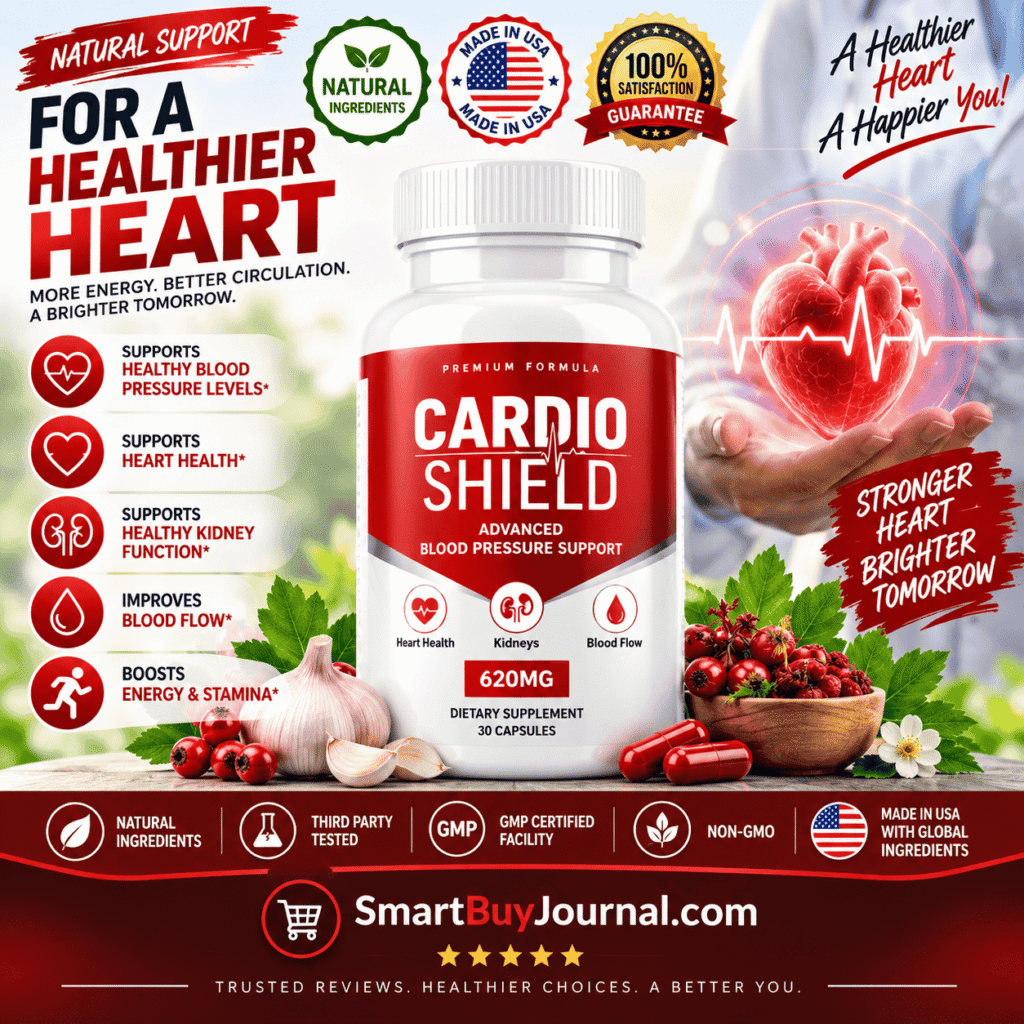
Navigating Product Variability: The Cardio Shield Case Study
The supplement marketplace reveals why ingredient transparency matters profoundly. “Cardio Shield” illustrates a critical issue: identical product names across different sellers can contain vastly different formulas. Our research found:
- Formula A (listed on SmartBuyJournal’s product page): Hawthorn Berry, CoQ10, Olive Leaf Extract, Vitamin K2 (MK-7), Magnesium Glycinate, Garlic Extract
- Formula B (other sites): Olive Leaf, Hibiscus, Buchu, Juniper Berry, Green Tea, Uva Ursi (no CoQ10, K2, magnesium, or garlic)
- Formula C (yet other vendors): CoQ10 with Omega-3s only (missing K2, magnesium, garlic, hawthorn)
This inconsistency means purchasing “Cardio Shield” without verifying the exact label risks receiving a formula with little resemblance to evidence-backed combinations discussed here. More concerning, some vendors market it with claims like “normalizes blood pressure in seven days” or “replaces hypertension medication”—assertions contradicted by all clinical evidence and potentially dangerous if they delay necessary medical care. Always check the specific formula before purchasing any product marketed as healthy heart supplements.
How to Choose a Cardiovascular Supplement Wisely
If evidence-based supplementation aligns with your situation after medical consultation:
- Prioritize formula transparency: Choose brands providing full ingredient lists with exact dosages (not proprietary blends hiding amounts).
- Match ingredients to your goals: For general support, look for CoQ10 + magnesium; for blood pressure focus, consider aged garlic extract + hibiscus; never select based on vitamin K2 alone without medical advice if on blood thinners.
- Verify third-party testing: Seek USP, NSF, or ConsumerLab certification for purity and potency—critical since supplements aren’t FDA-pre-approved.
- Ignore dramatic timelines: Benefits emerge over weeks/months of consistent use, not days. Expect 8-12 weeks to assess impact on subjective markers like energy or exercise tolerance.
- Track your own response: Note changes in energy during activity, recovery time, or subjective well-being—but pair with objective measures (BP logs, lab work) when possible.
- Always disclose to healthcare providers: Especially before surgeries or when starting new prescriptions.
These steps help ensure your selection of healthy heart supplements is both safe and potentially beneficial.
Practical Integration: Where Supplements Fit in the Heart Health Hierarchy
Imagine cardiovascular protection as a pyramid:
- Base (Non-negotiable): Sleep, stress management, whole-food diet rich in vegetables/fiber/healthy fats, regular movement, smoking cessation, medication adherence.
- Middle Tier (Evidence-Supported Complements): Targeted nutrients addressing specific gaps (e.g., magnesium for deficiency, CoQ10 for age-related decline, garlic for modest BP support).
- Top Tier (Context-Dependent Options): Ingredients like hawthorn (only under supervision for heart failure) or vitamin K2 (only after clearing blood thinner interactions).
Supplements reside firmly in the middle tier—they enhance but never substitute the foundation. Spending on them makes sense only when the base is solid; otherwise, resources are better directed toward proven lifestyle interventions. This hierarchy is essential when evaluating where healthy heart supplements fit in an overall cardiovascular health strategy.
FAQ Section
Q: Can healthy heart supplements lower my cholesterol as effectively as statins?
A: No. Evidence shows supplements like garlic extract or plant sterols may modestly reduce LDL cholesterol (typically 5-15%), but this is substantially less than statins’ 30-60% reduction. Supplements should never replace prescribed lipid-lowering therapy when indicated by risk assessment.
Q: Is it safe to take CoQ10 if I’m on statin medication?
A: Yes, and it may be beneficial. Statins can lower endogenous CoQ10 production as a side effect. Many cardiologists recommend CoQ10 supplementation (100-200mg daily) for statin users experiencing muscle discomfort, though consult your doctor first—it doesn’t interfere with statin efficacy.
Q: How do I know if I have a magnesium deficiency worth supplementing?
A: Symptoms (fatigue, muscle cramps, irregular heartbeat) are unreliable indicators. The best approach is discussing serum magnesium or RBC magnesium testing with your healthcare provider, as dietary recalls often overestimate intake. Supplementation is reasonable if deficient, but excess can cause diarrhea or interact with medications.
Q: Why does the guide emphasize that supplements work alongside lifestyle changes—not instead of them?
A: Clinical trials demonstrating supplement benefits (like Q-SYMBIO for CoQ10 or garlic BP studies) always test interventions added to standard care (diet, exercise, meds). Isolating supplements rarely shows significant effects because cardiovascular health is multifactorial—pills can’t compensate for sedentary behavior, poor diet, or uncontrolled stress.
Q: If I have healthy blood pressure, should I still consider garlic or magnesium supplements?
A: For normotensive individuals, preventive supplementation isn’t strongly supported by evidence. Resources are better spent on foundational habits. Exceptions exist if you have documented deficiency (magnesium) or strong family history with physician guidance—but routine use isn’t evidence-based for primary prevention in healthy adults.
Q: How can I verify the actual ingredients in a product like Cardio Shield before buying?
A: Always: 1) Check the product label image on the seller’s site (not just marketing copy), 2) Look for third-party testing seals (USP, NSF), 3) Confirm the seller is authorized/official, 4) Contact customer service for batch-specific COA (Certificate of Analysis) if unavailable online. Never rely solely on product names—formulas vary wildly between sellers.
Q: What’s the most important safety check before starting any heart health supplement?
A: Review all medications/supplements with your doctor or pharmacist for interactions—especially vitamin K2 (with blood thinners), high-dose garlic (with anticoagulants/surgery), magnesium (with certain antibiotics/BP meds), and potassium-sparing diuretics (with potassium-containing supplements).
Conclusion
The path to cardiovascular well-being isn’t paved with miracle supplements promising overnight transformation—it’s built on consistent, evidence-based habits: moving regularly, eating nutrient-dense foods, managing stress, sleeping well, and following medical advice when needed. Within this framework, specific supplements like CoQ10 (for cellular energy support), magnesium (for vascular tone and deficiency correction), and aged garlic extract (for modest circulation support) offer genuine, measurable benefits when chosen wisely and used patiently. Critical considerations remain: verifying exact formulas (avoiding products like inconsistently-formulated Cardio Shield), respecting dangerous interactions (especially vitamin K2 with blood thinners), and maintaining realistic expectations about effect sizes. True heart health emerges not from a single pill, but from the cumulative impact of daily choices grounded in science—not speculation. If supplements align with your situation after professional consultation, let them be quiet supporters of your foundation—not the foundation itself. Making informed decisions about healthy heart supplements requires understanding both their potential benefits and limitations within the broader context of cardiovascular health.