If your last blood test showed high LDL (“bad”) cholesterol, you have probably been told to eat better. But what does that mean on a Tuesday night with a refrigerator and a busy schedule? This guide covers foods that help lower cholesterol naturally, the foods to limit, easy meal ideas, and the point where food alone is not enough and a doctor may talk to you about medication. We checked each claim against medical sources and tell you where the evidence is limited.
The short answer: foods that help lower cholesterol naturally are mostly those rich in soluble fiber (oats, beans, lentils, apples, citrus), plus vegetables, fruit, nuts and fish, used in place of foods high in saturated fat. Food can support healthy cholesterol levels, but it is not guaranteed to be enough, and it does not replace prescribed medication.
Quick Summary: Foods That Help Lower Cholesterol Naturally
- Soluble fiber from oatmeal, oat bran, beans, lentils and fruit is one of the most consistent suggestions for foods that help lower cholesterol naturally.
- Replacing saturated fat with unsaturated fat, such as olive, canola or safflower oil, nuts and fish, is the other major step.
- MedlinePlus suggests keeping saturated fat under 7 percent of daily calories and aiming for roughly 10 to 25 grams of soluble fiber a day.
- Foods can help, but results vary from person to person and nothing is guaranteed.
- Some people need cholesterol medication in addition to food. Your doctor decides.
How Cholesterol Works (Briefly)
Cholesterol is a waxy substance your body needs. The trouble starts when LDL cholesterol is high, because it can build up in artery walls over time and raise the risk of heart disease, heart attack and stroke. High cholesterol usually causes no symptoms, so the only way to know where you stand is a blood test.
Diet is one piece of the picture, and foods that help lower cholesterol naturally work alongside other factors: genetics, weight, activity, smoking, age and other health conditions. That is why two people can eat the same foods that help lower cholesterol naturally and see different results.
Foods That Help Lower Cholesterol Naturally
1. Oats and oat bran: foods that help lower cholesterol naturally at breakfast
MedlinePlus lists oatmeal and oat bran among the soluble-fiber foods to choose when lowering cholesterol with diet (MedlinePlus: how to lower cholesterol with diet). Soluble fiber dissolves in water and forms a gel in the gut, which is the usual explanation offered for why oats are among the foods that help lower cholesterol naturally. Plain rolled or steel-cut oats work better than sweetened instant packets, which add sugar.
2. Beans and lentils: budget foods that help lower cholesterol naturally
The same MedlinePlus page names kidney beans, lentils, chickpeas, black-eyed peas and lima beans as good soluble-fiber sources. Beans are also filling and inexpensive, which makes them one of the easiest foods that help lower cholesterol naturally to work into regular meals.
3. Fruit among the foods that help lower cholesterol naturally
Apples, bananas, oranges, pears and prunes are all listed as soluble-fiber sources. Whole fruit is a better choice than juice because it keeps the fiber.
4. Vegetables: everyday foods that help lower cholesterol naturally
Vegetables provide fiber, vitamins and other nutrients, and MedlinePlus includes them among the foods to choose. They also take the place of higher-fat foods on your plate, which is part of why they are among the foods that help lower cholesterol naturally.
5. Nuts and seeds as foods that help lower cholesterol naturally
MedlinePlus suggests choosing nuts and unsaturated oils in place of saturated fats, and names walnuts, flaxseed and chia seeds as plant sources of omega-3 fats. The NIH’s National Center for Complementary and Integrative Health also says whole flaxseed may help, though flaxseed oil appears not to, and the evidence is limited (NCCIH: cholesterol management at a glance). Nuts are calorie-dense, so a small handful is enough.
6. Fatty fish in a plan of foods that help lower cholesterol naturally
MedlinePlus suggests fatty fish such as salmon, tuna and mackerel about twice a week. Pregnant and breastfeeding people should avoid high-mercury fish such as mackerel, so check with your doctor.
7. Unsaturated oils: swaps that help lower cholesterol naturally
Canola, olive and safflower oils are suggested in place of saturated fats such as butter, lard and shortening. Swapping fats is one of the simplest ways to eat more foods that help lower cholesterol naturally without changing your whole menu.
8. Plant sterols and stanols: fortified foods that help lower cholesterol naturally
MedlinePlus mentions aiming for about 2 grams a day of plant sterols and stanols. They occur naturally in whole grains, nuts, legumes and oils, and are added to some orange juices, margarines and breads. NCCIH says foods and supplements with these compounds can reduce cholesterol, with stronger evidence for foods, and that some products carry an FDA-approved heart-disease claim.
9. Soy: a smaller helper among foods that help lower cholesterol naturally
NCCIH reports that soy foods may lower cholesterol slightly, more than soy protein supplements do, and that the effect is much smaller than medication.
Foods to Limit While You Add Foods That Help Lower Cholesterol Naturally
Eating more of the foods that help lower cholesterol naturally works best when you also cut back on what pushes LDL up. MedlinePlus advises limiting:
- Saturated fat, found in some meats, dairy, chocolate, baked goods and fried or processed foods. Its guidance is under 7 percent of daily calories, which works out to about 13 grams at 2,000 calories.
- Dietary cholesterol, found in organ meats, egg yolks, shrimp and whole-milk dairy. The page gives a goal of under 200 mg a day. Advice on eggs and cholesterol varies, so ask your doctor what suits you.
- Salt, about 2,300 mg a day at most. Cutting salt mainly helps blood pressure rather than cholesterol directly.
- Alcohol, which adds calories and can raise blood pressure and triglycerides.
The NHLBI also notes that cutting extra weight and being active are part of lowering cholesterol (NHLBI: therapeutic lifestyle changes).
Practical Meal Ideas with Foods That Help Lower Cholesterol Naturally
You do not need a special diet. Here are simple ways to use foods that help lower cholesterol naturally across a day.
Breakfast
- Oatmeal made with water or low-fat milk, topped with sliced apple, cinnamon and a few walnuts.
- Whole-grain toast with mashed banana or a thin spread of nut butter.
Lunch
- Lentil or bean soup with a side salad dressed in olive oil.
- Chickpea and vegetable wrap on a whole-grain tortilla.
Dinner
- Baked salmon with roasted vegetables and brown rice.
- Stir-fried tofu and vegetables in canola oil.
- Black bean chili with a side of fruit.
Snacks
- A pear or orange, a small handful of unsalted nuts, or carrots with hummus.
Easy swaps
- Olive oil instead of butter for cooking.
- Beans instead of some of the meat in tacos or chili.
- Water or unsweetened tea instead of sweetened drinks.
These are examples of eating more of the foods that help lower cholesterol naturally, not a prescription, so adjust them for allergies, medications and your doctor’s advice.
Realistic Expectations for Foods That Help Lower Cholesterol Naturally
Here is what is fair to expect from foods that help lower cholesterol naturally.
- Food helps, but amounts vary. Genetics matter. Some people see large changes from diet and others see small ones.
- Time and a retest. Your doctor will tell you when to recheck your blood work, since the NHLBI page gives no fixed timeline.
- Consistency beats perfection. A pattern you can keep matters more than a perfect week.
- Supplements and “natural” products are not stronger than food. NCCIH says supplements should not replace prescribed cholesterol medicine, since their effects are much smaller.
We do not promise any particular drop in cholesterol, and we would be wary of any article or product that does.
When Foods That Help Lower Cholesterol Naturally Are Not Enough
Even the best foods that help lower cholesterol naturally are not always enough. The NHLBI says a provider may prescribe cholesterol medicine alongside heart-healthy lifestyle changes, with statins being the most common choice, and that other medicines are used when statins cause side effects or do not lower LDL enough (NHLBI: blood cholesterol treatment). Inherited high cholesterol (familial hypercholesterolemia) is another reason for stronger treatment.
A summary of the 2018 AHA/ACC cholesterol guideline lists several groups who may benefit from a statin: people with existing heart or blood-vessel disease, adults with LDL of 190 mg/dL or higher, adults aged 40 to 75 with diabetes and LDL of 70 mg/dL or higher, and some people aged 40 to 75 with a higher 10-year risk, after a discussion of risks and benefits with their clinician (AHA: 2018 cholesterol guideline, top things to know). Guidelines are updated over time, so ask your doctor what applies to you.
If you are prescribed medication, keep eating well. The NHLBI says the combination of medicine and healthy habits works best. Never stop or change a prescribed medicine because of a supplement or a diet change without talking to your doctor.
Can Supplements Help? A Balanced Look at Cardio Shield
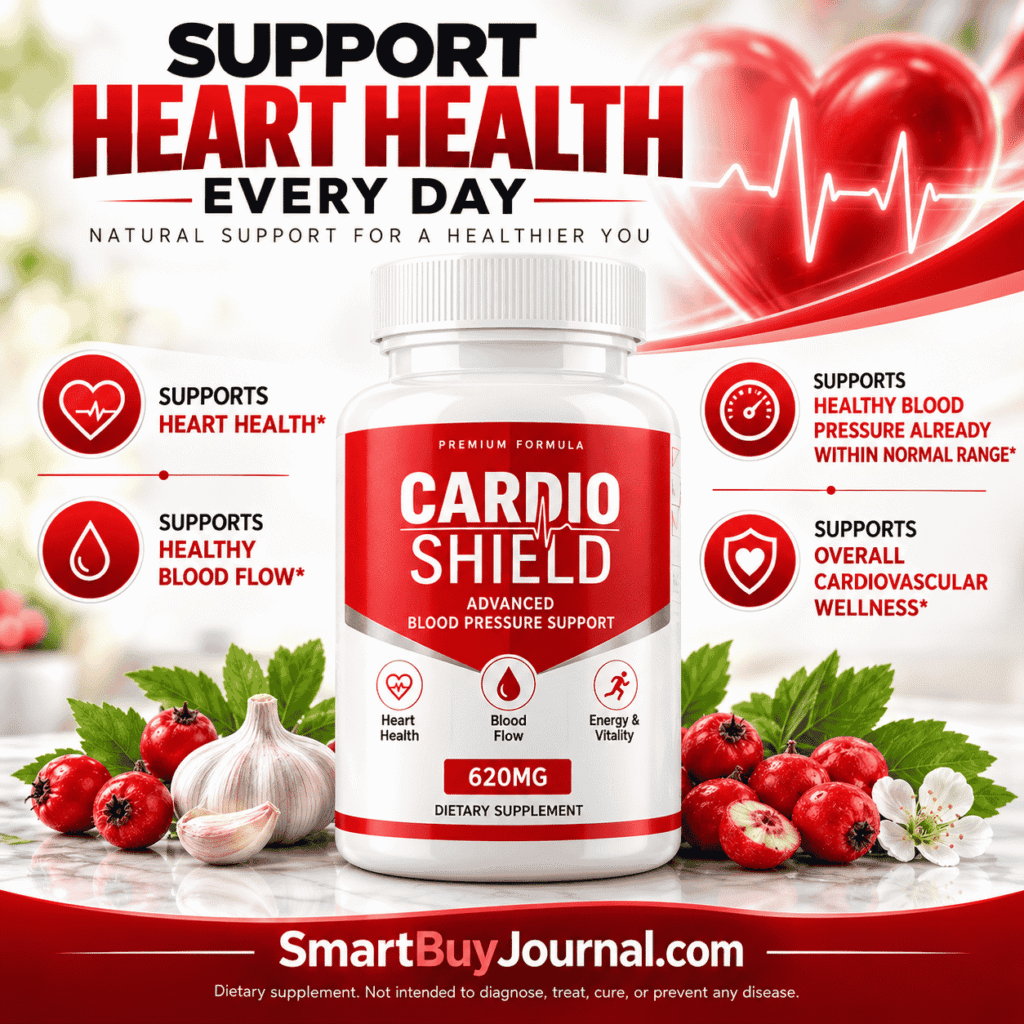
Because cholesterol is a common worry, readers often ask about heart-health supplements. One we review on SmartBuyJournal is Cardio Shield. Here is a balanced summary of what its review page says and what we could verify.
What it is: a daily capsule that lists six ingredients: hawthorn berry extract, CoQ10, olive leaf extract, vitamin K2 (MK-7), magnesium glycinate and garlic extract. No ingredient amounts are published on the page, even though it uses phrases like “therapeutic amounts.”
What it claims: general heart and circulation support, mild blood-pressure support, and “healthy cholesterol balance,” attributed to garlic. It does not say it treats high cholesterol, and neither do we.
What the medical sources say about some of the ingredients:
- Garlic. NCCIH says garlic supplements may lower cholesterol when taken for more than about two months, but the effect is modest compared with cholesterol-lowering drugs (NCCIH: high cholesterol and natural products).
- CoQ10. NCCIH lists coenzyme Q10 among products not shown to work for cholesterol, says studies on heart disease are inconclusive, and warns that it may interact with the blood thinner warfarin and with insulin (NCCIH: coenzyme Q10). That page was last updated in 2019, so newer research may not be reflected.
- Hawthorn, olive leaf, vitamin K2 and magnesium. We did not find a source we could verify for their effect on cholesterol, so we make no claims about them. The review page itself warns that vitamin K2 may interact with warfarin and other anticoagulants, and that garlic may have mild blood-thinning effects.
Things to know before buying
- Not evaluated by the FDA. The page says the product has not been evaluated by the FDA and is not intended to diagnose, treat, cure or prevent any disease.
- Does not replace medication. The page itself says it is not a replacement for prescribed cardiovascular medication, and people with active heart conditions should use it only under medical supervision.
- Talk to your doctor first if you take blood thinners, blood-pressure medicine or cholesterol medicine, or if you are pregnant or breastfeeding.
- Inconsistencies on the page: the review count differs between sections, the canonical and internal links use two slightly different URLs, and the money-back terms are not stated. Its only comment is not about the product.
- Prices vary on the page, from about $59 to $69 for one bottle, with larger packs priced lower.
Read our full Cardio Shield review for the details. If you are exploring other health topics, see our guides on blood sugar control and our HepatoBurn review. The foods that help lower cholesterol naturally, listed above, cost far less than any supplement and have better support.
Affiliate disclosure: some links on this page are affiliate links, so SmartBuyJournal may earn a commission if you buy through them, at no extra cost to you. This does not change what we write. See our affiliate disclosure.
When to See a Doctor About Cholesterol and Foods That Help Lower Cholesterol Naturally
Talk to your doctor if:
- You have never had your cholesterol checked, or have a family history of high cholesterol or early heart disease
- Your last results were high, or your doctor has suggested a retest
- You have diabetes, high blood pressure, or you smoke
- You have chest pain, shortness of breath, or weakness on one side of the body. Seek emergency care right away for those.
- You want to add a supplement while taking any medicine
Frequently Asked Questions
What are the best foods that help lower cholesterol naturally?
Foods high in soluble fiber, such as oats, beans, lentils, apples and citrus, are the most commonly recommended, along with vegetables, nuts, fatty fish and unsaturated oils used instead of saturated fats.
How quickly do foods that help lower cholesterol naturally work?
It varies from person to person, and we did not find a verified timeline. Ask your doctor when to retest, and do not expect overnight changes.
Do oats really lower cholesterol?
Oats are on MedlinePlus’s list of soluble-fiber foods to choose when lowering cholesterol with diet. The size of the effect varies, and oats work best as part of an overall pattern.
Are eggs bad for cholesterol?
MedlinePlus lists egg yolks among the sources of dietary cholesterol to limit, with a goal of under 200 mg a day. Guidance on eggs varies, so ask your doctor what is right for you.
Are nuts good for cholesterol?
Nuts are among the foods that help lower cholesterol naturally because they are suggested as a replacement for saturated fats, and walnuts are a plant source of omega-3s. They are high in calories, so keep portions small.
Can I lower cholesterol with food alone?
Some people can lower cholesterol with foods that help lower cholesterol naturally alone, and some cannot. Genetics and other health conditions matter. If your doctor recommends medication, take it as prescribed and keep up the food changes.
Do cholesterol supplements work?
Evidence varies. NCCIH rates garlic as modestly helpful and says several other products have not been shown to work, and that supplements should not replace prescribed medicine.
Can Cardio Shield treat high cholesterol?
No. Its own page says it is not a replacement for prescribed medication and that it is not intended to treat or prevent disease. Talk to your doctor before taking it.
Conclusion: Foods That Help Lower Cholesterol Naturally, Summed Up
The best foods that help lower cholesterol naturally are not exotic: oats, beans, fruit, vegetables, nuts, fish and unsaturated oils, eaten in place of foods high in saturated fat. Give them time, keep your portions sensible, and retest with your doctor. If food alone does not bring your numbers down, medication is a common and effective next step, and a supplement is not a substitute for it.
Medical Disclaimer
This article is for general information only and is not medical advice, diagnosis or treatment. It is not written or reviewed by a physician. High cholesterol is a serious health condition, so talk to a qualified healthcare professional before changing your diet, medications or supplements, particularly if you are pregnant or nursing, take medication or have another medical condition. Never stop a prescribed medicine on the basis of this article. Results vary and nothing here guarantees an outcome.