

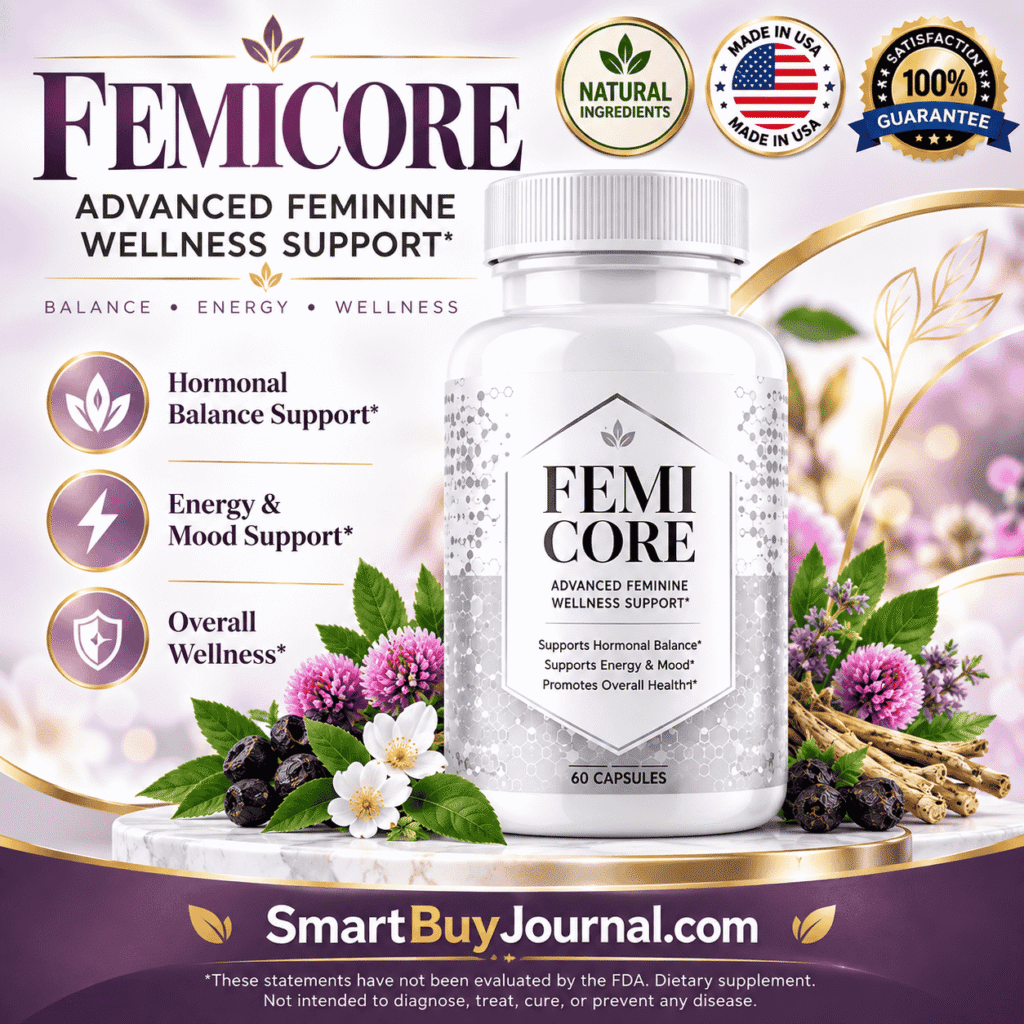
FemiCore Bladder Support Ingredients: What’s Actually Inside and What the Science Says
Introduction
When researching femicore bladder support ingredients, you’re likely trying to separate meaningful science from supplement marketing. You’ve encountered claims about reduced urgency and fewer bathroom trips—but what’s actually in FemiCore, and which ingredients have credible research behind them? Understanding the true nature of these femicore bladder support ingredients is essential for making informed decisions about your urinary health.
This isn’t another superficial review. Instead, we’ll analyze each ingredient using evidence from sources like the Cochrane Collaboration, NIH Office of Dietary Supplements, and peer-reviewed urology studies. You’ll learn which components have legitimate bladder-specific research, which effects are indirect or modest, and how to evaluate whether FemiCore fits into a science-informed bladder health strategy—without promising instant fixes or overstating what nutrients can achieve.
By the end, you’ll know exactly what femicore bladder support ingredients FemiCore contains, what they realistically offer based on current evidence, and how to decide if it aligns with your urinary health goals—especially when combined with proven lifestyle approaches like pelvic floor exercises and hydration habits.
What “Bladder Support” Actually Means (Beyond Symptom Masking)
Before examining specific ingredients, it’s crucial to clarify what legitimate bladder support entails—particularly when evaluating products making claims about femicore bladder support ingredients. True bladder support focuses on maintaining urinary tract health and comfort through physiological mechanisms, not suppressing symptoms like a medication would.
Your bladder and urinary tract have natural defenses: a protective mucus layer, beneficial bacteria (particularly Lactobacillus crispatus in women), and regular flushing through urination. When these systems become imbalanced—due to hormonal shifts, sexual activity, or microbiome disruptions—you may experience urgency, frequency, or discomfort.
Supplements like FemiCore aim to support these natural defenses nutritionally—not to treat active infections or diagnosed conditions. This distinction matters because marketing language suggesting supplements “cure” bladder issues often misrepresents what nutrients can realistically do. Effective bladder support works best as part of a comprehensive approach that includes hydration, bathroom habits, and pelvic floor strength—not as a standalone solution. When assessing femicore bladder support ingredients, always prioritize products that align with this physiological reality.
FemiCore’s Formula: Five Key Ingredient Categories
FemiCore avoids proprietary blends, disclosing exact amounts of five ingredient categories targeting bladder comfort through complementary mechanisms—critical for evaluating the true value of its femicore bladder support ingredients:
1. Mimosa Pudica Seed
- Intended role: Supports gut motility, which may indirectly influence bladder comfort via gut-bladder axis connections
- Evidence level: Strong traditional use in Ayurvedic medicine; limited direct clinical research on bladder-specific outcomes
- Transparency note: FemiCore discloses 200mg per capsule—allowing comparison to traditional use dosages
When researching femicore bladder support ingredients, note that Mimosa Pudica’s primary evidence relates to gut health, with bladder effects being speculative.
2. Bearberry (Uva-Ursi)
- Intended role: Provides arbutin, which metabolizes into hydroquinone—a mild antimicrobial compound in the urinary tract
- Evidence level: Well-established in European herbal medicine (EMA monograph); health authorities recommend cycling due to potential hydroquinone accumulation
- Transparency note: FemiCore discloses 150mg per capsule (standardized to 20% arbutin = 30mg active)
For those studying femicore bladder support ingredients, Bearberry requires careful cycling—never assume “more is better” with this ingredient.
3. Standardized Cranberry Extract
- Intended role: Reduces bacterial adhesion (particularly E. coli) to bladder wall lining via proanthocyanidins (PACs)
- Evidence level: Moderate—2023 Cochrane review found cranberry may reduce UTI incidence in susceptible populations; 2021 meta-analysis of 23 trials showed 32% relative risk reduction in recurrent UTIs among women
- Transparency note: FemiCore discloses 500mg per capsule (standardized to 36% PACs = 180mg PACs)—within range of doses used in positive trials
When assessing femicore bladder support ingredients, cranberry represents the component with strongest direct bladder-relevant evidence—but effectiveness depends on consistent PAC intake.
4. Granular Berberine
- Intended role: Supports gut-urinary microbiome connection through antimicrobial and anti-inflammatory properties
- Evidence level: Stronger evidence for general metabolic/gut health (e.g., blood sugar regulation) than direct bladder action; emerging research on urinary microbiome modulation
- Transparency note: FemiCore discloses 100mg per capsule—below doses used in many metabolic studies (500mg 2-3x daily) but suitable for microbiome support
In the context of femicore bladder support ingredients, Berberine’s value lies primarily in gut microbiome balance rather than direct bladder antimicrobial effects at this dosage.
5. 5-Strain Lactobacillus Blend
- Intended role: Supports healthy urinary and vaginal microbiome by reinforcing beneficial bacteria
- Evidence level: Biologically well-grounded; Lactobacillus crispatus is naturally dominant in healthy female urinary microbiome
- Strain specificity: Includes Crispatus (key for urinary tract), Acidophilus, Plantarum, Gaseri, and Cassei—each with distinct adhesion and immune-modulating properties
- Transparency note: FemiCore discloses 5 billion CFU total per capsule with strain breakdown
For anyone evaluating femicore bladder support ingredients, this probiotic blend represents the formula’s most innovative aspect—shifting focus from antimicrobial bombardment to ecological balance restoration.
This transparency—uncommon in a market where many bladder supplements hide behind “proprietary blends”—allows consumers to evaluate doses against clinical research, a critical advantage when assessing femicore bladder support ingredients. Always verify amounts before purchasing.
Evidence Behind Cranberry Extract in FemiCore
Cranberry extract is FemiCore’s most researched ingredient for direct bladder support, warranting detailed examination when analyzing its femicore bladder support ingredients:
The mechanism centers on A-type proanthocyanidins (PACs) inhibiting bacterial adhesion—specifically preventing E. coli’s P-fimbriae from binding to bladder uroepithelial cells. Without adhesion, bacteria flush out during urination rather than colonizing.
Key evidence includes:
- 2023 Cochrane Review (50 studies, 8,857 participants): Found cranberry products may reduce UTI incidence in women with recurrent UTIs, children, and those susceptible to UTIs—but noted significant heterogeneity and no established standard dose.
- 2021 Meta-Analysis (23 trials, 3,987 women): Reported statistically significant 32% relative risk reduction in recurrent UTIs with cranberry vs. placebo/control.
- NIH Perspective: Notes cranberry’s role in UTI prevention is “promising but not conclusive,” emphasizing it should not replace antibiotics for active infections.
Critically, effectiveness depends on PAC content and stability. FemiCore’s disclosure of 36% PACs (180mg per 500mg extract) aligns with doses showing benefit in research (typically 36-72mg PACs daily in effective studies). However, individual responses vary based on gut microbiome’s ability to metabolize PACs into active compounds—a factor not addressed in the formula.
When researching femicore bladder support ingredients, remember: cranberry supports urinary tract maintenance but doesn’t treat existing infections.
How Bearberry Contributes (With Important Caveats)
Bearberry (Uva-Ursi) has centuries of traditional use for urinary complaints, but modern understanding requires nuance—especially when evaluating it as part of femicore bladder support ingredients:
Its active compound arbutin converts to hydroquinone in alkaline urine, creating a mild antiseptic effect. The European Medicines Agency (EMA) acknowledges this traditional use but specifies:
- Maximum recommended duration: 1-2 weeks (not continuous daily use)
- Contraindicated in pregnancy, lactation, and children under 12
- Requires urinary pH >7.5 for optimal activity (often needing urinary alkalinizers)
FemiCore’s disclosure of 150mg Bearberry extract (standardized to 20% arbutin = 30mg arbutin) provides transparency missing in many competitors. However, the label lacks explicit cycling guidance—a notable omission given Bearberry’s usage limitations.
Research shows Bearberry works best for short-term support during anticipated urinary challenges (e.g., post-intercourse, travel) rather than as a daily foundational ingredient. For femicore bladder support ingredients evaluation, this means Bearberry’s role is situational, not universal—and users should consult healthcare providers about appropriate cycling if considering long-term use.
Never exceed recommended durations when using Bearberry-containing supplements for bladder support.
The Probiotic Blend: Targeting the Urinary Microbiome Foundation
FemiCore’s 5-strain Lactobacillus approach addresses bladder health at an ecological level—reinforcing the beneficial bacteria that maintain urinary tract balance:
Why Lactobacillus strains matter:
- A healthy female urinary microbiome is dominated by Lactobacillus crispatus (50-70% abundance in healthy states)
- These bacteria produce lactic acid (maintaining pH <4.5), hydrogen peroxide, and bacteriocins that inhibit pathogens
- They also modulate local immune responses and strengthen epithelial barrier function
Strain-specific rationale in FemiCore:
- L. crispatus: Primary focus—directly supports dominant healthy urinary bacteria
- L. acidophilus: Well-studied for vaginal/urinary adhesion and immune modulation
- L. plantarum: Strong antioxidant production and pathogen displacement
- L. gasseri: Associated with vaginal health stability in research
- L. casei: Supports gut-urinary axis communication and immunomodulation
Evidence level: While direct urinary tract supplementation studies are fewer than for gut probiotics, the biological plausibility is strong. Research shows oral Lactobacillus can migrate to the urinary tract, and strains like L. crispatus reduce UTI recurrence in clinical trials when administered vaginally—suggesting oral supplementation may offer complementary support.
For femicore bladder support ingredients assessment, this blend represents the formula’s most innovative aspect. However, CFU counts (5 billion) are modest compared to some gut-focused probiotics (50-100 billion), reflecting different target sites and mechanisms.
When evaluating femicore bladder support ingredients, prioritize products with strain specificity and disclosed CFU counts—like FemiCore provides.
Mimosa Pudica and Berberine: Indirect Pathways to Bladder Comfort
These ingredients work through less direct but still relevant pathways—important context when assessing the full profile of femicore bladder support ingredients:
Mimosa Pudica:
Primarily studied for gut motility and anti-diarrheal effects via tannin and flavonoid content. The gut-bladder connection emerges through:
- Shared inflammatory pathways (e.g., IL-6, TNF-alpha elevation in both IBS and interstitial cystitis)
- Visceral hypersensitivity syndromes where gut and bladder symptoms co-occur
- Autonomic nervous system links affecting both organs
Evidence for direct bladder effects is preliminary (mostly animal/cell studies), but improved gut regularity may reduce referred discomfort or systemic inflammation impacting bladder function. FemiCore’s 200mg dose aligns with traditional use ranges.
When researching femicore bladder support ingredients, recognize that Mimosa Pudica’s contribution is primarily indirect via gut health.
Berberine:
Best-researched for metabolic effects (AMPK activation improving insulin sensitivity), but relevant to bladder health via:
- Gut microbiome modulation (reducing pathobionts that may ascend to urinary tract)
- Anti-inflammatory actions in urothelial cells (shown in cell studies)
- Potential to reduce bacterial virulence factors
However, most bladder-relevant research uses doses ≥500mg—higher than FemiCore’s 100mg/capsule. This suggests Berberine’s contribution is likely supportive (gut microbiome balance) rather than direct bladder antimicrobial action at this dosage.
Importantly, Berberine inhibits liver enzymes (CYPs 2D6, 3A4, 1A2) that metabolize many medications—creating interaction risks with blood thinners (warfarin), diabetes drugs (metformin, sulfonylureas), and SSRIs. This necessitates medical consultation before use if taking prescriptions—a critical safety consideration often overlooked in bladder supplement marketing.
For anyone studying femicore bladder support ingredients, Berberine’s interaction potential requires special attention.
How FemiCore’s Ingredients Work Together: A Systems Approach
Rather than targeting a single mechanism, FemiCore employs a multi-layered strategy—essential context when evaluating the synergy of its femicore bladder support ingredients:
- Immediate urinary tract support:
- Bearberry (hydroquinone) provides mild antiseptic action in bladder urine
- Cranberry (PACs) reduces new bacterial adhesion to bladder wall
- Microbiome foundation:
- Lactobacillus blend reinforces beneficial bacteria that competitively exclude pathogens and maintain acidic pH
- Systemic modulation:
- Mimosa Pudica may reduce gut-derived inflammation affecting bladder sensitivity
- Berberine supports gut barrier integrity and microbial balance
This approach aligns with current understanding of bladder health as an ecosystem—not merely a sterile pipe requiring constant “disinfection.” However, the formula lacks ingredients directly addressing pelvic floor strength or hormonal influences (major factors in stress-related leakage and urgency), highlighting why supplements work best alongside lifestyle strategies.
When assessing femicore bladder support ingredients, remember: no single ingredient addresses all aspects of bladder health.
Why Ingredient Transparency Matters in Bladder Supplements
FemiCore’s commitment to disclosing exact ingredient amounts—rather than hiding behind proprietary blends—isn’t just a trust signal; it enables evidence-based evaluation of its femicore bladder support ingredients:
When researching femicore bladder support ingredients, transparency allows you to:
- Compare cranberry PAC dosage (180mg) to effective trial ranges (36-72mg daily showed benefit in some studies)
- Verify Bearberry arbutin amount (30mg) against traditional use notes (typically 200-400mg hydroquinone daily for short-term use)
- Assess probiotic strain specificity and CFU count against urinary microbiome research
- Identify potential gaps (e.g., no stated cycling guidance for Bearberry despite safety notes)
Contrast this with industry norms where “bladder support blend” labels prevent dose evaluation—making it impossible to know if cranberry is present at 1mg or 500mg. This transparency is FemiCore’s strongest differentiator in a crowded market and directly addresses a core frustration of consumers seeking femicore bladder support ingredients information.
Always choose supplements that disclose exact amounts—like FemiCore does for its bladder support ingredients.
Safety Considerations and Medication Interactions
While FemiCore’s ingredients are generally well-tolerated by healthy adults, key safety notes apply when considering its femicore bladder support ingredients:
Bearberry-specific cautions:
- Hydroquinone accumulation risk with continuous use >2-4 weeks (may cause liver toxicity, retinal damage, or carcinogenic effects in high doses)
- EMA recommends: “Do not use for longer than 1-2 weeks without medical advice”
- Contraindicated in pregnancy, breastfeeding, and children under 12
- Requires alkaline urine (pH >7.5) for activity—often needing urinary alkalinizers like sodium bicarbonate
Berberine interaction risks (most significant concern):
- Inhibits CYP2D6, CYP3A4, CYP1A2—affecting metabolism of:
- Blood thinners: Warfarin (increased bleeding risk)
- Diabetes medications: Metformin (altered efficacy), sulfonylureas (hypoglycemia risk)
- SSRIs: Fluoxetine, paroxetine (increased side effects)
- Others: Statins, certain antihistamines, benzodiazepines
- May lower blood sugar—additive effect with diabetes drugs
- Critical: Anyone on prescription medications must consult their doctor or pharmacist before using FemiCore
General considerations:
- Mild digestive upset possible initially (especially with Berberine/Mimosa Pudica)
- Not intended for active UTIs or diagnosed urological conditions
- Discontinue if pain, fever, or blood in urine occurs—and seek medical evaluation
FemiCore’s own materials and third-party sources like MedlinePlus emphasize: “Consult your physician before use”—advice that’s especially vital given the ingredient profile of its bladder support ingredients.
Lifestyle Strategies That Complement Bladder Support Supplements
Decades of urology research confirm that supplements like FemiCore work best when integrated with evidence-based habits—not as replacements. The Smart Buy Journal blog “Bladder Support: What Actually Works” highlights these foundational strategies:
Non-negotiable foundations:
- Hydration: Adequate water intake dilutes urine and flushes bacteria—aim for pale yellow urine (typically 6-8 cups water daily, adjusted for activity/climate)
- Post-intercourse urination: Clears bacteria before they ascend urethra—reduces UTI risk by up to 80% in some studies
- Avoid urine retention: Frequent, complete emptying prevents bacterial overgrowth and reduces bladder wall irritation
- Spermicide caution: Nonoxynol-9 disrupts protective vaginal/urinary flora—consider alternatives if using barrier contraception
The overlooked cornerstone: Pelvic floor exercises (Kegels)
- Specifically targets stress-related leakage (coughing, sneezing, exercise)—a different mechanism than urgency/infection
- Strong evidence: Cochrane reviews show Kegels reduce stress incontinence symptoms in 60-70% of women
- Protocol: 3 sets of 10-15 slow contractions daily, held 5-10 seconds each
- Timeline: Requires 6-12 weeks of consistency for meaningful improvement—longer than most supplement trials
- Why overlooked: Requires active effort vs. passive capsule-taking, but addresses root cause of leakage
For those evaluating femicore bladder support ingredients, understanding that supplements address only one piece (microbial/adhesion) of bladder health—while lifestyle tackles flushing, mechanics, and inflammation—is crucial for setting realistic expectations.
No supplement replaces these habits—even the best-researched femicore bladder support ingredients work optimally alongside them.
Realistic Expectations: What Users Actually Report
Analyzing independent feedback (beyond manufacturer testimonials) reveals patterns among women trying FemiCore—vital context when assessing the real-world value of its femicore bladder support ingredients:
Common experiences:
- Gradual onset: Most notice subtle changes at 3-4 weeks; clearer benefits at 6-8 weeks
- Primary reports: Reduced nighttime urgency, fewer “just in case” bathroom trips, improved sense of control
- Leakage notes: Modest improvement in stress-related leakage—but significantly less than what pelvic floor exercises typically achieve
- Digestive effects: Temporary gas/bloating in first 1-2 weeks (often resolving with continued use)
- Consistency dependency: Benefits diminish when doses are missed—highlighting need for daily routine
Important limitations:
- No finished-product clinical trials exist for FemiCore’s specific formula
- Results vary widely based on individual microbiome, hormones, and bladder sensitivity
- Not effective for active infections, neurological bladder issues, or severe structural problems
- Bearberry’s cycling requirement means long-term daily use isn’t aligned with ingredient safety profile
This aligns with the physiological reality: Bladder comfort depends on multiple systems (nerves, muscles, mucosa, microbiome, hormones)—no single ingredient addresses all. FemiCore’s value lies in supporting specific mechanisms within a broader strategy.
When researching femicore bladder support ingredients, always prioritize products that set realistic expectations—not miracle promises.
Who Might Benefit from FemiCore (And Who Should Look Elsewhere)
May be worth considering if:
- You experience mild-to-moderate urgency/frequency without pain, fever, or blood in urine
- You already practice foundational habits (hydration, post-sex urination, no retention)
- You’re interested in microbiome-focused support rather than symptom masking
- You’ve discussed Berberine interactions with your doctor/pharmacist (if on medications)
- You view supplements as complementary to—not replacements for—pelvic floor exercises and lifestyle habits
- You appreciate transparent labeling for evidence-based evaluation of femicore bladder support ingredients
Better suited elsewhere if:
- You have active UTI symptoms (pain, burning, fever)—requires antibiotics, not supplements
- You seek rapid relief (FemiCore works gradually over weeks)
- You have diagnosed overactive bladder, interstitial cystitis, or neurological bladder conditions
- You’re pregnant, breastfeeding, or under 18
- You take medications with known Berberine interactions (warfarin, diabetes drugs, SSRIs) without medical consultation
- You prioritize ingredients with direct, high-level bladder evidence (e.g., methenamine hippurate for prophylaxis—which FemiCore lacks)
When deciding whether to try FemiCore’s bladder support ingredients, match your expectations to the evidence—not the marketing.
Conclusion
FemiCore contains several ingredients with varying levels of research relevance to bladder comfort—particularly Cranberry Extract (moderate evidence for adhesion inhibition) and the Lactobacillus blend (strong biological rationale for microbiome support). However, the formula’s effectiveness depends entirely on realistic expectations: it works best as a nutritional complement to established bladder health habits, not as a standalone solution for urgency, frequency, or leakage.
The femicore bladder support ingredients in FemiCore offer modest, supportive potential when integrated into a comprehensive approach that prioritizes hydration, post-intercourse urination, avoiding urine retention, spermicide caution, and—critically—pelvic floor exercises for stress-related leakage. User experiences confirm benefits are most likely when combined with these habits, with typical onset at 6-8 weeks of consistent use. Notable considerations include Bearberry’s need for cycling (absent from label instructions) and Berberine’s significant interaction risks with common medications.
Before trying any bladder supplement, consult your healthcare provider—especially if you have existing health conditions or take medications. Remember that bladder comfort stems from the coordinated function of muscles, nerves, mucosa, and microbiome—supplements can only ever play a supporting role in maintaining this delicate balance, never replacing the foundational habits that truly determine long-term urinary health. Understanding the actual science behind femicore bladder support ingredients empowers you to make choices aligned with your body’s real needs—not marketing promises.
When evaluating femicore bladder support ingredients, always demand transparency, verify evidence levels, and prioritize safety over hype.
FAQ Section
Q: What are the exact femicore bladder support ingredients in FemiCore?
A: FemiCore contains Mimosa Pudica Seed (200mg), Bearberry (Uva-Ursi) standardized to 20% arbutin (150mg = 30mg arbutin), Standardized Cranberry Extract (500mg standardized to 36% PACs = 180mg PACs), Granular Berberine (100mg), and a 5-strain Lactobacillus Blend (5 billion CFU: Crispatus, Acidophilus, Plantarum, Gaseri, Cassei). Knowing these exact femicore bladder support ingredients allows evidence-based evaluation.
Q: How should I assess the evidence for each femicore bladder support ingredient?
A: Prioritize human clinical data over animal studies. For femicore bladder support ingredients, cranberry has moderate UTI prevention evidence (Cochrane Review 2023), Lactobacillus strains have strong biological rationale for urinary microbiome support, while Bearberry requires cycling and Berberine has interaction risks—all critical context when researching these specific femicore bladder support ingredients.
Q: Is it safe to take Bearberry daily as part of femicore bladder support ingredients?
A: No—health authorities including the EMA recommend Bearberry for short-term use only (1-2 weeks max) due to hydroquinone accumulation risks. When evaluating femicore bladder support ingredients containing Bearberry, always discuss cycling strategies with your doctor; continuous daily use isn’t aligned with its safety profile.
Q: Can the Berberine in femicore bladder support ingredients interact with my medications?
A: Yes—Berberine inhibits liver enzymes (CYPs 2D6, 3A4, 1A2) affecting warfarin, diabetes medications (metformin, sulfonylureas), and SSRIs (antidepressants). Anyone evaluating femicore bladder support ingredients containing Berberine must consult their pharmacist or doctor before combining with prescriptions.
Q: How long should I take FemiCore to evaluate its femicore bladder support ingredients?
A: Most users report initial subtle changes at 3-4 weeks, with clearer assessment possible at 6-8 weeks of consistent daily use—especially when combined with foundational habits like hydration and post-intercourse urination. Shorter trials often miss the gradual onset typical of microbiome-supporting approaches to femicore bladder support ingredients.
Q: Does FemiCore help with stress-related leakage when evaluating its femicore bladder support ingredients?
A: FemiCore’s ingredients primarily target urinary microbiome and bacterial adhesion—not pelvic floor strength. For stress-related leakage, pelvic floor exercises (Kegels) have substantially stronger evidence as a first-line approach. When assessing femicore bladder support ingredients, remember FemiCore may offer minor complementary support via microbiome balance but shouldn’t be relied upon as primary leakage treatment.
Q: Why does FemiCore disclose exact amounts of its femicore bladder support ingredients instead of using proprietary blends?
A: Transparency allows consumers to evaluate doses against clinical research—for example, verifying cranberry PAC content (180mg) falls within ranges showing benefit in studies (36-72mg daily in some trials). This addresses a key consumer frustration with bladder supplements where “proprietary blend” labels prevent evidence-based assessment of femicore bladder support ingredients. Always choose transparency.
Q: Is FemiCore effective for active urinary tract infections when considering its femicore bladder support ingredients?
A: No—FemiCore is not intended to treat active UTIs. If you suspect an infection (symptoms like burning urination, frequency, urgency, or pelvic pain), seek medical evaluation for appropriate antibiotic treatment. Supplements support urinary health maintenance but don’t replace infection treatment—critical context when researching any femicore bladder support ingredients.
Q: Should I take FemiCore with or without food to optimize its femicore bladder support ingredients?
A: Taking with food may reduce potential digestive discomfort from ingredients like Berberine or Mimosa Pudica and can improve absorption of certain fat-soluble compounds. Consistency (same time daily) matters more than exact timing for microbiome-supporting ingredients when evaluating femicore bladder support ingredients.
Conclusion
FemiCore provides a transparent blend of ingredients targeting bladder comfort through microbial adhesion inhibition (cranberry), urinary tract support (bearberry), microbiome reinforcement (probiotics), and systemic modulation (mimosa pudica, berberine). While individual components like cranberry extract and specific Lactobacillus strains have credible research support, the formula works most effectively when viewed as one element of a comprehensive bladder health strategy.
Real urinary comfort depends on foundational habits: adequate hydration for bacterial flushing, post-intercourse urination to prevent ascent, avoidance of urine retention, spermicide caution to protect native flora, and—critically for stress-related leakage—consistent pelvic floor exercises. FemiCore’s value lies in supporting specific biochemical and ecological mechanisms within this broader framework, not replacing it.
User experiences confirm that benefits emerge gradually (typically 6-8 weeks) and are most noticeable when the supplement complements—not substitutes—for these evidence-based lifestyle approaches. The brand’s transparency in ingredient dosing enables informed evaluation—a meaningful advantage in a market where many competitors obscure their formulations. However, critical considerations remain: Bearberry requires cycling for safe long-term use (absent from label instructions), and Berberine poses significant interaction risks with common medications necessitating medical consultation.
When researching femicore bladder support ingredients, always prioritize evidence over exaggeration.
For those considering FemiCore, approach it as a potential nutritional adjunct to an already bladder-healthy lifestyle, maintain realistic expectations about modest effects on urgency/frequency, prioritize purchasing from the official source to avoid counterfeit concerns, and always consult your healthcare provider—particularly if you take medications or have existing urinary health concerns. True bladder health stems from the synergistic function of muscles, nerves, mucosa, and microbiome; supplements can only ever play a supporting role in maintaining this remarkable system’s innate resilience.