

You are eating well, moving more, and tracking your progress, but the scale will not budge, and you slept five hours last night. It is fair to ask: does poor sleep affect weight loss, or is it just an excuse? The research says it probably does, though not in the dramatic way some headlines suggest. This guide answers does poor sleep affect weight loss by explaining what studies show about sleep duration, sleep quality, appetite, energy and activity, which habits actually help, and where supplements fit. We checked each claim against medical sources and say clearly when the evidence is limited.
The short answer: does poor sleep affect weight loss? Evidence suggests it can. Short or poor sleep is linked to higher calorie intake, stronger cravings and less adherence to a diet, and in one trial, extending sleep reduced daily intake. But sleep is one factor among many, the research is partly observational, and better sleep is not a guaranteed route to weight loss.
Quick Summary: Does Poor Sleep Affect Weight Loss?
- Short answer to “does poor sleep affect weight loss?”: probably, but modestly, and with caveats.
- The CDC recommends 7 or more hours of sleep for adults aged 18 to 60, and links not getting enough sleep to a higher chance of weight gain.
- A 2022 randomized trial found that adults with overweight who extended their sleep ate about 270 fewer calories a day than those who kept their usual sleep.
- Short sleep is associated with changes in the hunger hormones ghrelin and leptin, but findings across studies are inconsistent.
- Practical habits (consistent schedule, caffeine timing, a cool and dark bedroom) are the safest first step.
- Sleep supplements are optional, mixed in evidence, and are not weight-loss treatments.
- Persistent sleep problems deserve a doctor’s visit.
Does Poor Sleep Affect Weight Loss? What the Research Shows
In short, does poor sleep affect weight loss? The evidence below suggests yes.
Here is the honest evidence summary on the question “does poor sleep affect weight loss?” in four parts.
1. Short sleep is common. The CDC reports that about 30.5 percent of U.S. adults averaged less than 7 hours of sleep in 2024 (CDC: short sleep duration among adults, 2024). The CDC’s general guidance for adults aged 18 to 60 is 7 or more hours a night (CDC: about sleep).
2. Poor sleep is linked to weight gain, which is why people ask does poor sleep affect weight loss. The CDC lists a higher chance of weight gain among the risks of not getting enough sleep, along with poorer heart health and metabolism and a greater risk of type 2 diabetes.
3. Sleep and calorie intake: the strongest trial on does poor sleep affect weight loss. In a randomized trial at the University of Chicago, 80 adults aged 21 to 40 with overweight and habitual sleep under 6.5 hours were assigned either to sleep extension (aimed at 8.5 hours in bed) or to keep their usual sleep. Over two weeks, sleep rose by about 1.2 hours a night, and the extension group ate roughly 270 fewer calories a day than controls, with no significant difference in energy expenditure (JAMA Internal Medicine, 2022). The study was small and short, included only adults with overweight, and the authors did not test how long the changes last.
4. Sleep during dieting, where does poor sleep affect weight loss most? A narrative review of sleep deprivation and weight loss reported that short sleep is linked to extra snacking on high-fat and high-carbohydrate foods, that in a 2010 trial of calorie-restricted people less of the weight lost was fat when sleep was shorter, and that better sleep quality was linked to a higher chance of weight-loss success in a 2012 trial of women (review: sleep deprivation and weight loss). The same review is candid about limits: it is narrative rather than systematic, only 10 clinical trials met its criteria, several were very small, findings on hormones were inconsistent, and some studies found no link. It also notes that the relationship may run both ways, since sleep improved as people lost weight.
So does poor sleep affect weight loss? Probably, through several routes, but the size of the effect varies and the science is still developing.
How Poor Sleep May Affect Weight Management: Why the Answer to “Does Poor Sleep Affect Weight Loss?” Is Probably Yes
Appetite regulation: how does poor sleep affect weight loss through hunger?
The review above describes short sleep as associated with higher ghrelin (a hormone that increases hunger) and lower leptin (which signals fullness), and with more appetite and cravings for calorie-dense foods. It also notes that results on these hormones were inconsistent across studies. In plain terms, this is one way poor sleep may affect weight loss: when you are tired, high-calorie foods may seem more appealing and harder to resist.
Cravings and food choices: does poor sleep affect weight loss at the snack drawer?
The same review reports extra snacking, mostly on high-fat and high-carbohydrate foods, with short sleep. This is one reason that people asking whether poor sleep affects weight loss often notice the effect at night and in the afternoon slump.
Metabolism and blood sugar: does poor sleep affect weight loss biologically?
The review says sleep loss may reduce glucose and insulin sensitivity and raise evening cortisol, and may shift fuel use toward carbohydrates rather than fat. These are proposed mechanisms, and the authors call for more research.
Daily energy and mood: does poor sleep affect weight loss motivation?
The CDC links too little sleep to higher stress, lower mood and reduced attention and memory. When you are exhausted, a workout or meal prep is harder to face, even if the research on this exact pathway is thin.
Physical activity: does poor sleep affect weight loss through exercise?
The picture on activity is less clear. In the Chicago trial, total energy expenditure did not differ between groups. The narrative review offers little direct evidence on physical activity as a mechanism. On whether poor sleep affects weight loss through activity, we would not claim that more sleep automatically leads to more exercise, though many people find it easier to stay active when rested.
Realistic Expectations: Does Poor Sleep Affect Weight Loss Enough to Matter?
When you ask does poor sleep affect weight loss, the honest answer is “yes, somewhat.”
Before changing your routine, here is what is fair to expect when you ask does poor sleep affect weight loss.
- Sleep supports weight loss; it does not replace diet and activity. So even if the answer to does poor sleep affect weight loss is yes, sleep is not the whole story. The 270-calorie difference in the Chicago trial is meaningful, but it was measured in a small, short study.
- Results vary. Age, health, medications, stress and schedule all matter.
- Cause and effect are tangled. Asking does poor sleep affect weight loss has a two-way answer, because weight and stress can also affect sleep. Stress and weight can affect sleep, and sleep can affect weight.
- Do not expect overnight change. Building a routine takes weeks.
- Do not trust guarantees. No habit or product guarantees weight loss.
Practical Sleep Habits If Poor Sleep Affects Weight Loss for You
The CDC’s tips for better sleep are a sensible starting point:
- Keep a consistent schedule, the simplest answer if poor sleep affects weight loss for you. Go to bed and wake up at the same times each day, including weekends where you can.
- Make the bedroom quiet, relaxing and cool. A good sleep environment matters most for people who ask does poor sleep affect weight loss and want a first step.
- Put phones and screens away at least 30 minutes before bed.
- Skip large meals and alcohol close to bedtime.
- Avoid caffeine in the afternoon and evening.
- Exercise regularly and eat a healthy diet.
Caffeine timing when poor sleep affects weight loss
The CDC advises not drinking caffeine in the afternoon or evening. We did not find a source we could verify for an exact cut-off hour, because sensitivity varies. A practical test is to move your last coffee or tea earlier by a couple of hours for two weeks and see whether you fall asleep more easily. Remember that caffeine is also in tea, cola, energy drinks, chocolate and some pre-workout products and weight-loss supplements.
A simple wind-down routine: does poor sleep affect weight loss less once you have one?
- Set a fixed wake-up time first, because it anchors everything else.
- Dim the lights and stop work 30 to 60 minutes before bed.
- Do something calm: read, stretch, take a warm shower.
- Keep the bedroom cool and dark.
- If you cannot sleep after a while, get up, do something quiet, and return when sleepy.
When Poor Sleep Needs Medical Attention, Whether or Not It Affects Weight Loss
Habits are not enough for everyone, and fixing the answer to does poor sleep affect weight loss should not delay care. Talk to a doctor if you have trouble falling or staying asleep for weeks, wake unrefreshed despite enough hours, feel very sleepy during the day, or have been told that you snore loudly or stop breathing at night. NCCIH notes that cognitive behavioral therapy for insomnia is the most strongly recommended treatment for chronic insomnia (NCCIH: sleep disorders and complementary health approaches). A doctor can also look for conditions, medicines or habits that disrupt sleep.
Can Sleep Supplements Help? A Balanced Look at Sleep Lean
Sleep supplements are heavily marketed, sometimes with a weight-loss angle, and some pages suggest they answer “does poor sleep affect weight loss?” for you. Here is a fair summary.
First, the big picture. If your question is does poor sleep affect weight loss, the first fix is behavioral. NCCIH says chronic insomnia is best treated with cognitive behavioral therapy, that melatonin evidence is mixed, and that “natural” does not necessarily mean safe. No supplement is a proven weight-loss treatment, and none replaces good sleep habits or treatment for a sleep disorder.
What Sleep Lean is, according to its review page
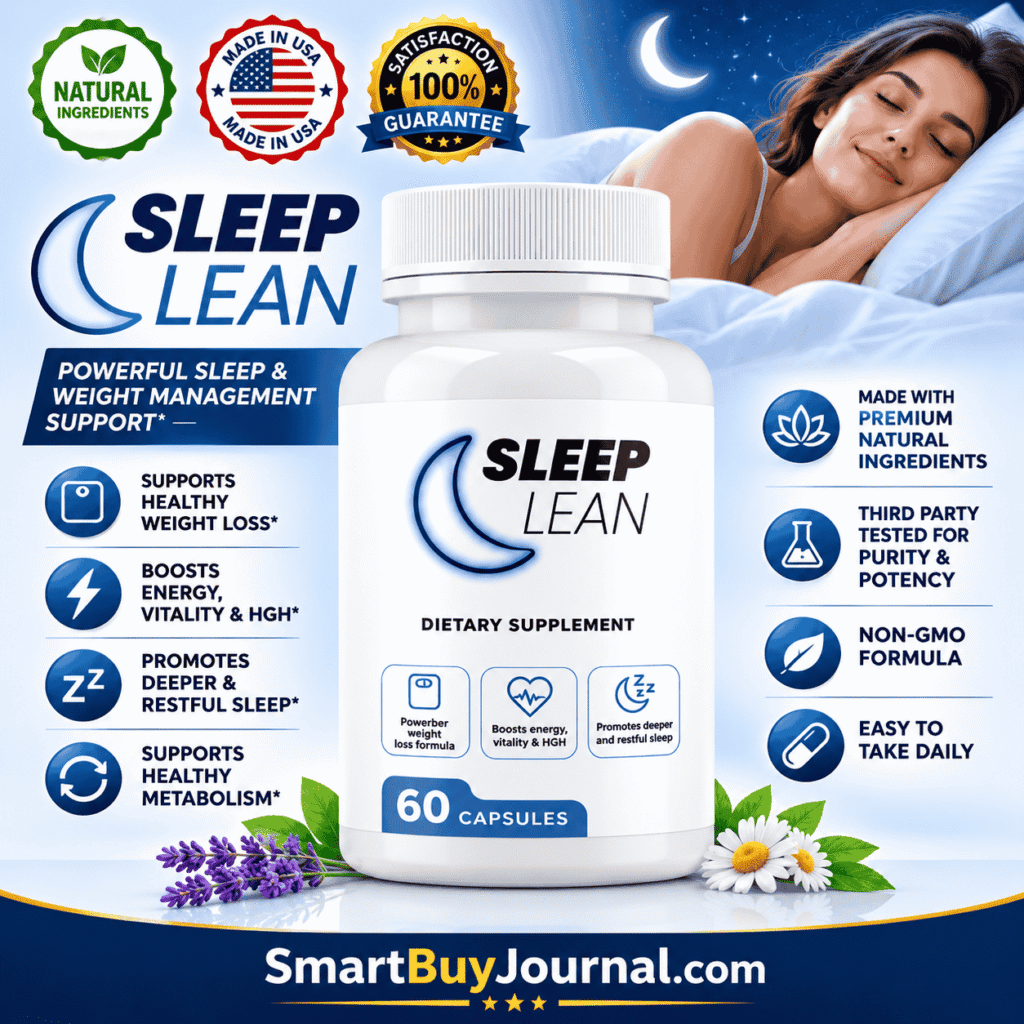
Sleep Lean is a nighttime supplement we review on SmartBuyJournal. It is optional, and we are not saying you need it. Per its review page:
- Form and directions: capsules, taken once nightly, 30 to 60 minutes before bed.
- Ingredients: melatonin, L-theanine, magnesium glycinate, GABA, chamomile extract and valerian root extract.
- No ingredient amounts are listed. The page says exact dosages “are not always fully disclosed.”
- Claims: faster sleep onset, deeper sleep and less morning grogginess. On weight, the page says it is “not a fat burner” and will not produce weight loss without a reasonable diet. Any effect is described as indirect, through better sleep. We do not claim it causes weight loss, and we do not claim it cures any sleep disorder. The page itself says it is not a substitute for treating diagnosed disorders such as sleep apnea or chronic insomnia.
- No trial of the finished formula, according to the page.
- Not evaluated by the FDA. The page says it is not intended to diagnose, treat, cure or prevent disease.
What the research says about the ingredients
NCCIH’s pages cover several of these ingredients, and they are less encouraging than marketing suggests:
- Melatonin: evidence is mixed and depends on the problem. A 2022 review found it may shorten the time to fall asleep but did not improve overall sleep quality or night waking, and 2017 and 2019 guidelines recommend against using it for chronic insomnia because the evidence is insufficient (NCCIH: melatonin). Short-term use appears safe for most adults, but long-term safety data are lacking. NCCIH also reports that studies found many melatonin products did not contain the labeled amount, so quality varies.
- Valerian: weak evidence. A 2017 guideline from the American Academy of Sleep Medicine recommends against it for chronic insomnia.
- Chamomile: inconclusive evidence, and allergic reactions are possible, especially in people allergic to ragweed or related plants.
- Magnesium: very limited evidence for sleep. NCCIH says intake above 350 mg a day from supplements for adults should be avoided unless a provider recommends it, because excess can cause diarrhea, nausea and cramping.
- L-theanine and GABA: the NCCIH page does not cover them, and we did not find a source we could verify, so we make no claims about them.
Things to know before buying
If you are weighing a purchase after asking does poor sleep affect weight loss for you, keep these points in mind.
- Interactions. The page warns of possible additive sedation with prescription sleep medications, benzodiazepines or anti-anxiety drugs. NCCIH advises people with epilepsy or on blood thinners to use melatonin only under medical supervision, and people who are pregnant or breastfeeding to see a provider first.
- Mixed messaging about does poor sleep affect weight loss. The title calls it a “weight loss supplement,” while the body says it is not a fat burner. The page also says no trial of the finished formula exists, yet its verdict calls it a “legitimate choice.”
- Reviews. The reviews tab shows zero reviews while the body contains five testimonials, so we do not use them as evidence. The page shows a 4.5 rating that we cannot verify.
- Price and guarantee. The header shows $79, while its table lists about $59 to $69 for one bottle, with larger packs lower. It advertises a 60-day money-back guarantee. Check current terms with the seller.
- Availability. The page says it is sold only on the official website in one place, and through “authorized affiliates” in another.
If you are still asking does poor sleep affect weight loss for you personally, a doctor is the right person to ask. For the full analysis, read our Sleep Lean review. For other sleep topics, see our guides on magnesium for sleep and Yu Sleep.
Affiliate disclosure: some links on this page are affiliate links, so SmartBuyJournal may earn a commission if you buy through them, at no extra cost to you. This does not change what we write. See our affiliate disclosure.
Frequently Asked Questions About Whether Poor Sleep Affects Weight Loss
Does poor sleep affect weight loss?
Research suggests it can: does poor sleep affect weight loss? Probably, yes. Short or poor sleep is linked to higher calorie intake, cravings and weaker adherence to a diet, but the size of the effect varies, and some studies find no link.
How many hours of sleep do I need if poor sleep affects weight loss?
The CDC recommends 7 or more hours for adults aged 18 to 60, 7 to 9 hours for ages 61 to 64, and 7 to 8 hours for ages 65 and older. Needs vary by person.
Does sleeping more help, if poor sleep affects weight loss?
In one small trial, adults with overweight who extended their sleep ate about 270 fewer calories a day. That is encouraging but not a guarantee of weight loss.
Does poor sleep affect weight loss by causing junk food cravings?
Studies link short sleep to more snacking on high-fat and high-carbohydrate foods and to changes in appetite hormones, though hormone findings are inconsistent.
Does poor sleep affect weight loss through quality as much as duration?
Both may matter. One trial in women linked better subjective sleep quality to a higher chance of weight-loss success, but that is one study.
When should I stop drinking caffeine if poor sleep affects weight loss?
The CDC advises avoiding caffeine in the afternoon and evening. Sensitivity varies, so try moving your last caffeine earlier and see how you sleep.
Do sleep supplements fix the problem if poor sleep affects weight loss?
No sleep supplement is proven to cause weight loss. Any benefit is indirect and depends on whether it actually improves your sleep.
Does Sleep Lean answer the question “does poor sleep affect weight loss” by causing weight loss or curing insomnia?
No. Its own page says it is not a fat burner and not a substitute for treating sleep disorders, and we do not claim it does either.
When should I see a doctor if poor sleep affects weight loss and daily life?
See one if sleep problems last for weeks, you are very sleepy by day, or someone says you snore loudly or stop breathing at night.
Conclusion: Does Poor Sleep Affect Weight Loss?
So, does poor sleep affect weight loss? Evidence suggests it can, mostly by nudging appetite, cravings and diet adherence in the wrong direction. Is that enough to act on? The best response is unglamorous, and it works whether or not poor sleep affects weight loss for you: a consistent schedule, earlier caffeine, a cool dark bedroom, and 7 or more hours. Supplements are optional, mixed in evidence, and are not weight-loss treatments. If poor sleep persists, see a doctor.
Medical Disclaimer
This article, which asks does poor sleep affect weight loss for general readers, is for general information only and is not medical advice, diagnosis or treatment. It is not written or reviewed by a physician. Sleep problems can be signs of medical conditions, so talk to a qualified healthcare professional before changing your diet, medications or supplements, particularly if you are pregnant or nursing, take medication or have a medical condition. Nothing here guarantees weight loss or cures any sleep disorder, and results vary.