

Best Supplements for Joint Health: Evidence, Ingredients & Safety (2026)
If your knees complain on the stairs or your hands feel stiff in the morning, it’s natural to wonder about the best supplements for joint health. The shelves are crowded, and nearly every label promises comfort, mobility, or “cartilage support.”
Here’s the less exciting truth. The research on joint health supplements is mixed, and several popular ingredients have weaker evidence than their marketing suggests. A few show modest, early promise. None cures arthritis.
This guide explains what each common ingredient is, what studies and medical organizations actually say, and which side effects and drug interactions deserve attention. The goal is to help you judge the best supplements for joint health without the hype.
Affiliate disclosure: SmartBuyJournal.com participates in affiliate programs. If you buy through links on this site, we may earn a commission at no extra cost to you. This never changes our evidence-based assessments.
Medical disclaimer: This article is for education only and is not medical advice. These statements have not been evaluated by the FDA, and supplements are not intended to diagnose, treat, cure, or prevent any disease. Talk to your doctor or pharmacist before starting a supplement, especially if you take medication or have a medical condition.
The Best Supplements for Joint Health at a Glance
There is no single winner. Evidence varies by ingredient and by the type of joint problem. Here’s a fair snapshot, based on the sources listed at the end of this article.
| Ingredient | What the evidence suggests | Main caution |
|---|---|---|
| Glucosamine | Mixed and uncertain; a major guideline recommends against it for osteoarthritis | May raise blood sugar in some people; warfarin interaction reported |
| Chondroitin | Mixed; conditionally recommended for hand osteoarthritis in one guideline | Warfarin interaction reported |
| Collagen | Some meta-analyses show benefit; study quality and consistency are limited | Check the source for allergens |
| Turmeric / curcumin | Some trials for knee osteoarthritis; hard to compare across studies | Rare cases of liver injury |
| Boswellia | Some positive trials of specific extracts; evidence quality described as weak | May interact with other drugs; ask your pharmacist |
| Omega-3 fish oil | Better support in rheumatoid arthritis than in osteoarthritis | May affect bleeding at higher doses |
| MSM | Limited evidence | Allergic reactions possible |
Think of this table as a starting point for a conversation with your clinician, not a shopping list.
What Joint Supplements Can and Can’t Do
Most supplements for joint pain aim to ease symptoms like stiffness or aching. They don’t rebuild worn cartilage, and none has been shown to cure osteoarthritis.
Even for the best supplements for joint health, the honest question is “does it help me feel better and move more easily?” not “does it repair my joint?” Symptom scores are also affected by placebo response, which is why careful trials matter.
Treat supplements as an optional add-on. The foundation of joint care is still movement, strength, a healthy weight, and medical guidance.
Glucosamine and Chondroitin: The Most Popular Pair
Glucosamine and chondroitin are natural substances found in cartilage. They’re sold as supplements, alone or together, and they’re the best-known joint health supplements on the market.
What the Evidence Shows
The NIH’s National Center for Complementary and Integrative Health (NCCIH) says that despite extensive research, it’s still uncertain whether glucosamine and chondroitin meaningfully improve symptoms or joint structure in osteoarthritis [1][2].
The largest long-term test was the Glucosamine/Chondroitin Arthritis Intervention Trial (GAIT), which enrolled nearly 1,600 people with knee osteoarthritis. Its results were mixed, and later studies haven’t settled the question.
NCCIH also notes that where some studies did find a benefit, the improvement may be too small to matter to patients [1].
What Guidelines Say
Medical groups don’t agree, which tells you something. The 2019 guideline from the American College of Rheumatology and the Arthritis Foundation strongly recommends against glucosamine for hip, knee, and hand osteoarthritis. It conditionally recommends chondroitin for hand osteoarthritis [3].
Other guidance is more open. NCCIH notes that a 2021 orthopedic guideline lists chondroitin among supplements that may help mild-to-moderate knee osteoarthritis while cautioning that the evidence is inconsistent [2].
Safety Notes
Large studies haven’t found major safety problems, according to NCCIH. However, glucosamine may raise blood glucose in some people, and both ingredients have been linked to a higher bleeding risk in people who take the blood thinner warfarin [2][3].
Many glucosamine products are made from shellfish shells, so check the label if you have a shellfish allergy.
Collagen for Joints: Promising but Uneven
Collagen for joints is one of the fastest-growing categories. It generally comes in two forms: hydrolyzed collagen (broken into small peptides) and undenatured type II collagen, often sold as UC-II.
What Studies Found
A 2024-era meta-analysis in Clinical and Experimental Rheumatology pooled 11 randomized trials with 870 participants. It reported improvements in knee osteoarthritis pain and function with collagen, though the results varied a lot between studies [4].
An earlier meta-analysis in International Orthopaedics found a significant decrease in stiffness, but the pain and function scores did not differ significantly from placebo [5]. That’s a good reminder that results depend on how studies are analyzed.
A review of undenatured type II collagen described it as promising in early knee osteoarthritis, but based on limited literature and only 243 patients [6]. A broader scoping review concluded there is relatively little evidence overall for collagen derivatives in osteoarthritis [7].
The Bottom Line
Collagen for joints may help some people a little, but the evidence is not strong or consistent. Side effects are usually mild, but check the collagen source for allergens such as fish, egg, or bovine ingredients.
Turmeric and Curcumin: Real Research, Real Cautions
Curcumin is the main active compound in turmeric. It’s popular among supplements for joint pain because of its anti-inflammatory reputation.
NCCIH says many studies have tested turmeric and curcumin for osteoarthritis, but it’s challenging to compare them because products and doses differ [8]. Some meta-analyses suggest benefits for knee osteoarthritis pain, but study quality varies.
The Liver Question
Turmeric supplements have drawn attention for rare cases of liver injury. NCCIH’s turmeric page points to reports from the U.S. Drug-Induced Liver Injury Network [8], and published case reports describe severe hepatitis that resolved after stopping turmeric [9].
Regulators, including Australia’s Therapeutic Goods Administration, have also reviewed these reports. The risk appears rare and may be higher with high doses or products designed for enhanced absorption.
If you have liver disease, take medication that affects the liver, or notice dark urine, yellowing skin, or unusual fatigue, stop and contact a doctor.
Boswellia and Pine Bark: Smaller Studies Worth Knowing
Boswellia serrata, sometimes called Indian frankincense, is a resin extract. The Arthritis Foundation notes that proprietary extracts temporarily reduced inflammation, pain, and disability in knee osteoarthritis studies. A systematic review found noteworthy effects, but the quality of the evidence was weak [10].
Pine bark extract, often sold as Pycnogenol or “French maritime pine bark,” is also listed among supplements with limited but some supportive evidence for osteoarthritis [10].
These ingredients show up in newer combination formulas, including Joint Genesis, which we cover below. They deserve interest, not blind trust, because the studies tend to be small and often test a specific branded extract.
Omega-3 Fish Oil: Stronger for Inflammatory Arthritis
Fish oil contains EPA and DHA, omega-3 fats linked to lower inflammation. The evidence depends heavily on the type of arthritis.
For rheumatoid arthritis, NCCIH says omega-3 supplements may help relieve symptoms [3]. The Arthritis Foundation also cites a meta-analysis finding less joint tenderness and stiffness in people with rheumatoid arthritis [11].
For osteoarthritis, the Arthritis Foundation says there’s no clear evidence that fish oil improves symptoms [10]. So among the best supplements for joint health, fish oil is a better fit for inflammatory arthritis than for everyday wear-and-tear.
High doses may affect bleeding, so tell your doctor if you take blood thinners.
MSM, SAMe, and Hyaluronic Acid: Limited or Inconsistent Evidence
These ingredients appear in many joint health supplements, but their evidence is thinner.
- MSM (methylsulfonylmethane): The Arthritis Foundation notes it can cause side effects, including allergic reactions [10]. Evidence for benefit is limited.
- SAMe: A compound your body produces naturally. Studies for osteoarthritis have been inconsistent [10].
- Oral hyaluronic acid: It’s a key part of joint fluid, but the research on swallowed forms is still limited, and benefits are not established.
If a product relies mostly on these ingredients, keep expectations modest.
Side Effects and Medication Interactions to Check
“Natural” doesn’t mean risk-free. NCCIH warns that some dietary supplements can cause side effects or interact with prescription and over-the-counter drugs [1]. It also warns about arthritis products tainted with hidden drugs [1].
Check with a doctor or pharmacist if you take:
- Warfarin or other blood thinners: glucosamine and chondroitin have been linked to increased bleeding risk with warfarin [2][3]. Turmeric, boswellia, and high-dose fish oil may also matter.
- Diabetes medication: glucosamine may raise blood glucose in some people [2][3].
- Liver-affecting medicines: turmeric is the main concern [8][9].
- Any prescription drug before surgery: tell your surgeon about every supplement.
Also be cautious if you’re pregnant, breastfeeding, under 18, or managing kidney or liver disease. These groups are often excluded from supplement studies, so safety data is limited.
How to Choose the Best Supplements for Joint Health Safely
Marketing claims don’t tell you what’s in the bottle. Use this checklist before you buy.
- Read the Supplement Facts panel. Look for clear amounts of each ingredient, not a vague “proprietary blend.”
- Look for third-party testing. Seals from USP, NSF, or ConsumerLab add some assurance of quality.
- Check allergens. Shellfish, fish, egg, and bovine sources are common.
- Avoid miracle language. Claims like “regrows cartilage” or “replaces medication” are red flags.
- Understand the research. Studies on an ingredient don’t prove a finished product works.
- Read the refund policy. Joint changes are gradual, so a longer window helps.
- Set a trial period. Pick a defined number of weeks, track symptoms, and stop if nothing changes.
Following these steps matters more than picking a trending brand. The best supplements for joint health are the ones with transparent labels, realistic claims, and your clinician’s approval.
Joint Genesis Review: Where It Fits
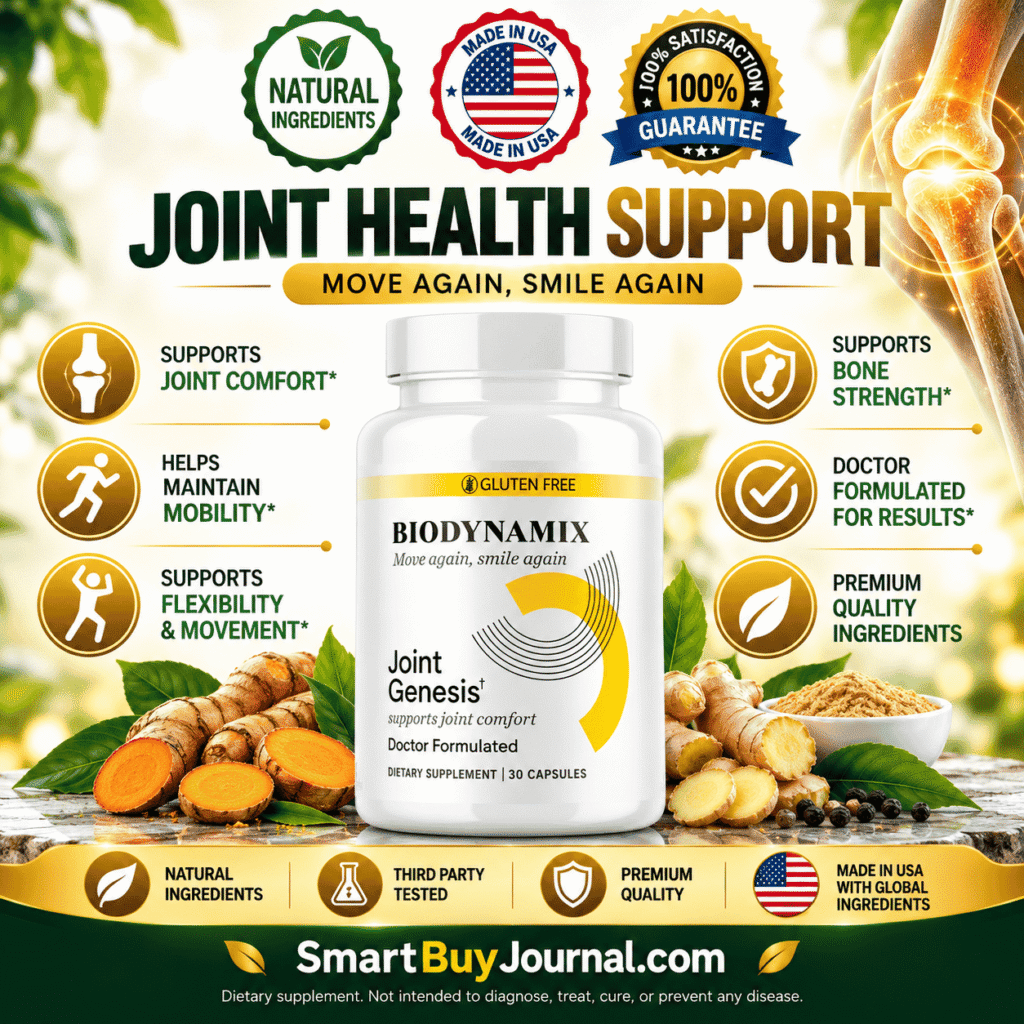
Joint Genesis is a two-capsule-per-day formula that combines several of the ingredients discussed above. According to our product page, it includes:
- Mobilee, a patented hyaluronic acid
- French maritime pine bark
- Ginger root extract
- Boswellia serrata extract
- BioPerine, a black pepper extract used to support absorption
In context, this is an interesting mix, because boswellia and pine bark are among the supplements for joint pain with limited supportive evidence. But our full analysis flags real limits. Per-ingredient amounts aren’t clearly disclosed. The manufacturer cites trials on individual ingredients, but no independent clinical trials test the finished capsule. The page also advises caution above age 70.
There’s one more detail to check. Mobilee is described as coming from rooster combs, so vegetarians and vegans should confirm with the manufacturer despite the “vegetarian capsule” wording.
Read the full breakdown, including pros, cons, and who should skip it, in our Joint Genesis review. You can also browse our other supplement reviews.
Habits That Matter More Than Pills
Supplements are the smallest piece of joint care. These habits usually matter more:
- Move regularly. Gentle, consistent activity keeps joints and the muscles around them working.
- Strengthen your muscles. Stronger legs and hips take pressure off the knees.
- Manage your weight. Extra weight increases load on weight-bearing joints.
- Ask about physical therapy. A therapist can tailor exercises to your joint.
- Pace yourself. Warm up, and avoid sudden jumps in activity.
If you’re building a routine, treat even the best supplements for joint health as a bonus on top of movement, not a substitute for it.
When to See a Healthcare Professional
Don’t wait on a supplement if you notice:
- Joint swelling, redness, or warmth
- Pain that wakes you at night or keeps getting worse
- Stiffness lasting more than an hour in the morning
- A joint that locks, gives way, or looks deformed
- Fever with joint pain
- Pain after an injury
These can point to inflammatory arthritis, infection, or structural damage that needs proper diagnosis. A clinician can also tell you whether the best supplements for joint health make sense for your situation or whether another treatment is better.
Frequently Asked Questions
What are the best supplements for joint health?
There’s no single best option. Commonly studied ingredients include glucosamine, chondroitin, collagen, curcumin, boswellia, and omega-3, but evidence varies and results are modest. The best supplements for joint health for you depend on your joint problem, your medications, and your doctor’s advice.
Do glucosamine and chondroitin really work?
Research is mixed. NCCIH says it’s still uncertain whether they meaningfully help osteoarthritis, and a major guideline recommends against glucosamine [1][3]. Some people report relief, so a short, monitored trial under medical guidance is reasonable.
Is collagen for joints worth trying?
Some meta-analyses report improved pain and function in knee osteoarthritis, but study quality and consistency are limited [4][5][7]. It may be worth discussing with your doctor if you want to try it.
Which supplements for joint pain are safest?
No supplement is risk-free. Glucosamine and chondroitin showed no major safety problems in large studies, but they can interact with warfarin [2]. Turmeric has rare liver-injury reports [8]. Always check interactions with a pharmacist.
Can supplements replace arthritis medication?
No. Supplements don’t treat arthritis, and you shouldn’t stop prescribed medicine without your doctor’s advice.
How long do joint health supplements take to work?
If they help, most people notice changes after several weeks. Set a defined trial period, track your symptoms, and stop if nothing improves.
Is Joint Genesis one of the best supplements for joint health?
It’s a reasonable formula to examine, but it hasn’t been independently tested as a finished product, and per-ingredient amounts aren’t clearly disclosed. See our Joint Genesis review for the full analysis.
Conclusion
The honest answer about the best supplements for joint health is that the evidence is modest and uneven. Glucosamine and chondroitin remain widely used but contested. Collagen, curcumin, and boswellia show some promise in smaller studies. Omega-3 is stronger for rheumatoid arthritis than osteoarthritis.
If you decide to try one, choose transparent labels, check interactions with your pharmacist, set a clear trial period, and stop if it doesn’t help. Keep moving, strengthen your muscles, and see a doctor for persistent or worsening symptoms.
Use this guide to ask better questions, not to chase a miracle. The best supplements for joint health work, if at all, as a small extra on top of good habits and good medical care.