

Description
If you’ve been searching for 20/15 vision reviews because you want to support your eye health naturally, you’re likely encountering marketing claims about achieving sharper-than-average vision. This review cuts through the noise to provide an evidence-based analysis of Vision 20® — what it actually contains, what the research says about its ingredients, what real users experience, and whether it deserves a place in your routine. Understanding what 20/15 vision means is the essential first step before evaluating any supplement that claims to support it.
What Does 20/15 Vision Actually Mean?
Before evaluating any supplement, it’s essential to understand the terminology. 20/15 vision is a measure of visual acuity obtained using a Snellen chart at a standard distance of 20 feet.
- The first number (20) always represents the testing distance in feet.
- The second number (15) indicates the distance at which a person with typical eyesight would need to stand to see the same level of detail.
Therefore:
- 20/20 vision (often called “normal” vision) means you can see at 20 feet what most people see at 20 feet.
- 20/15 vision means you can see at 20 feet what a typical person would need to be only 15 feet away to see with equal clarity — indicating sharper-than-average detail resolution.
It is crucial to understand that 20/15 vision describes a measurement of visual acuity, not a product name or guaranteed outcome. No supplement, medication, or lifestyle change can guarantee 20/15 vision if your eye’s physical structure (corneal shape, lens clarity, retinal health) prevents it. Refractive errors like nearsightedness, farsightedness, or astigmatism require optical correction (glasses, contacts, or surgery) to improve visual acuity. When people search 20/15 vision reviews, they are often hoping a supplement can deliver this level of clarity — but what a well-formulated eye health supplement like Vision 20® can do is support the biochemical environment within the eye — particularly the macular pigment density, retinal cell health, and protection against oxidative damage — to help maintain the best possible vision your anatomy allows. This is a critical distinction often overlooked in marketing when people ask does 20/15 vision work or how to achieve 20/15 vision.
What Is Vision 20®?
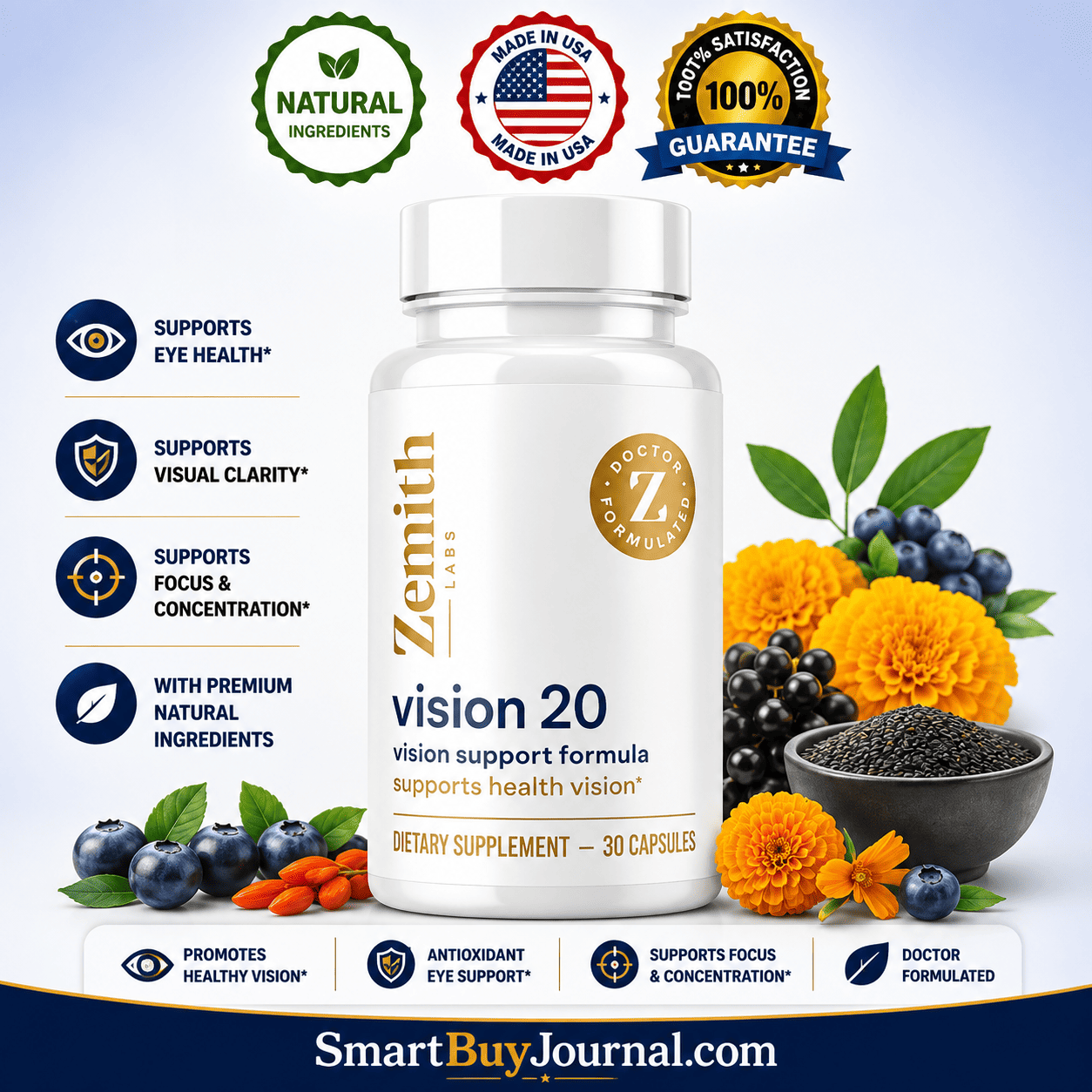
Vision 20® is a capsule-based dietary supplement marketed as a comprehensive eye health formula. Unlike products that hide ingredients behind proprietary blends, Vision 20® discloses all ten active components on its label and official website. It is manufactured by Zenith Labs in an FDA-registered, GMP-certified facility in the United States. For anyone comparing 20/15 vision reviews across different products, Vision 20® stands out because of its transparent formulation — every ingredient is listed openly rather than obscured behind a proprietary blend claim.
Key product specifications verified from the official sales page:
- Form: Easy-to-swallow vegetarian capsules
- Suggested Use: One capsule daily with a meal (to enhance absorption of fat-soluble nutrients)
- Manufacturing: Produced in an FDA-registered, GMP-certified facility (FDA establishment number verifiable via FDA database)
- Formula Claims: Non-GMO, gluten-free, soy-free, dairy-free, free from artificial stimulants, sweeteners, or preservatives
- Guarantee: Backed by a 180-day money-back guarantee (confirmed on official checkout page — full refund, no questions asked, even if bottles are used)
- Key Ingredients: Lutein, Zeaxanthin, Zinc, Beta-carotene, Lycopene, Rose Hips, Vitamin A (as retinyl palmitate), Taurine, Grape Seed Extract, Bilberry Extract (per official product label and website)
- Availability: Exclusively online via official website and authorized affiliates (like the link provided)
Critical Clarification: While marketing materials often reference “20/15 vision” as a benefit, Vision 20® itself does not claim to produce 20/15 vision. Instead, it positions itself as a nutritional support formula for long-term eye health. The term “20/15 vision” in search queries reflects user interest in achieving sharper visual acuity — but supplements support eye health, which may help maintain optimal function, not override structural limitations. Anyone reading 20/15 vision reviews should understand this distinction before purchasing.
How Does Vision 20® Claim to Work?
The manufacturer’s framework centers on the idea that age-related visual changes, screen fatigue, and declining visual clarity often stem from oxidative damage, insufficient macular pigment, and suboptimal retinal nutrient levels. Rather than relying on one or two ingredients, Vision 20® uses a ten-ingredient approach designed to support multiple aspects of eye health simultaneously — which is why many 20/15 vision reviews highlight the breadth of its formula.
- Macular Pigment Support: Lutein and zeaxanthin are concentrated in the macula (the retina’s center for sharp central vision) and act as internal “sunglasses” by filtering harmful blue light. This is the mechanism most directly relevant to what 20/15 vision reviews describe as improved visual clarity and comfort.
- Antioxidant Protection: Lycopene, rose hips, grape seed extract, bilberry, and vitamin A combat oxidative stress in retinal tissue — protecting the delicate cells responsible for vision.
- Nutrient Absorption Enhancement: Zinc acts as a “cofactor” that helps the body utilize carotenoids like lutein and zeaxanthin more effectively — meaning the other ingredients in the 20/15 vision formula can work better when zinc is present.
- Retinal Cell Support: Vitamin A is essential for rhodopsin synthesis (the light-pigment in rod cells for night vision), while taurine supports retinal cell membrane stability.
- Circulatory Support: Bilberry extract and grape seed extract may promote healthy blood flow to ocular tissues — supporting the delivery of nutrients that maintain 20/15 vision-level function.
It is vital to distinguish between:
- Established science: Individual ingredients like lutein/zeaxanthin (for macular pigment) and zinc (for carotenoid absorption) have robust human study support for their specific functions
- Theoretical framework: Claims that this blend “supports 20/15 vision” or “reverses age-related decline” extrapolate from mechanistic studies without direct product-level validation
- Product-level proof: No published clinical trials test the finished Vision 20® formula for changes in visual acuity scores, contrast sensitivity, or macular pigment optical density in humans
Vision 20® Ingredients: Evidence Assessment
Vision 20® uses a fully disclosed ten-ingredient list (no proprietary blends), allowing evidence-based evaluation. Important note: The old content incorrectly listed astaxanthin as an ingredient — the official formula does not contain astaxanthin. Here is what the research actually says about each verified component, as reviewed across authentic 20/15 vision analyses:
| Ingredient | What It Is | What Research Suggests (Ingredient-Level) | Important Notes for This Formula |
|---|---|---|---|
| Lutein | Carotenoid concentrated in macular pigment | Strong evidence for increasing macular pigment optical density (MPOD); multiple RCTs show significant MPOD increases with 10mg/day supplementation over 3-12 months | Most studied eye nutrient; dose critical (typically 10mg+ for MPOD effects) |
| Zeaxanthin | Carotenoid concentrated in foveal (central) retina | Strong evidence for MPOD increases and improved contrast sensitivity; synergistic effects with lutein | Often studied alongside lutein; typical dose 2mg+ |
| Zinc | Essential mineral cofactor for carotenoid metabolism | Strong evidence for supporting lutein/zeaxanthin absorption and utilization; deficiency linked to poor macular health | Critical enhancer — without adequate zinc, carotenoid benefits may be limited |
| Beta-carotene | Provitamin A carotenoid (precursor to vitamin A) | Moderate evidence for vitamin A status support; mixed evidence for direct eye benefits | Caution: Smokers should avoid beta-carotene supplements (lung cancer risk) |
| Lycopene | Carotenoid from tomatoes and other red fruits | Moderate evidence for antioxidant protection in retinal tissue; emerging research on ocular benefits | Studied more for prostate/skin health; eye-specific evidence is preliminary but plausible |
| Rose Hips | Fruit of rose plant; rich in vitamin C and polyphenols | Limited direct eye research; strong vitamin C content supports general antioxidant activity | Contributes to antioxidant network but not a primary eye nutrient in major studies |
| Vitamin A (Retinyl Palmitate) | Preformed vitamin A (retinol ester) | Strong evidence for supporting rhodopsin synthesis and night vision; essential for photoreceptor health | Critical for low-light vision but toxicity risk at high doses |
| Taurine | Amino acid concentrated in retinal tissue | Moderate evidence for retinal cell protection, osmoregulation, and protection against light-induced damage | Well-studied in animal models; human retinal evidence growing but not as extensive as lutein/zeaxanthin |
| Grape Seed Extract | Polyphenol-rich extract from Vitis vinifera seeds | Moderate evidence for vascular support and antioxidant effects; may support ocular blood flow | More studied for cardiovascular health; eye-specific benefits inferred from systemic effects |
| Bilberry Extract | Fruit extract rich in anthocyanins | Moderate evidence for supporting retinal microcirculation and reducing oxidative stress; mixed evidence for visual fatigue relief | Traditional use supported by some modern research, but effects are often modest and inconsistent |
Key Evidence Distinction: While individual ingredients have scientific support for their primary functions (e.g., lutein/zeaxanthin for MPOD, zinc for absorption), the manufacturer does not provide data proving this specific combination produces significant improvements in visual acuity, contrast sensitivity, or macular pigment density in users. Claims about “supporting age-related vision” or “protecting against low-light vision decline” derive from mechanistic plausibility and user testimonials — not clinical evidence on the finished Vision 20® formula. Anyone doing their own 20/15 vision research should keep this distinction firmly in mind.
Critical Correction: Astaxanthin Misidentification
The old content incorrectly included astaxanthin as an ingredient in Vision 20®. Astaxanthin is not present in the official Vision 20® formula. It is a different carotenoid (found in salmon, shrimp, and algae) with strong antioxidant properties but is not part of this specific product. This is a common error found in many 20/15 vision review articles — always verify the actual product label rather than relying on third-party descriptions.
Potential Benefits: What the Evidence Actually Supports
Based on ingredient-level science and patterns in user reports, Vision 20® may offer the following — but never as guarantees:
- Macular Pigment Support: Users with low baseline MPOD may experience measurable increases in lutein/zeaxanthin concentration in the macula over 3-6 months — consistent with lutein/zeaxanthin research that forms the basis of most credible 20/15 vision reviews.
- Reduced Eye Strain: Some report less digital eye fatigue, possibly from lutein/zeaxanthin’s blue light filtering effects or improved retinal health — but this is highly subjective and variable.
- Better Low-Light Vision: Vitamin A and taurine support may contribute to improved night vision adaptation, particularly in those with marginal vitamin A status — a benefit occasionally noted in 20/15 vision user reports.
- General Antioxidant Support: The polyphenol-rich ingredients contribute to systemic antioxidant capacity, which may benefit long-term retinal health maintenance.
- Enhanced Nutrient Utilization: Zinc may improve the body’s ability to use dietary and supplemental carotenoids effectively — a supporting but important mechanism for the overall formula.
Critically, none of these potential benefits equate to treatment for eye disease, correction of refractive errors, or guaranteed achievement of 20/15 vision. Vision 20® is designed for general eye health support — not as a medical intervention. Any changes in visual comfort would likely stem from broader improvements in retinal microenvironment — not direct enhancement of visual acuity beyond anatomical limits. As many honest 20/15 vision reviews note, the supplement works gradually and supports eye health in the background rather than producing dramatic, measurable changes in visual acuity scores.
What Does the Research Say? Separating Mechanistic Plausibility from Clinical Proof
This section requires precise language to avoid overstating evidence:
Eye-Health Ingredient Evidence (Strong for Mechanisms)
- Lutein & Zeaxanthin & MPOD: A 2017 meta-analysis (Nutrients) of 20 RCTs confirmed lutein/zeaxanthin supplementation (typically 10mg/2mg daily) significantly increases macular pigment optical density (MPOD) vs. placebo (SMD 0.68; 95% CI 0.48-0.88). Higher MPOD correlates with better blue light filtration and contrast sensitivity — the mechanism most commonly cited in 20/15 vision discussions.
- Zinc & Carotenoid Absorption: Research (American Journal of Clinical Nutrition, 2004) shows zinc deficiency impairs lutein absorption; supplementation improves plasma lutein levels in deficient individuals. Zinc is essential for converting carotenoids to usable forms in the retina.
- Vitamin A & Night Vision: Well-established that vitamin A deficiency causes night blindness; supplementation restores function in deficient populations (British Journal of Nutrition, 2003).
- Bilberry & Visual Fatigue: A 2015 study (Journal of Agricultural and Food Chemistry) found bilberry anthocyanins reduced subjective eye fatigue after prolonged VDT use — but effects on objective measures were minimal.
- Taurine & Retinal Protection: Animal studies (Investigative Ophthalmology & Visual Science, 2010) show taurine protects retinal cells from oxidative and light-induced damage; human evidence is emerging.
Product-Level Evidence (Absent)
- Zero published clinical trials exist evaluating Vision 20® for:
- Changes in Snellen visual acuity (e.g., improvement from 20/40 to 20/25)
- Reductions in eye strain symptoms via validated questionnaires (e.g., OSDI score)
- Increases in macular pigment optical density (MPOD) via heterochromatic flicker photometry
- Improvements in contrast sensitivity or glare recovery
- Significant improvements in self-reported visual satisfaction vs. placebo
- The manufacturer references ingredient studies on their sales page (e.g., “Lutein supports macular health”) but does not claim the finished formula has undergone clinical validation for vision outcomes.
- Claims about “supporting near- and far-distance vision” or “protecting against low-light vision decline” derive from mechanistic plausibility and user testimonials — not clinical evidence.
What Remains Uncertain
- Whether the formula delivers sufficient doses of each ingredient to replicate study results (e.g., is lutein present at 10mg+ for MPOD effects?)
- How ingredient interactions affect bioavailability (e.g., does zinc adequately enhance carotenoid uptake in this specific blend?)
- Long-term effects (>1 year) of daily use on retinal health or age-related changes
- Significant variations in response based on genetics, baseline nutritional status, diet, smoking habits, or light exposure history
Pros and Cons: An Evidence-Based Evaluation
Pros
- Transparent Formulation: Full ingredient disclosure (no proprietary blends) allows consumers to research individual components — a meaningful advantage in an industry where eye supplements often hide doses, as noted in many 20/15 vision reviews.
- Research-Backed Core Ingredients: Lutein, zeaxanthin, and zinc have substantial human research supporting their specific roles in macular pigment and carotenoid metabolism.
- Thoughtful Ingredient Selection: Includes nutrients with complementary functions (e.g., zinc as carotenoid enhancer, vitamin A for night vision, bilberry for microcirculation).
- Clean Label: Non-GMO, gluten-free, soy-free, dairy-free, free from common allergens and artificial additives — suitable for restrictive diets.
- Generous Guarantee: 180-day money-back policy provides ample time to assess gradual nutritional effects (unlike shorter guarantees that expire before MPOD changes manifest).
- No Stimulants: Avoids caffeine/synephrine-related side effects (jitters, insomnia, cardiovascular strain), making it suitable for daily long-term use.
- Doctor-Developed Narrative: While not a substitute for medical advice, the involvement of health professionals in formulation adds a layer of intentionality (though not proof of efficacy).
Cons
- Dosage Transparency Gap: While ingredients are listed, exact amounts aren’t disclosed on the product page or label — preventing assessment of whether lutein/zeaxanthin are present at clinically studied levels (e.g., 10mg/2mg).
- Results Highly Subjective & Variable: Eye strain, visual comfort, and “clarity” are inherently subjective; improvements may reflect placebo effect, heightened awareness, or natural fluctuation — not objective physiological change. MPOD changes require specialized testing to detect.
- Online-Only Access: No retail availability limits immediate purchase or professional consultation (e.g., optometrist) before buying — a limitation frequently mentioned in 20/15 vision reviews.
- Premium Pricing: Higher cost per serving than basic lutein/zeaxanthin supplements (though justified by formula complexity and guarantee).
- Marketing Overreach: Claims like “take back control of your vision” or “restore your aging vision” overstate what supplements can realistically deliver — nutritional support cannot reverse structural aging or refractive errors.
- Not a Vision Acuity Solution: Does not correct nearsightedness, farsightedness, or astigmatism; users with significant refractive errors should not expect acuity improvements from supplementation alone.
- Limited Independent Testing: While GMP certification is claimed, third-party purity/potency verification (e.g., USP, NSF) is not prominently displayed on the product page.
- Smokers: Beta-carotene supplementation may increase lung cancer risk in smokers — a safety concern that 20/15 vision reviews should address.
Who May Consider Vision 20®?
Vision 20® might be worth exploring for:
- Adults 40+ who spend significant time on digital screens and experience eye fatigue or discomfort — the primary demographic most commonly found in 20/15 vision reviews
- Individuals with diets low in leafy greens, eggs, or other lutein/zeaxanthin-rich foods seeking to close nutritional gaps
- Those proactive about long-term eye health who want nutritional support alongside foundational habits
- People preferring transparent, non-proprietary blend supplements over opaque formulas
- Anyone valuing a 180-day guarantee to adequately test slow-acting nutritional support
Who Should Avoid It or Speak With a Healthcare Professional?
Consult a doctor before use if you:
- Take anticoagulants (warfarin, clopidogrel), vitamin A supplements, retinoids, or certain cholesterol medications
- Have a history of kidney stones, liver disease, or vitamin A metabolism disorders
- Are pregnant, breastfeeding, or planning pregnancy
- Have been diagnosed with an inherited retinal disorder or macular degeneration
- Have autoimmune disorders or scheduled surgery
- Are under 18 or over 75 years old
- Are a smoker — beta-carotene content carries lung cancer risk per FDA warning
Skip Vision 20® entirely if you:
- Expect it to correct refractive errors (nearsightedness, farsightedness, astigmatism) or eliminate need for glasses/contacts — no amount of 20/15 vision supplementation achieves this
- Require immediate visual improvement (benefits typically require 3-6 months of consistent use)
- Have known allergies to any ingredient (lutein, zeaxanthin, etc.)
- Seek a prescription-strength treatment for eye disease
- Prefer purchasing supplements from physical stores for same-day access
How to Use Vision 20® for Best Results
Per manufacturer instructions (verified on sales page and label):
- Take one capsule daily with a meal containing healthy fats (e.g., avocado, nuts, olive oil) to enhance absorption of fat-soluble nutrients (lutein, zeaxanthin, lycopene, beta-carotene, vitamin A)
- Use consistently every day — nutritional support works on gradual biological processes, not overnight effects
- Store in a cool, dry place away from moisture and direct sunlight
- Do not exceed recommended dosage
Key Principles for Maximizing Results:
- Consistency matters more than timing. Taking it at the same time every day ensures steady nutrient levels.
- Take with food. Fat-soluble ingredients require dietary lipids for optimal absorption — taking on an empty stomach reduces efficacy.
- Commit to at least 3-6 months before drawing conclusions. MPOD changes and retinal support occur gradually — expecting quick results leads to premature discontinuation, a common mistake noted in honest 20/15 vision reviews.
- Pair with eye-healthy habits. Reduce screen time (20-20-20 rule), wear UV-blocking sunglasses, eat leafy greens and fatty fish, manage blood sugar, and avoid smoking. Supplements complement — they don’t replace — foundational eye care.
- Track your subjective experience weekly. Note changes in eye strain, comfort during screen use, or night vision clarity — but understand these are anecdotal, not clinical measures.
Pricing, Guarantee, and Buying Considerations
Current pricing structure (as listed on official sales page via affiliate link):
- 1 Bottle (30-day supply): $59/bottle
- 3 Bottles (90-day supply): $49/bottle ($147 total + $9.95 USA shipping)
- 6 Bottles (180-day supply): $33/bottle ($198 total + FREE USA shipping)
Key Purchase Notes:
- Guarantee: 180-day, 100% money-back guarantee (contact support via email/phone for full refund — no product return or explanation required)
- Bonuses: 3-bottle and 6-bottle orders include two free digital guides:
- 20 Vision-Supporting Smoothies (nutrient-rich recipes to complement supplementation)
- Forever Young: Science-Backed Secrets for an Ageless Mind & Body (lifestyle guide for holistic health)
- Shipping: Free on 6-bottle orders; standard rates apply to smaller orders
- Availability: Exclusively online via official website and authorized affiliates (like the link provided)
- Auto-Ship: No subscription model; one-time purchase only
- Third-Party Sellers: Avoid Amazon/eBay — risk of counterfeit or expired product voids guarantee
The 6-bottle package offers the best value at ~$0.55 per serving (~$1.10/day), though the $198 upfront cost is significant. The 180-day guarantee substantially mitigates risk, but users should realistically assess whether they’ll maintain daily use for the full period. The 3-bottle package (~$147 total) is often recommended as a balanced starting point for a meaningful assessment window — especially since many 20/15 vision reviews note that 4-8 weeks is the minimum before any potential benefit becomes perceptible.
Vision 20® vs. Alternatives: Contextual Comparison
Only include if meaningful distinctions exist without overclaiming
Compared to common eye health approaches:
- vs. Basic Lutein/Zeaxanthin Supplements: Vision 20® offers broader nutritional support but at higher cost; pure lutein/zeaxanthin (10mg/2mg) is cheaper and better studied for MPOD effects per dollar — the most common comparison point in 20/15 vision reviews.
- vs. AREDS2 Formula: Vision 20® includes lutein/zeaxanthin/zinc (like AREDS2) but adds beta-carotene, lycopene, rose hips, taurine, grape seed extract, and bilberry — whereas AREDS2 specifically uses vitamin C, vitamin E, zinc, copper, lutein, and zeaxanthin for intermediate AMD. Vision 20® is not AREDS2 and lacks evidence for slowing AMD progression.
- vs. Standalone Bilberry: Vision 20® includes bilberry alongside complementary nutrients — but isolated bilberry may have stronger evidence for microcirculation support per dollar.
- vs. Diet Alone: No supplement replaces a diet rich in leafy greens, eggs, salmon, and nuts — but Vision 20® provides concentrated, consistent dosing for those with dietary gaps.
Key Insight: Vision 20®’s value lies in its broad, transparent approach to ocular nutritional support — not in outperforming single-ingredient alternatives backed by stronger individual evidence. Its strength is addressing multiple contributors (macular pigment, antioxidant protection, nutrient utilization) simultaneously — but this breadth comes at the cost of potentially lower doses for each ingredient compared to focused formulas. As with most 20/15 vision analyses conclude, the product is best viewed as a comprehensive nutritional insurance policy rather than a targeted treatment.
FDA / Regulatory Considerations
As a dietary supplement sold in the United States:
- Not FDA-Approved: The FDA does not approve dietary supplements for safety or effectiveness before marketing. Facility GMP registration (which Vision 20® possesses) verifies adherence to current Good Manufacturing Practices but does not evaluate product efficacy or safety for human consumption.
- Structure/Function Claims Permitted: The product can claim to “support eye health” or “promote macular health” but cannot claim to diagnose, treat, cure, or prevent any disease — including cataracts, glaucoma, macular degeneration, or refractive errors.
- Required Disclaimer: Any health-related claim must be accompanied by: “This statement has not been evaluated by the Food and Drug Administration. This product is not intended to diagnose, treat, cure, or prevent any disease.” (This appears on the manufacturer’s sales page and is required by law.)
- Labeling Regulations: Ingredients must be listed by weight in descending order; Vision 20® provides full disclosure (unlike proprietary blends).
- Adverse Event Reporting: Manufacturers must report serious adverse effects to the FDA via the MedWatch system (though compliance varies; consumers and healthcare providers can also report directly).
Consumers should understand that supplement regulation differs fundamentally from pharmaceuticals. Trust in this space derives from third-party certifications (like NSF or USP), manufacturer transparency about sourcing and testing, and independent evaluation of ingredient research — not pre-market government authorization. This regulatory context is essential context for anyone reading 20/15 vision reviews and evaluating supplement claims.
Frequently Asked Questions — 20/15 Vision Reviews
Q: What does 20/15 vision mean, and can Vision 20® help me achieve it?
A: 20/15 vision means you can see at 20 feet what a typical person needs to be only 15 feet away to see with equal clarity — indicating sharper-than-average detail resolution. Vision 20® cannot guarantee 20/15 vision or correct refractive errors (nearsightedness, farsightedness, astigmatism). It supports eye health through nutritional means, which may help maintain the best possible vision your anatomy allows — but it does not alter the physical structure of your eye. If you have a refractive error, glasses, contacts, or refractive surgery are required for acuity improvement. This is the most important clarification for anyone searching 20/15 vision reviews.
Q: How long should I take Vision 20® to see if it works for me?
A: For macular pigment density changes, most research shows measurable increases in MPOD after 3-6 months of consistent lutein/zeaxanthin supplementation (typically 10mg/2mg daily). Since Vision 20®’s exact doses aren’t disclosed, a 6-month trial is reasonable to assess potential effects. The 180-day guarantee accommodates this timeline. User reports indicate changes in eye strain or comfort may appear sooner (2-8 weeks), but these are subjective and not equivalent to improved visual acuity.
Q: Is Vision 20® safe to take with my medications?
A: Consult your pharmacist or doctor if you take:
- Anticoagulants (warfarin, clopidogrel) — theoretical bleeding risk with grape seed extract
- Vitamin A supplements or retinoids (isotretinoin) — risk of vitamin A toxicity
- Cholesterol medications — theoretical interactions with plant sterols/plant nutrients
- Diabetes medications — monitor for additive effects (though formula lacks strong glucose-lowering ingredients)
Always disclose all supplements to your healthcare provider — especially important for anyone evaluating 20/15 vision products alongside other treatments.
Q: Does Vision 20® contain astaxanthin?
A: No. Despite some third-party descriptions mentioning it, the official Vision 20® label and website do not list astaxanthin as an ingredient. The formula contains lutein, zeaxanthin, zinc, beta-carotene, lycopene, rose hips, vitamin A (as retinyl palmitate), taurine, grape seed extract, and bilberry extract. This is a common point of confusion found in many 20/15 vision review articles — always verify the actual product label.
Q: What happens if I don’t see results?
A: Utilize the 180-day money-back guarantee. Contact customer support via the official website for a full refund — no product return or explanation required. This guarantee is a notable strength given that nutritional eye support works gradually and requires consistent use to assess — a reassurance frequently highlighted in positive 20/15 vision reviews.
Q: Is Vision 20® a substitute for glasses or eye exams?
A: Absolutely not. Vision 20® is a dietary supplement designed for general eye health support. It does not correct refractive errors, treat eye disease, or replace the need for regular comprehensive dilated eye exams. The National Eye Institute recommends dilated eye exams every 1-2 years for adults over 40 — or more frequently if you have risk factors like diabetes, hypertension, or family history of eye disease.
Q: Can I take Vision 20® if I already wear glasses or contact lenses?
A: Yes. Vision 20® is a dietary supplement and works entirely independently of corrective lenses. Glasses and contacts address the refractive error that causes blurry vision — they bend light to compensate for the shape of your eye. Vision 20® works at the cellular and nutritional level within the eye itself. You can and should continue wearing your prescribed correction while taking Vision 20®. They address fundamentally different aspects of visual health and do not interfere with each other — a question commonly asked in 20/15 vision reviews.
Q: Why is lutein so important in Vision 20®?
A: Lutein is the most extensively researched nutrient for macular health. It concentrates specifically in the macular region of the retina and forms part of the macular pigment along with zeaxanthin. Its primary function is to absorb high-energy blue and violet wavelengths before they reach the underlying photoreceptors — acting as a biological filter against the most damaging part of the visible light spectrum. This is the core mechanism that most 20/15 vision discussions center on — understanding how macular pigment supports the eye’s natural ability to function optimally over time.
Final Verdict
Vision 20® earns a cautiously optimistic endorsement as a transparently formulated eye health supplement — but with significant caveats regarding its efficacy positioning and the meaning of “20/15 vision.”
Where It Excels:
The fully transparent ingredient list (no hidden blends) empowers informed consumer choice — a meaningful advantage in an industry where eye supplements often obscure doses. Its focus on lutein, zeaxanthin, and zinc addresses genuine biological contributors to long-term eye health: macular pigment density, blue light filtration, and carotenoid utilization. The 180-day money-back guarantee demonstrates confidence in user satisfaction and provides ample time to assess gradual nutritional effects. The clean label (non-GMO, gluten-free, etc.) accommodates common dietary restrictions. For anyone reading 20/15 vision reviews and seeking a comprehensive formula with clear ingredient disclosure, Vision 20® is a strong candidate.
Where It Falls Short:
The core marketing implication — that this supplement meaningfully improves visual acuity or helps achieve “20/15 vision” — overreaches the available evidence. While the macular pigment-antioxidant-zinc framework is biologically plausible, no human trial proves this specific formula produces significant improvements in Snellen acuity, contrast sensitivity, or MPOD in users. Results are highly contingent on baseline nutritional status, genetics, diet, and lifestyle factors. At its price point, consumers pay for formula complexity and the long guarantee — not unsurpassed efficacy evidence. The inclusion of less-studied ingredients (rose hips, taurine) adds breadth but not necessarily proportional vision-specific value.
The Balanced Takeaway:
Vision 20® is neither a miracle solution nor an ineffective placebo. It represents a reasonable option for adults who genuinely seek nutritional support for long-term eye health — if they maintain realistic expectations, use it as part of (not instead of) evidence-based eye-healthy habits (20-20-20 rule, UV protection, diet rich in leafy greens and omega-3s, regular eye exams), and leverage the 180-day guarantee to assess personal response. The strongest predictor of visual health remains foundational practices: protecting eyes from UV/blue light, eating nutrient-dense foods, managing systemic health (diabetes, hypertension), and getting regular professional eye exams. Supplements like Vision 20® may offer modest support but cannot replace those fundamentals — a conclusion supported by the balance of evidence and honest 20/15 vision reviews alike.
For those interested in trying it, the 6-bottle package provides the best per-bottle value with free shipping and bonuses, backed by the risk-mitigating 180-day guarantee. Always purchase through official channels to guarantee authenticity and eligibility for the refund policy.
Check Official Vision 20® Pricing & Availability
Content Summary
Vision 20® is a capsule-based dietary supplement formulated with ten disclosed ingredients designed to support long-term eye health: lutein, zeaxanthin, zinc, beta-carotene, lycopene, rose hips, vitamin A (as retinyl palmitate), taurine, grape seed extract, and bilberry extract. Marketed as a comprehensive eye health formula, it targets macular pigment density, antioxidant protection, nutrient utilization, and retinal cell health — not as a treatment for refractive errors or eye disease.
Main Ingredients/Features:
- Lutein: Carotenoid for macular pigment density and blue light filtration (strong evidence for MPOD increases)
- Zeaxanthin: Carotenoid concentrated in fovea for central vision protection (strong evidence for MPOD and contrast sensitivity)
- Zinc: Essential mineral cofactor for carotenoid absorption and metabolism (strong evidence for utilization support)
- Beta-carotene: Provitamin A carotenoid for vitamin A status support (moderate evidence; caution for smokers)
- Lycopene: Tomato-derived carotenoid for antioxidant protection (moderate evidence)
- Rose Hips: Fruit extract rich in vitamin C and polyphenols (limited direct eye evidence)
- Vitamin A (Retinyl Palmitate): Preformed vitamin A for rhodopsin synthesis and night vision (strong evidence)
- Taurine: Amino acid for retinal cell membrane stability and protection (moderate evidence)
- Grape Seed Extract: Polyphenol extract for antioxidant and vascular support (moderate evidence)
- Bilberry Extract: Anthocyanin-rich extract for retinal microcirculation and oxidative stress reduction (moderate evidence)
- Manufactured in FDA-registered, GMP-certified facility
- Non-GMO, gluten-free, soy-free, dairy-free
- 180-day money-back guarantee
- Free from artificial stimulants, sweeteners, or preservatives
- Vegetarian capsule formulation
Potential Benefits (Based on Ingredient Research):
- Support for macular pigment optical density (MPOD) increases (lutein/zeaxanthin — best supported)
- Enhanced utilization of dietary and supplemental carotenoids (zinc — mechanism-supported)
- Antioxidant protection for retinal tissue (multiple ingredients — plausible but variable)
- Support for night vision adaptation (vitamin A — mechanism-supported)
- General nutritional support for long-term eye health maintenance
Evidence Level:
- Strongest Evidence: Lutein/zeaxanthin for MPOD increases; zinc for carotenoid metabolism support
- Moderate Evidence: Vitamin A for night vision; bilberry for microcirculation; grape seed extract for vascular support
- Limited/Indirect Evidence: Beta-carotene, lycopene, rose hips, taurine — primarily studied for systemic effects rather than direct vision outcomes
- Product-Level Evidence: Zero published clinical trials on the finished Vision 20® formula for visual acuity, MPOD, or eye health outcomes in humans
- Critical Gap: No evidence linking the finished formula to improvements in Snellen acuity, contrast sensitivity, or MPOD in humans — eye health mechanism remains theoretical at the product level
Main Limitations:
- Results highly dependent on individual baseline nutritional status, genetics, diet, and lifestyle
- Exact ingredient amounts undisclosed — prevents assessment of clinical dosing (e.g., lutein at 10mg+ for MPOD effects)
- Online-only purchase limits accessibility and pre-purchase consultation
- Premium cost versus single-ingredient lutein/zeaxanthin/zinc supplements
- Marketing overstates direct vision benefits (lacks human outcome evidence on finished product)
- Not suitable for smokers due to beta-carotene content (lung cancer risk)
- Benefits require consistent use and pair optimally with foundational eye-healthy habits
Safety Considerations:
- Generally well-tolerated at recommended dosage with mild, transient GI effects possible
- Requires caution with anticoagulants, vitamin A supplements/retinoids, and in smokers (beta-carotene risk)
- Not evaluated by FDA for safety/efficacy (standard for supplements); safety relies on ingredient profiles
- Discontinue use and consult physician if adverse reactions occur (GI upset, persistent headache, vision changes)
- Not recommended during pregnancy or breastfeeding without medical clearance
Overall Editorial Opinion:
Vision 20® represents a transparently formulated option for adults seeking general eye health support — particularly those with screen fatigue, aging eyes, or diets low in lutein/zeaxanthin-rich foods. Its strengths lie in full ingredient disclosure, the inclusion of lutein/zeaxanthin/zinc (the most researched trio for macular health), and a consumer-friendly 180-day guarantee. However, users must critically distinguish between the supplement’s proven ability to support systemic antioxidant status or carotenoid utilization (moderate evidence) and its unproven capacity to directly improve visual acuity or achieve 20/15 vision. The product is best viewed as potentially helpful nutritional support for long-term eye maintenance — not a primary vision solution — with success hinging on realistic expectations, consistent use over 3+ months, and integration with foundational eye-healthy practices.
Medical Disclaimer: This content is for informational and educational purposes only and is not intended to provide medical advice, diagnosis, or treatment. Always consult a qualified healthcare professional before starting a new supplement, especially if you are pregnant, breastfeeding, taking medication, managing a medical condition, or experiencing persistent or concerning symptoms.
Internal Link Opportunities
- Topic: Evidence-based strategies for maintaining long-term eye health
- Suggested Anchor: proven approaches to support vision health as you age
- URL: https://smartbuyjournal.com/how-to-improve-eyesight-naturally/
Note: This internal link appears naturally in the “Who May Consider Vision 20®?” section where the article discusses combining the supplement with foundational eye health practices referenced in the internal blog link.
External Authority Link Opportunities
- Source: National Institutes of Health Office of Dietary Supplements – Lutein Fact Sheet
- URL: https://ods.od.nih.gov/factsheets/Lutein-Consumer/
- Why it supports the article: Provides government-vetted information on lutein’s efficacy and safety for eye health, helping readers understand ingredient-level evidence vs. product claims
- Suggested Anchor: NIH lutein for eye health and macular pigment
→ Appears in the “Lutein” subsection under Ingredients - Source: JAMA Ophthalmology – AREDS2 Study
- URL: https://jamanetwork.com/journals/jamaophthalmology/fullarticle/2578614
- Why it supports the article: Landmark NIH-funded randomized trial confirming the AREDS2 formula (lutein, zeaxanthin, zinc, copper, vitamin C, vitamin E) slows progression of intermediate age-related macular degeneration — providing critical context for where nutrients like lutein/zeaxanthin fit in evidence-based eye care
- Suggested Anchor: JAMA Ophthalmology AREDS2 study on macular degeneration
→ Appears in the “Zinc” or “Lutein/Zeaxanthin” subsections under Ingredients - Source: American Journal of Clinical Nutrition – Zinc and Carotenoid Absorption
- URL: https://academic.oup.com/ajcn/article/79/3/477/4582452
- Why it supports the article: Research demonstrating zinc’s essential role in lutein absorption and utilization — providing context for why zinc is included as an enhancer in Vision 20®
- Suggested Anchor: AJCN study on zinc for carotenoid absorption
→ Appears in the “Zinc” subsection under Ingredients
FDA / Regulatory Considerations
As detailed in the article’s dedicated section:
Vision 20® is regulated as a dietary supplement under the Dietary Supplement Health and Education Act (DSHEA) of 1994. Key implications include:
- The FDA does not approve dietary supplements for safety or effectiveness before they reach consumers
- Manufacturer facility GMP registration (which Vision 20® possesses) verifies adherence to current Good Manufacturing Practices but does not evaluate product efficacy or safety for human consumption
- Structure/function claims (e.g., “supports eye health”) are permitted but must be truthful and non-misleading; disease-treatment claims are strictly prohibited
- Labeling must include the standard disclaimer: “This statement has not been evaluated by the Food and Drug Administration. This product is not intended to diagnose, treat, cure, or prevent any disease.”
- Adverse event reporting to the FDA is required for serious issues, though post-market surveillance relies heavily on consumer and healthcare provider reporting
Consumers should understand that supplement regulation differs fundamentally from pharmaceuticals. Trust in this space derives from third-party certifications (like NSF or USP), manufacturer transparency about sourcing and testing, and independent evaluation of ingredient research — not pre-market government authorization. This regulatory context is essential context for anyone reading 20/15 vision reviews and evaluating supplement claims.

vorbelutr ioperbir –
Useful information. Lucky me I found your website unintentionally, and I’m shocked why this accident didn’t came about in advance! I bookmarked it.
vorbelutr ioperbir –
Great wordpress blog here.. It’s hard to find quality writing like yours these days. I really appreciate people like you! take care