

Bloating after lunch. Irregular mornings. A grocery cart full of “gut-friendly” labels that all seem to say something different. If you’re wondering what to actually eat, you’re in the right place.
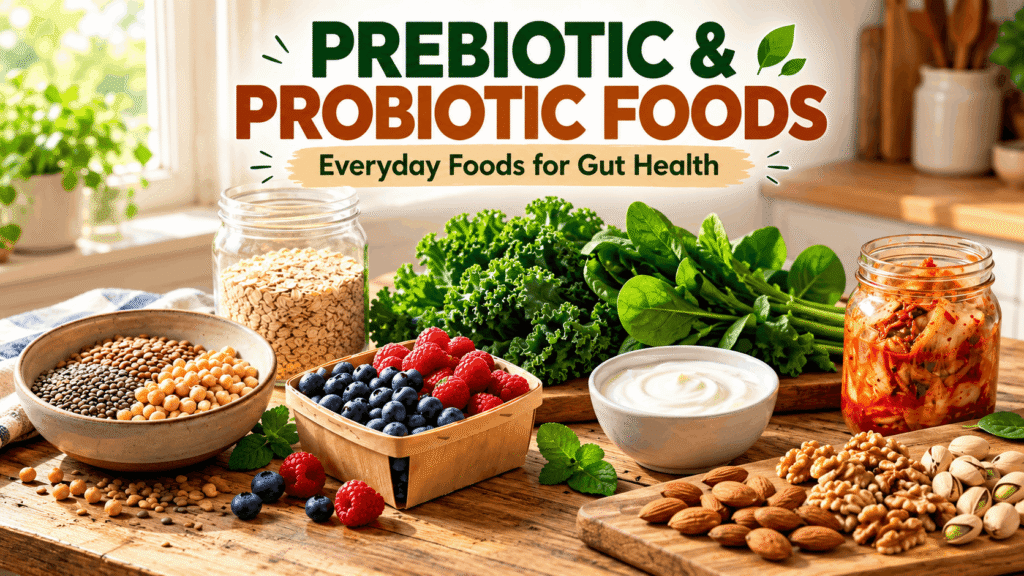
Here’s the plain answer. The best foods for gut health are mostly everyday plants, like beans, oats, vegetables, fruit, and nuts, plus a few fermented foods such as yogurt with live cultures or kimchi.
This guide explains how each food group supports digestion, what research really shows, and how to add these foods without discomfort. It also covers food tolerances and when to see a doctor. Think of it as a practical shopping list for the best foods for gut health, minus the hype.
Affiliate disclosure: SmartBuyJournal.com participates in affiliate programs. We may earn a commission if you buy through links on this site, at no extra cost to you. This never changes our conclusions.
Medical disclaimer: This article is for education only and is not medical advice. No food or supplement cures digestive disorders. Talk to your doctor or a registered dietitian before major diet changes, especially if you have a digestive condition, take medication, or are pregnant.
The Best Foods for Gut Health at a Glance
| Food group | Examples | Why it helps | Watch for |
|---|---|---|---|
| Legumes | Beans, lentils, chickpeas | High in fiber and prebiotic-type carbohydrates | Gas if you add them too fast |
| Whole grains | Oats, barley, brown rice | Fiber that feeds gut microbes | Wheat sensitivity in some people |
| Vegetables | Onions, garlic, leeks, asparagus, leafy greens | Fiber plus prebiotic compounds | Some trigger gas in sensitive guts |
| Fruit | Berries, apples, pears, bananas | Fiber and natural plant compounds | Large servings can loosen stools |
| Nuts and seeds | Chia, flax, almonds | Fiber and healthy fats | Calorie-dense |
| Fermented foods | Yogurt, kefir, kimchi, sauerkraut | Add live microbes | Sodium, added sugar |
No single food does everything. Variety matters more than any one “superfood.” That’s the core idea behind the best foods for gut health.
How Food Shapes Your Gut Microbiome
Your gut microbiome is the community of bacteria, fungi, and other microbes living in your digestive tract, mostly in the colon. What you eat is one of the main things you can change.
Harvard Health reports that a healthy diet low in processed foods is key to a healthy gut microbiome, and that fiber and fermented foods appear to play important roles [1]. Researchers are still learning exactly how. So the benefits are best described as supportive, not curative.
In short, fiber feeds the microbes you already have, and fermented foods may add live ones. That’s why the best foods for gut health fall into those two camps.
Realistic Benefits: What the Best Foods for Gut Health Can and Can’t Do
Let’s set honest expectations.
What the evidence supports:
- Fiber-rich eating supports regular bowel movements and fullness.
- A large Lancet analysis of studies on carbohydrate quality found that people eating more fiber and whole grains had lower risks of heart disease, type 2 diabetes, and colorectal cancer. The greatest benefit appeared at 25 to 29 grams of fiber a day [2]. That’s a whole-body benefit, not just a gut one.
- In one small Stanford trial, a fermented-food diet increased microbiome diversity and lowered inflammatory markers [3].
What it can’t do:
- Cure irritable bowel syndrome, Crohn’s disease, ulcerative colitis, or any digestive disease
- Replace medical care or prescribed treatment
- Work overnight, since changes take weeks
The best foods for gut health improve the odds, not the guarantees.
High Fiber Foods: The Foundation of Gut-Friendly Eating
Fiber is the nutrient most people lack. The adequate intake is 14 grams per 1,000 calories, or about 25 grams a day for women and 38 grams for men aged 19 to 50 [4]. According to USDA, the average U.S. diet in 2017 to 2018 contained 8.1 grams per 1,000 calories, about 58 percent of the recommended amount [5].
You don’t need to count every gram. Harvard’s Eric Rimm suggests focusing on adding more servings of fiber-rich foods instead of tracking daily totals [1].
Legumes: Beans, Lentils, and Chickpeas
Legumes are among the most fiber-dense foods you can buy, and they’re cheap. Add them to soups, salads, and grain bowls.
They also contain complex sugars called oligosaccharides, which can cause gas as they pass through the digestive system [6]. Start with small portions, such as a few tablespoons, and build up.
Whole Grains: Oats, Barley, and Brown Rice
Whole grains keep the fiber-rich bran and germ. The Lancet analysis linked higher whole-grain intake with lower risks of several chronic diseases [2]. Oats, barley, brown rice, and whole-wheat bread are easy swaps for refined versions.
Vegetables and Fruit
Aim for color and variety. Onions, garlic, leeks, asparagus, broccoli, leafy greens, berries, apples, pears, and bananas all add fiber and plant compounds.
Nuts and Seeds
A spoonful of chia, ground flax, or a handful of almonds adds fiber and healthy fats. Keep portions reasonable, since they’re calorie-dense.
If you eat fiber-rich plants most days, you’re already close to the best foods for gut health.
Prebiotic Foods: Feeding the Microbes You Already Have
Prebiotics are substrates that your gut microbes selectively use to produce a health benefit [7]. ISAPP notes they’re distinct from fiber: many prebiotics are fibers, but not every fiber is a prebiotic [7].
Commonly cited prebiotic foods include:
- Garlic, onions, and leeks
- Asparagus
- Chicory root and Jerusalem artichokes
- Slightly underripe bananas
- Oats and barley
- Beans, lentils, and chickpeas
You don’t need special products. Many of the best foods for gut health double as prebiotic foods. For definitions and the difference between the two terms, see our guide on probiotics vs prebiotics.
Fermented Foods for Gut Health: What the Evidence Shows
Fermented foods are made through microbial growth. Common options include:
- Yogurt with “live and active cultures”
- Kefir
- Sauerkraut and kimchi (unpasteurized)
- Miso and tempeh
- Kombucha
Fermented Doesn’t Always Mean Probiotic
ISAPP notes that fermented foods aren’t automatically probiotics. A food only qualifies as a probiotic when the microbes are identified and have proven benefits [8]. Pasteurizing or baking kills live microbes, so check the label.
What One Randomized Trial Found
In a Stanford study published in Cell, 36 healthy adults followed either a high-fiber diet or a high-fermented-food diet for 10 weeks. The fermented-food group showed increased microbiome diversity and lower levels of 19 inflammatory markers. In the high-fiber group, diversity stayed stable on average [3].
It’s an interesting result, but it was small, short, and in healthy people. It doesn’t show fermented foods treat disease. Fermented foods earn a spot among the best foods for gut health, but with limits: some are high in sodium, and flavored yogurts and kombucha can be high in added sugar.
Foods That May Work Against Your Gut
You don’t need to fear food, but a few patterns are worth watching. Harvard Health points to a diet low in processed foods as a priority for the microbiome [1].
Foods and habits to limit:
- Ultra-processed snacks and refined grains
- Sugary drinks and heavy added sugar
- Very low-fiber meals most days
- Carbonated drinks, if bloating is a problem [6]
Research on specific additives and alcohol is still developing, so I won’t make claims beyond the general advice above.
How to Add the Best Foods for Gut Health Without Bloating
Going from low fiber to high fiber overnight is the most common mistake.
MedlinePlus advises increasing fiber slowly. If you develop bloating or gas, you’ve probably eaten too much, so cut back for a few days. It also says to drink plenty of fluids, because too little can make constipation worse [9].
Here’s a gentle approach:
- Add one new high-fiber food a day for a week. Mayo Clinic’s patient guidance suggests exactly this, then repeating until you hit your goal [10].
- Spread fiber across meals instead of loading it into one.
- Drink fluids through the day. Mayo suggests at least eight 8-ounce glasses [10].
- Choose whole foods first. MedlinePlus notes fiber supplements and foods with added fiber often don’t deliver the same benefits and may worsen bloating and gas [9].
- Be careful with added inulin. Mayo notes some people get bloating, cramping, or loose stools from foods that use inulin as added fiber [10].
- Pause and step back if symptoms flare, then try again more slowly.
Following these steps makes the best foods for gut health much easier to tolerate.
Food Tolerances: When “Healthy” Foods Cause Trouble
Some people react to foods that are healthy for others. That doesn’t mean they’re doing something wrong.
Common Triggers
- Beans and lentils: natural sugars that cause gas [6]
- Onions and garlic: high in fermentable carbohydrates
- Carbonated drinks: add excess air [6]
- Dairy: a problem for people with lactose intolerance
- Wheat: a problem for people with celiac disease or sensitivity
If You Have IBS
The American College of Gastroenterology guideline suggests a limited trial of a low FODMAP diet for IBS to improve global symptoms. It’s a conditional recommendation based on low-quality evidence [11]. The diet has three phases (restriction, reintroduction, and personalization) and is best done with a dietitian [12]. It’s not meant to be permanent.
Don’t cut out whole food groups on your own. A Canadian IBS guideline suggests a trial of low FODMAP eating but does not suggest a gluten-free diet for IBS [13]. If you suspect celiac disease, get tested before you stop eating gluten.
Even if you’re sensitive, the best foods for gut health can often be adjusted rather than dropped.
Your Gut-Friendly Grocery List: 10 of the Best Foods for Gut Health
Here’s a simple shopping list.
- Beans or lentils for fiber and protein
- Oats for a soluble-fiber breakfast
- Berries for fiber and plant compounds
- Leafy greens or broccoli for vegetable variety
- Onions and garlic for prebiotic-type fibers
- Bananas (some slightly underripe)
- Chia or ground flax seeds for fiber and fats
- Barley or brown rice for whole grains
- Yogurt or kefir with live cultures (unsweetened when possible)
- Kimchi or sauerkraut from the refrigerated section
A Simple Week of the Best Foods for Gut Health
You don’t need a strict meal plan. Try this weekly checklist:
- Monday: Oats with berries and chia for breakfast
- Tuesday: Lentil soup with a side salad
- Wednesday: Yogurt with sliced banana and nuts
- Thursday: Stir-fry with onions, garlic, broccoli, and brown rice
- Friday: Bean and veggie tacos on whole-grain tortillas
- Saturday: Barley bowl with roasted vegetables and a spoonful of kimchi
- Sunday: Kefir smoothie with spinach and berries
Swap items freely. The point is steady variety, which is the real secret behind the best foods for gut health.
For lifestyle habits like sleep, stress, and movement, see our guide on how to improve gut health.
Do You Need Supplements?
Not for most people. Food comes first, and MedlinePlus notes whole foods tend to deliver more benefit than fiber supplements [9].
Some people still choose a probiotic or prebiotic product. If that’s you, read labels carefully and talk to your doctor first. You can compare products in our best gut health supplements roundup, or read our PrimeBiome review for a close look at one gummy and what we could and couldn’t verify.
A supplement can’t make up for a diet short on the best foods for gut health.
When to Talk to a Doctor
Food changes are not a substitute for medical care. See a healthcare professional if you have:
- Blood in your stool, or black, tarry stools
- Unexplained weight loss
- Persistent or severe abdominal pain
- Diarrhea or constipation that lasts more than a few weeks
- Fever with digestive symptoms
- Trouble swallowing or repeated vomiting
- A family history of celiac disease, IBD, or colon cancer with new symptoms
These can signal conditions that diet won’t solve. The ACG guideline, for example, suggests checking fecal calprotectin in people with suspected IBS and diarrhea to rule out inflammatory bowel disease [11]. A clinician can tell you what’s actually going on, and whether the best foods for gut health are enough or need support.
Frequently Asked Questions
What are the best foods for gut health?
High fiber foods like beans, lentils, oats, vegetables, fruit, and nuts, plus fermented foods such as yogurt with live cultures, kefir, and kimchi. The best foods for gut health work through variety, not any single item.
How much fiber do I need each day?
The adequate intake is about 25 grams for women and 38 grams for men aged 19 to 50 [4]. A large Lancet analysis found the greatest benefit at 25 to 29 grams a day [2]. Increase gradually.
Are fermented foods better than probiotic supplements?
They’re different. Fermented foods offer live microbes plus nutrients, but not all contain strains with proven benefits [8]. Supplements deliver specific strains, and evidence varies by strain. Food is a good first step.
Why do high fiber foods make me bloated?
Fiber ferments in your gut and can produce gas, especially if you increase it too quickly or don’t drink enough fluids [9]. Add foods slowly, and pause if symptoms flare.
Can the best foods for gut health fix IBS or Crohn’s disease?
No. Food can help manage symptoms for some people, but it doesn’t cure these conditions. Talk to your gastroenterologist or dietitian about a plan.
How long does it take to see a change in digestion?
It varies. Some people notice changes in stool and comfort within days to weeks. Microbiome shifts take longer, and results differ from person to person.
Is yogurt good for gut health?
Yogurt with live and active cultures can be a useful food, but not all yogurts are equal. Choose unsweetened varieties when you can, and check that the label mentions live cultures.
Conclusion
The best foods for gut health aren’t exotic. They’re beans, oats, whole grains, vegetables, fruit, nuts, and seeds, plus a few fermented foods like yogurt, kefir, or kimchi. Fiber feeds your microbes, and fermented foods may add live ones.
Add them gradually, drink enough fluids, and pay attention to your own tolerances. If you have persistent symptoms or a diagnosed digestive condition, work with a doctor or dietitian instead of guessing.
Start with one change this week. Add one fiber-rich food to a meal, or swap a refined grain for a whole one. Small, steady habits are what make the best foods for gut health work over time.