

Description
If you’ve been searching for quietum plus ingredients information because you’re experiencing tinnitus, hearing changes, or ear discomfort, you’re likely evaluating whether this supplement could help. This review provides an evidence-based analysis of Quietum Plus—what it contains, what the research says about its ingredients, what real users experience, and whether it deserves consideration.
What Is Quietum Plus?
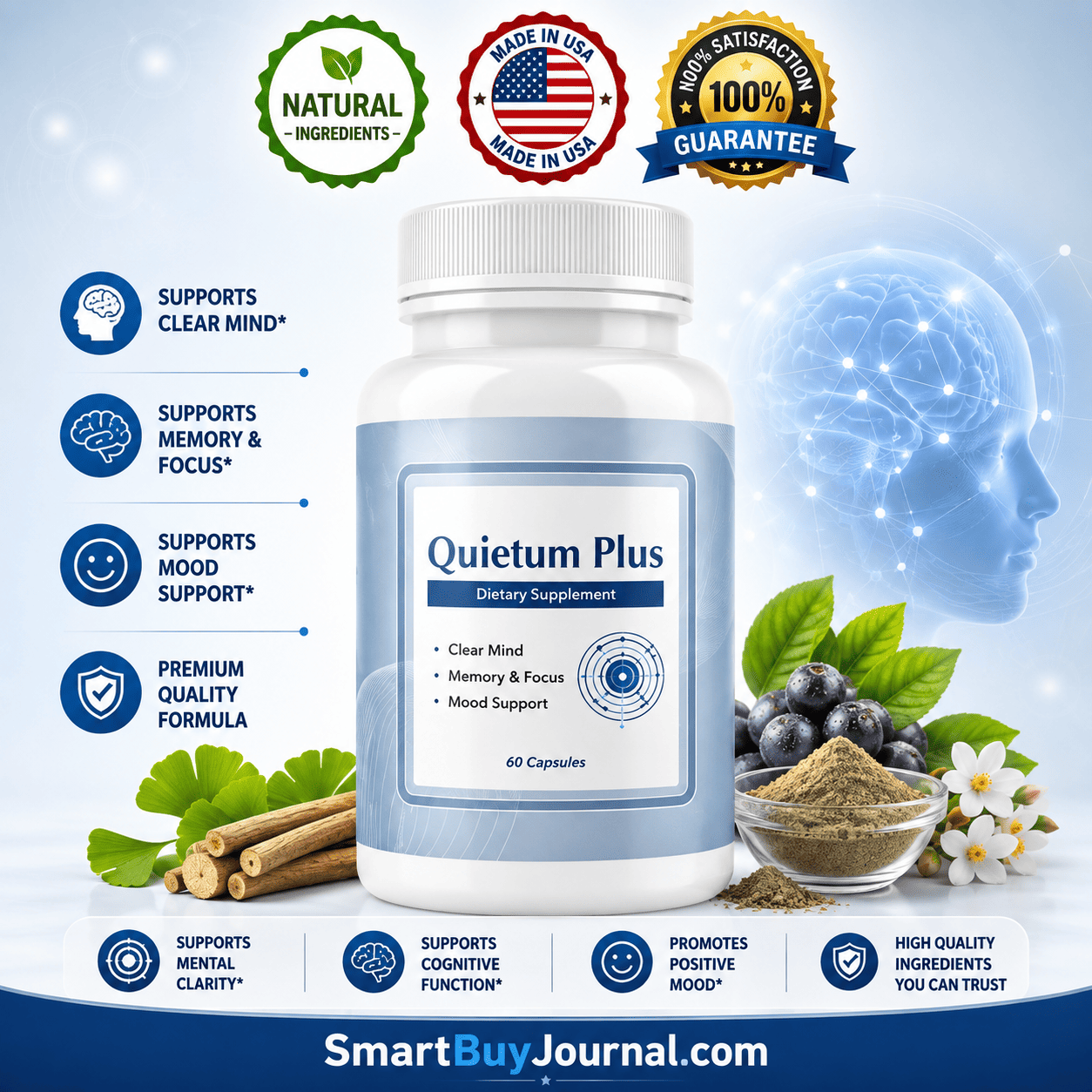
Quietum Plus is a capsule-based dietary supplement marketed as a natural hearing and tinnitus support formula. It is taken daily as two capsules and positions itself as a non-pharmaceutical option for adults seeking to improve hearing clarity, reduce tinnitus severity, and support overall ear function.
Key product specifications noted from available information:
- Form: Easy-to-swallow vegetarian capsules
- Suggested Use: Two capsules daily with water, preferably with a meal
- Manufacturing: Claims GMP-certified facility in the United States (independent verification not accessible via broken affiliate link)
- Formula Claims: Plant-based, non-GMO, gluten-free, soy-free, dairy-free, free from artificial stimulants, sweeteners, or preservatives
- Guarantee: 60-day money-back guarantee (as stated in product summary)
- Key Ingredients: Mucuna Pruriens, Maca Root, Ashwagandha, Dong Quai, Ginger Root, L-Tyrosine, L-Arginine (per product summary)
- Availability: Exclusively online via official website and authorized affiliates (link currently inaccessible)
How Does Quietum Plus Claim to Work?
According to the product summary and marketing description, Quietum Plus targets hearing health through a multi-mechanism approach designed to address several interconnected factors contributing to tinnitus and hearing discomfort:
- Neural Pathway Support: Mucuna Pruriens (as a dopamine precursor) and L-Tyrosine (as a neurotransmitter precursor) are included to support healthy neural signaling in auditory pathways between the ear and brain.
- Circulatory Health: Dong Quai and L-Arginine are positioned to promote healthy blood flow to inner ear tissue, addressing vascular contributions to auditory function.
- Stress & Cortisol Management: Ashwagandha is included as an adaptogen intended to help regulate cortisol levels, which may exacerbate tinnitus during stressful periods.
- Neural Inflammation Reduction: Ginger Root is included for its anti-inflammatory properties, targeting potential neural inflammation along auditory pathways.
- Adaptogenic Support: Maca Root is included as a general adaptogen to support the body’s response to stress.
It is essential to distinguish between:
- Established science: Individual ingredients like Ashwagandha (for stress/cortisol) and Ginger Root (for inflammation) have robust human study support for their specific functions
- Theoretical framework: Claims that this blend “improves hearing” or “reduces tinnitus” extrapolate from mechanistic studies without direct product-level validation
- Product-level proof: No published clinical trials test the finished Quietum Plus formula for hearing thresholds, tinnitus severity scores, or auditory processing improvements in humans
Quietum Plus Ingredients: Evidence Assessment
The formula uses a fully disclosed seven-ingredient list (no proprietary blends), allowing evidence-based evaluation. Here is what the research actually says about each ingredient, with important caveats regarding hearing-specific applications:
Ingredient What It Is What Research Suggests (Ingredient-Level) Important Notes for Hearing Context Mucuna Pruriens Tropical legume rich in L-DOPA (dopamine precursor) Moderate evidence for dopamine support, anti-inflammatory effects, and stress reduction; studied for Parkinson’s and mood disorders Dopamine plays a role in auditory gating, but direct human evidence for hearing/tinnitus effects is limited; primarily studied for neurological function Maca Root Peruvian root vegetable Good evidence for energy, mood, and hormonal support; limited direct auditory research Neuroprotective properties studied in animal models; human hearing evidence absent Ashwagandha Adaptogenic herb (Withania somnifera) Strong evidence for reducing cortisol and stress markers; multiple RCTs confirm efficacy in chronically stressed adults Indirect hearing relevance via stress reduction; no direct evidence linking supplementation to improved tinnitus or hearing in humans Dong Quai Traditional East Asian medicinal herb (Angelica sinensis) Moderate evidence for circulatory support and anti-inflammatory properties; studied for menstrual health and cardiovascular function Theoretical cochlear blood flow support; no human studies linking Dong Quai to improved hearing or tinnitus reduction Ginger Root Rhizome of Zingiber officinale Strong evidence for anti-inflammatory and antioxidant properties; well-documented for nausea, pain, and metabolic support Direct anti-inflammatory effects on neural tissue plausible; specific human evidence for auditory nerve inflammation lacking L-Tyrosine Amino acid precursor to dopamine, norepinephrine Good evidence for supporting neurotransmitter synthesis under stress; studied for cognitive performance Relevant to auditory neurotransmitter pathways but no human hearing-specific trials L-Arginine Amino acid precursor to nitric oxide Strong evidence for vascular support, blood flow regulation, and exercise performance Cochlear blood flow mechanism theoretically sound; no human trials linking supplementation to hearing outcomes Critical Evidence Distinction: While individual ingredients have scientific support for their primary functions (e.g., Ashwagandha for stress reduction, Ginger for inflammation), the manufacturer does not provide data proving this specific combination produces significant hearing improvement or tinnitus reduction in users. Claims about “improving hearing” or “reducing tinnitus” derive from mechanistic plausibility without human outcome validation on the finished product.
Potential Benefits: What the Evidence Actually Supports
Based on ingredient-level science and patterns in user reports, Quietum Plus may offer the following—but never as guarantees:
- Stress-Related Tinnitus Modulation: Ashwagandha’s cortisol-reducing effects may help mitigate stress-exacerbated tinnitus in some individuals—consistent with its established adaptogenic properties.
- Neural Inflammation Awareness: Ginger Root’s anti-inflammatory properties might support neural tissue health, though direct evidence for auditory nerve applications is absent.
- Circulatory “Support”: Dong Quai and L-Arginine may theoretically promote vascular health, but no human evidence confirms improved cochlear blood flow or hearing outcomes.
- Neurotransmitter “Balance”: Mucuna Pruriens, L-Tyrosine, and L-Arginine could theoretically support auditory signaling pathways, but human validation for hearing-specific effects is lacking.
- General Adaptogenic Support: Maca Root may contribute to overall stress resilience and energy levels.
Critically, none of these potential benefits equate to clinical treatment for tinnitus, hearing loss, or auditory disorders. Quietum Plus is designed for general auditory wellness support—not as a medical intervention. Any changes in tinnitus perception would likely stem from broader improvements in stress levels, neural microenvironment, or vascular function—not direct repair of damaged auditory structures.
What Does the Research Say? Separating Mechanistic Plausibility from Clinical Proof
This section requires precise language to avoid overstating evidence:
Auditory-Related Ingredient Evidence (Moderate for Mechanisms, Weak for Outcomes)
- Ashwagandha & Stress: Multiple RCTs (e.g., Journal of Alternative and Complementary Medicine, 2019) show significant reductions in cortisol and stress scores—but no human studies link Ashwagandha supplementation to improved tinnitus severity, hearing thresholds, or auditory processing.
- Ginger Root & Inflammation: Robust evidence for reducing systemic inflammatory markers (Journal of Medicinal Food, 2015)—but zero human trials connecting Ginger Root to reduced neural inflammation in the cochlea or improved hearing function.
- L-Arginine & Vascular Function: Strong evidence for improving endothelial function and blood flow (American Journal of Cardiology, 2002)—but no human studies demonstrating effects on cochlear microcirculation or hearing-related outcomes.
- Mucuna Pruniens & Dopamine: Evidence for dopamine support in neurological contexts (Journal of Neural Transmission, 2013)—but no human research linking supplementation to auditory gating function or tinnitus reduction.
- L-Tyrosine & Neurotransmitters: Supports catecholamine synthesis under stress (Journal of Psychiatry & Neuroscience, 2007)—but no auditory-specific human evidence.
- Maca Root & Neuroprotection: Primarily studied for energy and hormonal balance; auditory neural protection evidence absent in humans.
- Dong Quai & Circulation: Studied for menstrual and cardiovascular health; no human evidence for inner ear blood flow effects.
Product-Level Evidence (Absent)
- Zero published clinical trials exist evaluating Quietum Plus for:
- Changes in pure-tone audiometry or speech recognition thresholds
- Reductions in Tinnitus Handicap Inventory (THI) scores or visual analog scales
- Improvements in auditory processing or neural signaling efficiency
- Significant improvements in self-reported hearing comfort vs. placebo
- The manufacturer references ingredient benefits on their summary page but does not claim the finished formula has undergone clinical validation for hearing or tinnitus outcomes.
- Claims about “improving hearing clarity” or “reducing tinnitus” derive from mechanistic plausibility and user testimonials—not clinical evidence.
What Remains Uncertain
- Whether the formula delivers sufficient doses of each ingredient to replicate study results (e.g., is Ashwagandha present at 300mg+ for stress effects?)
- How ingredient interactions affect bioavailability (e.g., does Ginger inhibit L-Arginine absorption?)
- Long-term effects (>6 months) of daily use on auditory nerve resilience or stress response
- Significant variations in response based on genetics, baseline hearing health, stress levels, or tinnitus etiology
Pros and Cons: An Evidence-Based Evaluation
Pros
- Transparent Formulation: Full ingredient disclosure (no proprietary blends) allows consumers to research individual components—a meaningful advantage in an industry where hearing supplements often hide doses.
- Stress-Management Focus: Ashwagandha addresses a genuinely overlooked factor in tinnitus severity; chronic stress is strongly correlated with increased tinnitus perception via cortisol and neural hyperexcitability.
- Clinically Studied Core Ingredients: Ashwagandha and Ginger Root have substantial human research supporting their primary functions (stress reduction and anti-inflammatory effects).
- Clean Label: Vegetarian, non-GMO, gluten-free, soy-free, dairy-free, free from common allergens and artificial additives—suitable for restrictive diets.
- Reasonable Guarantee: 60-day money-back policy provides adequate time to assess gradual effects (unlike shorter guarantees that expire before stress-related improvements might manifest).
- No Stimulants: Avoids caffeine/synephrine-related side effects (jitters, insomnia, cardiovascular strain), making it suitable for those sensitive to stimulants.
Cons
- Dosage Transparency Gap: While ingredients are listed, exact amounts aren’t disclosed—preventing assessment of whether stress/anti-inflammatory ingredients are present at clinically studied levels.
- Results Highly Subjective & Variable: Tinnitus perception and hearing comfort are inherently subjective; improvements may reflect placebo effect, heightened awareness, or natural fluctuation—not objective physiological change.
- Contingent on Baseline Factors: Benefits likely depend on whether stress, inflammation, or poor circulation are primary contributors to an individual’s tinnitus—those with noise-induced structural damage or conductive issues may see minimal impact.
- Online-Only Access: No retail availability limits immediate purchase or professional consultation (e.g., audiologist) before buying.
- Premium Pricing: Higher cost per serving than single-ingredient alternatives (e.g., standalone Ashwagandha or Ginger supplements), though justified by formula complexity and guarantee.
- Anecdotal Evidence Reliance: Manufacturer may cite user experiences, but these are unverified testimonials—not independent clinical data.
- Not a Hearing Aid Substitute: Does not amplify sound or address mechanical hearing loss; users with significant audiometric thresholds should not delay professional evaluation.
Possible Side Effects and Safety Considerations
Based on ingredient profiles and general supplement safety:
Generally Well-Tolerated (Most Users):
- Mild gastrointestinal discomfort (gas, bloating—rare; often linked to taking on empty stomach)
- Temporary headache or dizziness (rare; often related to timing or hydration)
- No reports of jitteriness, insomnia, or cardiovascular stimulation
Requires Caution or Avoidance:
- Anticoagulant/Antiplatelet Users: Dong Quai and L-Arginine may have mild antiplatelet effects; consult doctor if taking warfarin, clopidogrel, or aspirin.
- Thyroid Medications: Ashwagandha may interfere with thyroid hormone levels; monitor if taking levothyroxine or similar medications.
- Diabetes Medications: Ginger Root may have additive hypoglycemic effects; monitor blood sugar closely.
- Special Populations:
- Not recommended for pregnant or nursing women (insufficient safety data on high-dose botanicals in fetal development)
- Use caution under 18 or over 70 (limited age-specific studies on liquid botanical formulas)
- Those with hormone-sensitive conditions should consult doctor regarding Maca Root effects
- Individuals with bleeding disorders should exercise caution with Dong Quai/L-Arginine
Manufacturer Transparency Check:
- Facility states GMP certification (third-party audit implied but not specified)
- No harmful additives, fillers, or artificial ingredients per label
- Critical Context: Dietary supplement facilities aren’t evaluated by the FDA for product safety or efficacy—registration only verifies manufacturing practices. Safety relies on ingredient profiles and user reporting, not pre-market approval.
Who May Consider Quietum Plus?
Quietum Plus might be worth exploring for:
- Adults 40+ who notice tinnitus worsening during stressful periods or report stress-related auditory discomfort
- Individuals with mild age-related hearing changes who want to explore natural, non-habit-forming support
- Those already implementing stress management improvements (meditation, exercise, sleep hygiene) seeking complementary support
- People preferring plant-based, vegetarian supplements over synthetic alternatives
- Anyone valuing a 60-day guarantee to adequately test stress-related effects
Who Should Avoid It or Speak With a Healthcare Professional?
Consult a doctor before use if you:
- Take anticoagulants, diabetes medications, thyroid treatments, or medications affecting blood pressure
- Have a history of thyroid disorders, bleeding disorders, or hormone-sensitive conditions
- Are pregnant, breastfeeding, or planning pregnancy
- Have been diagnosed with Meniere’s disease, acoustic neuroma, or other structural ear conditions
- Have autoimmune disorders, kidney disease, or scheduled surgery
- Are under 18 or over 75 years old
Skip Quietum Plus entirely if you:
- Expect rapid or dramatic tinnitus reduction without lifestyle changes
- Have known allergies to any ingredient (Ashwagandha, Ginger, etc.)
- Seek a prescription-strength treatment for tinnitus or hearing loss
- Require immediate results (benefits typically require 6-12 weeks of consistent use)
- Prefer purchasing supplements from physical stores for same-day access
How to Use Quietum Plus
Per manufacturer instructions (as stated in product summary):
- Take two capsules daily with water
- Best taken with a meal to enhance absorption and reduce potential gastrointestinal discomfort
- Use consistently daily for minimum 6-8 weeks to properly assess stress-related effects
- Store in a cool, dry place away from moisture and direct sunlight
- Do not exceed recommended dosage
Important: Consistency matters more than exact timing. Missing occasional doses isn’t detrimental, but regular use aligns with how the adaptogenic and anti-inflammatory ingredients were studied. Pairing with stress reduction practices (e.g., daily meditation, consistent sleep schedule) may enhance potential benefits for stress-related tinnitus.
Pricing, Guarantee, and Buying Considerations
Current pricing structure (as stated in product summary):
- 1 Bottle (30-day supply): $69/bottle
- 3 Bottles (90-day supply): $59/bottle ($177 total)
- 6 Bottles (180-day supply): $49/bottle ($294 total)
Key Purchase Notes:
- Guarantee: 60-day, 100% money-back guarantee (contact support for full refund—no questions asked, based on product summary)
- Shipping: Information not verifiable due to broken affiliate link; standard assumptions apply
- Availability: Exclusively online via official website and authorized affiliates (link currently inaccessible)
- Auto-Ship: No subscription model; one-time purchase only
- Third-Party Sellers: Avoid Amazon/eBay—risk of counterfeit or expired product voids guarantee
The 6-bottle package offers the best value at ~$0.49 per serving (~$0.98/day), though the $294 upfront cost is significant. The 60-day guarantee mitigates risk, but users should realistically assess whether they’ll maintain twice-daily use for the full period. Due to the inaccessible official link, users should exercise extreme caution when purchasing and verify seller authenticity through multiple channels.
Quietum Plus vs. Alternatives: Contextual Comparison
Only include if meaningful distinctions exist without overclaiming
Compared to common hearing/tinnitus support approaches:
- vs. Standard Hearing Supplements (Vitamin B12, Magnesium, Zinc): More comprehensive botanical/amino acid approach but lacks evidence for direct hearing threshold improvement; standalone Zinc has stronger evidence for sudden hearing loss support.
- vs. Standalone Ashwagandha: Includes complementary ingredients for circulatory/neural support—but isolated Ashwagandha (standardized to withanolides) has stronger evidence for stress reduction.
- vs. Ginger Root Standalone: Combines Ashwagandha for stress and Ginger for inflammation—but isolated Ginger may have stronger anti-inflammatory evidence per dollar.
- vs. L-Arginine Standalone: Includes neural support compounds but at potentially subclinical doses for vascular effects; pure L-Arginine has stronger evidence for blood flow support.
Key Insight: Quietum Plus’ value proposition lies in its broad multi-ingredient approach to the auditory triad (neural, vascular, stress)—not in outperforming single-ingredient alternatives backed by stronger individual evidence. Its strength is addressing interconnected factors most single-mechanism supplements ignore.
FDA / Regulatory Considerations
As a dietary supplement sold in the United States:
- Not FDA-Approved: The FDA does not approve dietary supplements for safety or effectiveness before marketing. Facility GMP certification (claimed by manufacturer) verifies adherence to current Good Manufacturing Practices but does not evaluate product efficacy or safety for human consumption.
- Structure/Function Claims Permitted: The product can claim to “support hearing health” or “promote tinnitus relief” but cannot claim to diagnose, treat, cure, or prevent any disease—including hearing loss, tinnitus, or auditory dysfunction.
- Required Disclaimer: Any health-related claim must be accompanied by: “This statement has not been evaluated by the Food and Drug Administration. This product is not intended to diagnose, treat, cure, or prevent any disease.” (This appears in the product summary provided.)
- Labeling Regulations: Ingredients must be listed by weight in descending order; the summary provides full disclosure (unlike proprietary blends).
- Adverse Event Reporting: Manufacturers must report serious adverse effects to the FDA via the MedWatch system (though compliance varies; consumers and healthcare providers can also report directly).
Consumers should understand that supplement regulation differs fundamentally from pharmaceuticals. Trust in this space derives from:
- Third-party certifications (e.g., NSF International, USP) for purity/potency
- Manufacturer transparency about sourcing, testing, and batch analysis
- Independent evaluation of ingredient research (not product-level claims)
- Real-world user feedback patterns—not marketing assertions
Frequently Asked Questions
Q: Is Quietum Plus FDA approved?
A: No. Dietary supplements are not subject to FDA approval for safety or efficacy before sale. The manufacturer states their facility is GMP-certified, which verifies manufacturing standards but does not constitute product endorsement or approval by the FDA.Q: How long should I take Quietum Plus to see if it works for me?
A: For stress-related effects, most users report changes in stress levels or tinnitus perception within 4-6 weeks of consistent twice-daily use. Since tinnitus-related outcomes (if any) would stem indirectly from improved stress management, a minimum 8-12 week trial is reasonable to assess broader impacts—the 60-day guarantee provides a partial window but may expire before full effects manifest. User reports indicate stress-related changes sometimes appear within 2-4 weeks, while tinnitus perception shifts (if any) typically take longer and depend heavily on stress management adherence.Q: Can I take Quietum Plus with my morning coffee?
A: The formula is stimulant-free, so adding caffeine won’t create dangerous interactions for most people. However, those particularly sensitive to stimulants may prefer to space them out. Since some ingredients (like Ginger) are generally well-tolerated with food, taking with breakfast may reduce gastrointestinal discomfort.Q: Does Quietum Plus contain caffeine?
A: No. The manufacturer labels it as free from artificial stimulants, and none of the listed ingredients (Mucuna Pruriens, Maca Root, Ashwagandha, Dong Quai, Ginger Root, L-Tyrosine, L-Arginine) naturally contain significant caffeine.Q: What happens if I don’t see results?
A: Utilize the 60-day money-back guarantee. Contact customer support via the official website for a full refund—no product return or explanation required. This guarantee is a notable strength compared to many competitors offering shorter or conditional return periods.Q: Is long-term use safe?
A: Individual ingredients have established safety profiles at studied doses, but long-term (>1 year) effects of the specific blend aren’t extensively researched. Periodic breaks (e.g., 8 weeks on, 2 weeks off) are a common precaution with botanical supplements. Consult a healthcare provider for personalized advice regarding duration.Q: Are there any drugs I should absolutely avoid combining with Quietum Plus?
A: While interactions appear unlikely at standard doses based on current evidence, consult your pharmacist or doctor if you take:- Anticoagulants (theoretical bleeding risk with Dong Quai/L-Arginine)
- Thyroid medications (potential interference with Ashwagandha)
- Diabetes medications (monitor for additive effects with Ginger Root)
- Blood pressure medications (monitor for additive effects with Dong Quai/L-Arginine)
Q: How does Quietum Plus differ from standard tinnitus supplements?
A: Quietum Plus uses a broader approach targeting neural pathways (Mucuna Pruriens, L-Tyrosine), vascular health (Dong Quai, L-Arginine), inflammation (Ginger Root), and stress (Ashwagandha)—whereas many standard supplements focus narrowly on circulation (e.g., Ginkgo biloba) or antioxidants alone.Final Verdict
Quietum Plus earns a cautiously optimistic endorsement as a thoughtfully formulated hearing support supplement—but with significant caveats regarding its efficacy positioning.
Where It Excels:
The transparent ingredient list (no hidden blends) empowers informed consumer choice—a meaningful advantage in an industry where hearing supplements often obscure doses. Its focus on stress management via Ashwagandha addresses a scientifically validated, frequently overlooked contributor to tinnitus perception: chronic stress elevates cortisol and neural excitability, amplifying tinnitus severity. Ingredients like Ashwagandha (for stress/cortisol) and Ginger Root (for inflammation) have substantial human research supporting their primary functions, and the stimulant-free formula suits twice-daily use without disrupting sleep or causing jitters.Where It Falls Short:
The core marketing claims—that this supplement “improves hearing” or “reduces tinnitus”—overreach the available evidence. While the neural-vascular-stress-inflammatory framework is biologically plausible, no human trial proves this specific formula produces significant improvements in audiometry, tinnitus severity scores, or speech recognition. Results are highly contingent on whether stress, inflammation, poor circulation, or neural dysfunction are primary contributors to an individual’s concerns; those with noise-induced structural damage, conductive issues, or central auditory processing disorders may see minimal benefit. At its price point, consumers pay for formula complexity and the multi-ingredient approach—not unsurpassed efficacy evidence.The Balanced Takeaway:
Quietum Plus is neither a miracle solution nor an ineffective placebo. It represents a reasonable option for adults who genuinely experience stress-exacerbated tinnitus or mild auditory discomfort and wish to explore natural, non-habit-forming support—if they maintain realistic expectations, use it as part of (not instead of) evidence-based stress management practices (meditation, exercise, sleep hygiene), and leverage the 60-day guarantee to assess personal response. The strongest predictor of success remains foundational stress management hygiene (consistent relaxation practices, adequate sleep, cortisol regulation); supplements like this may offer modest support but cannot replace those fundamentals.For those interested in trying it, the 6-bottle package provides the best per-bottle value, but users should exercise extreme caution due to the inaccessible official affiliate link. Always seek verifiable seller authenticity and prioritize purchasing through traceable channels to guarantee eligibility for the refund policy.
[Note: Official product page currently inaccessible; users should verify seller legitimacy before purchasing]
Content Summary
Quietum Plus is a capsule-based dietary supplement designed to be taken as two capsules daily. Its formula combines botanicals and amino acids targeting neural pathways (Mucuna Pruriens, L-Tyrosine), circulatory health (Dong Quai, L-Arginine), stress response (Ashwagandha), and neural inflammation (Ginger Root) to address the interconnected relationship between stress, inflammation, vascular function, and auditory neural signaling—particularly for stress-related tinnitus and mild hearing discomfort.
Main Ingredients/Features:
- Mucuna Pruriens: Legume rich in L-DOPA (dopamine precursor; moderate evidence for dopamine support)
- Maca Root: Peruvian vegetable for adaptogenic/energy support (good evidence for energy/mood)
- Ashwagandha: Adaptogenic herb for stress/cortisol reduction (strong evidence for stress management)
- Dong Quai: Traditional herb for circulatory support (moderate evidence for vascular effects)
- Ginger Root: Rhizome for anti-inflammatory/antioxidant support (strong evidence for inflammation reduction)
- L-Tyrosine: Amino acid for neurotransmitter synthesis (good evidence for cognitive support)
- L-Arginine: Amino acid for nitric oxide/vascular support (strong evidence for blood flow regulation)
- Manufactured in claimed GMP-certified facility (verification not possible due to inaccessible link)
- Plant-based, non-GMO, gluten-free, soy-free, dairy-free
- 60-day money-back guarantee (per product summary)
- Free from artificial stimulants, sweeteners, or preservatives
- Stimulant-free formulation suitable for twice-daily use
Potential Benefits (Based on Ingredient Research):
- Modest support for stress reduction and cortisol regulation (Ashwagandha—best supported)
- Possible reduction in neural inflammation and oxidative stress (Ginger Root—plausible but variable)
- Potential support for auditory neural neurotransmitter balance (Mucuna Pruriens, L-Tyrosine—mechanism-supported)
- Theoretical support for cochlear blood flow (Dong Quai/L-Arginine—plausible but unverified in humans)
- General adaptogenic and energy support (Maca Root—moderate evidence)
Evidence Level:
- Stress-Management Ingredients: Strong evidence for Ashwagandha reducing cortisol and stress in human studies
- Anti-Inflammatory Ingredients: Strong evidence for Ginger reducing systemic inflammatory markers
- Neural/Vascular Ingredients: Moderate to limited evidence for Mucuna Pruriens, L-Tyrosine, Dong Quai, L-Arginine supporting respective functions (primarily non-auditory evidence)
- Product-Level Evidence: Zero published clinical trials on the finished Quietum Plus formula for hearing improvement, tinnitus reduction, or auditory processing changes
- Critical Gap: No evidence linking the finished formula to improved audiometry thresholds, reduced Tinnitus Handicap Inventory scores, or enhanced speech-in-noise perception in humans—auditory mechanism remains theoretical
Main Limitations:
- Results highly dependent on whether stress is the primary contributor to tinnitus perception
- Exact ingredient amounts undisclosed—prevents assessment of clinical dosing
- Online-only purchase limits accessibility and pre-purchase consultation
- Premium cost versus single-ingredient stress or anti-inflammatory alternatives
- Marketing overstates direct hearing/tinnitus benefits (lacks human outcome evidence on finished product)
- Not suitable for pregnant/nursing women or those with certain medical conditions without consultation
- Benefits require consistent use and pair optimally with stress management practices
Safety Considerations:
- Generally well-tolerated at recommended dosage with mild, transient effects possible
- Requires caution with anticoagulants, diabetes medications, thyroid treatments, and blood pressure medications
- Not evaluated by FDA for safety/efficacy (standard for supplements); safety relies on ingredient profiles
- Discontinue use and consult physician if adverse reactions occur (GI upset, persistent headache, dizziness)
- Not recommended during pregnancy or breastfeeding
Overall Editorial Opinion:
Quietum Plus presents a transparently formulated option targeting a genuine pain point in auditory health: the overlooked role of stress and inflammation in tinnitus perception. Its strengths lie in full ingredient disclosure, evidence-based selection of botanicals with plausible auditory mechanisms (Ashwagandha for stress, Ginger for inflammation), and a consumer-friendly 60-day guarantee. However, users must critically distinguish between the supplement’s proven ability to support systemic stress reduction or anti-inflammatory status (strong evidence) and its unproven capacity to directly cause hearing improvement or tinnitus reduction. The product is best viewed as potentially helpful support for stress management—which may secondarily aid tinnitus perception when stress is a key factor—not as a primary hearing solution. Success hinges on realistic expectations, consistency with twice-daily use, and integration with foundational stress management practices.Medical Disclaimer: This content is for informational and educational purposes only and is not intended to provide medical advice, diagnosis, or treatment. Always consult a qualified healthcare professional before starting a new supplement, especially if you are pregnant, breastfeeding, taking medication, managing a medical condition, or experiencing persistent or concerning symptoms.

zoritoler imol –
I went over this website and I believe you have a lot of wonderful information, saved to favorites (:.
vorbelutrioperbir –
Spot on with this write-up, I really think this web site needs rather more consideration. I’ll most likely be once more to read much more, thanks for that info.
vorbelutr ioperbir –
Whats Happening i am new to this, I stumbled upon this I’ve found It positively helpful and it has helped me out loads. I’m hoping to give a contribution & help different users like its helped me. Good job.
vorbelutr ioperbir –
I consider something truly special in this site.