

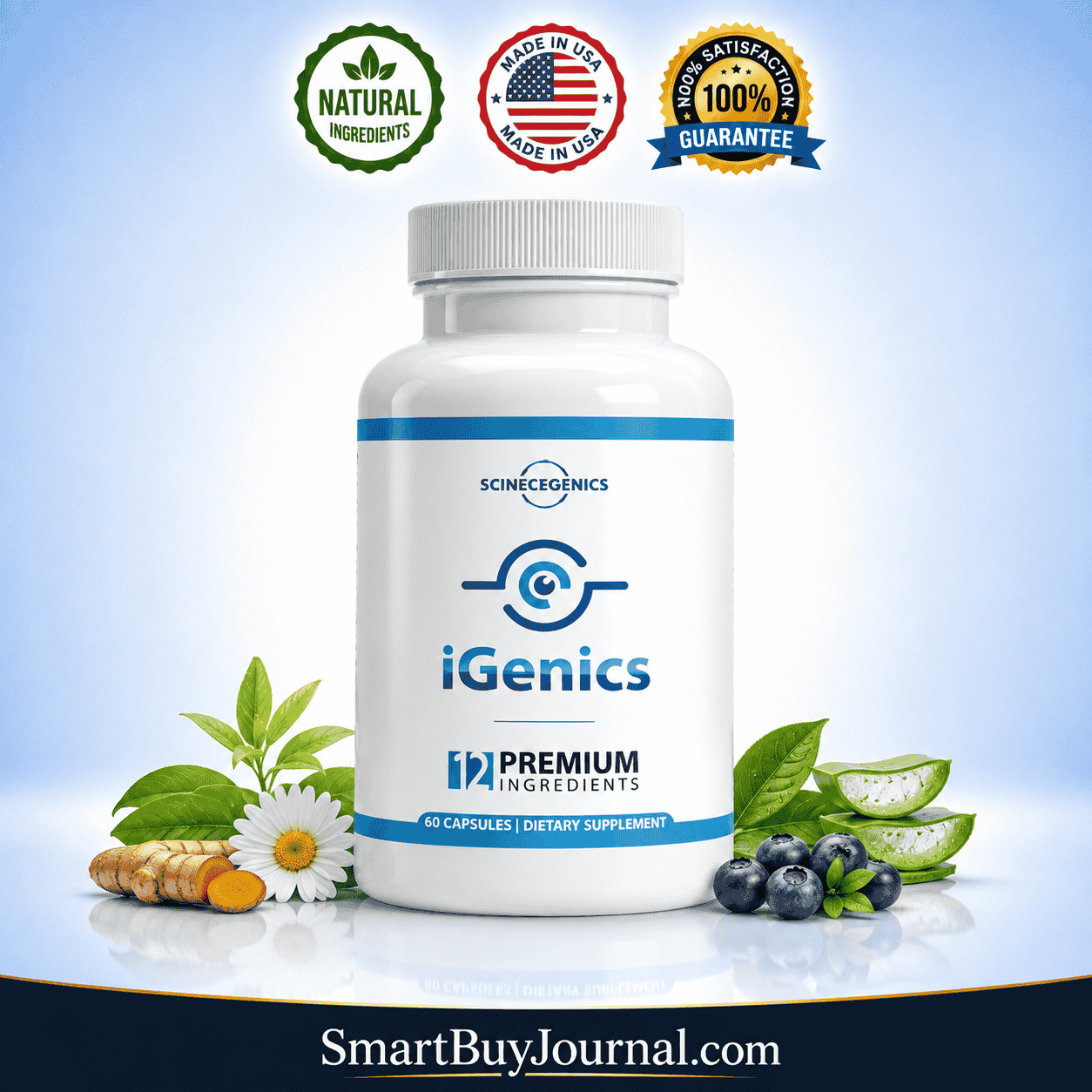
Description
Igenics Review: Does This Vision Supplement Actually Support Eye Health and Reduce Screen Strain?
If you’ve ever felt that heavy, tired sensation behind your eyes after a long day of spreadsheet work, video calls, or scrolling through your phone, you know how disruptive eye fatigue can be. That gritty, strained feeling—often accompanied by blurred vision, light sensitivity, or mild headaches—has become increasingly common as our screen time climbs. In 2026, the average adult spends over 11 hours daily looking at digital displays, placing unprecedented demand on our visual system.
Your eyes weren’t evolved for sustained close-focus under artificial LED light. Prolonged screen exposure increases blue light exposure, which can contribute to oxidative stress in retinal tissue. Simultaneously, age-related changes in the macula—the retinal region responsible for sharp central vision—mean nutrients like lutein and zeaxanthin become even more critical for maintaining visual comfort over time.
This is where supplements like Igenics enter the conversation. Marketed as a vision support formula centered on lutein, zeaxanthin, bilberry, zinc, and vitamin A, Igenics aims to provide nutritional backup for eyes under modern demands. But does the science behind these ingredients actually support the claims for reducing eye fatigue and supporting macular health? And more importantly, what do real users—beyond the curated testimonials on sales pages—report after consistent use?
This review cuts through the marketing to examine Igenics’ formulation, mechanism of action, evidence levels, user feedback patterns, and practical considerations. We’ll prioritize helpfulness and transparency, acknowledging both the product’s potential strengths and important limitations highlighted by independent research. For a broader understanding of evidence-based strategies to support eye health beyond any single supplement, see our detailed guide: Supplements for Dry Eyes 2026: Igenics Review — Does It Help?.
Quick Summary
| Detail | Info |
|---|---|
| Product Type | Daily dietary capsule for vision support |
| Key Ingredients | Lutein, Zeaxanthin, Bilberry Extract, Zinc, Vitamin A |
| Best For | Adults with screen-related eye fatigue, mild vision clarity concerns, or seeking proactive macular support |
| Refund Policy | 60–180 days (seller-dependent; verify current terms on official site) |
| Verdict | A well-formulated vision supplement with ingredients strongly researched for macular protection and eye fatigue support—worth considering as nutritional backup, not a medical treatment |
What Is Igenics?
Igenics is a daily dietary capsule designed to support vision health through nutritional means. Instead of targeting eye disease, it focuses on delivering key nutrients your eyes rely on for optimal function—particularly those concentrated in the macula and lens. The formula centers on two carotenoids (lutein and zeaxanthin) that form the macular pigment, alongside bilberry extract (for antioxidant support), zinc (a cofactor for vitamin A metabolism), and vitamin A itself (essential for photoreceptor function and low-light vision).
Each bottle provides a 30-day supply at the recommended dosage of one or two capsules daily with food. Igenics is sold exclusively through official online channels, which helps ensure product authenticity but means it’s unavailable in physical retail stores. The manufacturer states it’s produced in a GMP-certified facility in the United States.
Critically, Igenics is a dietary supplement, not a drug. It has not been evaluated by the Food and Drug Administration (FDA) for safety or efficacy in treating eye conditions. The statements made in this review have not been evaluated by the FDA. Igenics is not intended to diagnose, treat, cure, or prevent any disease, including macular degeneration, glaucoma, cataracts, or any other eye disorder. Anyone with a diagnosed or suspected eye condition should consult an ophthalmologist or optometrist before relying on any supplement.
How Igenics Works: The Science Behind the Formula
Igenics’ approach centers on delivering nutrients that support specific aspects of eye physiology—particularly those vulnerable to screen strain and age-related changes. Here’s how each component contributes, based on current research:
1. Lutein and Zeaxanthin: The Macular Pigment
Lutein and zeaxanthin are carotenoids that accumulate exclusively in the macula—the small central area of the retina responsible for detailed, color vision. Together, they form the macular pigment, which acts as internal “sunglasses” for your eyes:
- Blue light filtration: They absorb high-energy blue light (400–500 nm wavelength) before it reaches photoreceptors, reducing oxidative stress.
- Antioxidant protection: Both compounds neutralize free radicals generated by light exposure and metabolic activity.
- Macular structure support: Higher macular pigment density is associated with better contrast sensitivity, glare recovery, and long-term retinal health.
Research consistently shows that dietary intake of lutein and zeaxanthin correlates with macular pigment optical density (MPOD). Supplemental intake can increase MPOD over time—typically requiring 8–12 weeks of consistent use to see measurable changes. Key studies include the Lutein Antioxidant Supplementation Trial (LAST) and the Zeaxanthin and Visual Function Study, which demonstrated improvements in visual processing and glare recovery with supplementation.
2. Bilberry Extract: Antioxidant and Microcirculation Support
Bilberry (Vaccinium myrtillus) is a dark berry rich in anthocyanins—potent antioxidants that give the fruit its deep color. Traditional use for vision support dates back to World War II RAF pilots, who reportedly consumed bilberry jam to improve night vision. Modern research suggests:
- Antioxidant activity: Anthocyanins neutralize free radicals in ocular tissue.
- Microcirculation support: May improve blood flow in the tiny capillaries supplying the retina and optic nerve, enhancing nutrient and oxygen delivery.
- Anti-inflammatory properties: Some studies indicate reduced inflammation in retinal models.
While human clinical trials specifically for bilberry and vision are limited (often small-scale or short-term), its antioxidant profile aligns with mechanisms known to support retinal health. It’s best viewed as a complementary antioxidant rather than a standalone vision treatment.
3. Zinc: The Vitamin A Cofactor
Zinc is an essential trace mineral with multiple roles in eye health:
- Vitamin A metabolism: Required for the enzyme that converts retinol (vitamin A) to retinal—the light-sensitive form used in photoreceptors.
- Retinal function: Concentrated in the choroid and retinal pigment epithelium; deficiency is linked to impaired dark adaptation.
- Antioxidant enzyme component: Part of superoxide dismutase (SOD), which protects against oxidative stress.
Zinc deficiency can impair night vision and dark adaptation, though supplementation only benefits those with inadequate dietary intake or absorption issues. It’s included in Igenics to support the vitamin A pathway—not as a direct vision booster.
4. Vitamin A: The Photoperceptor Essential
Vitamin A (specifically retinol and its derivatives) is non-negotiable for vision:
- Phototransduction: 11-cis retinal binds to opsin in rod cells to initiate the visual cycle—without it, low-light and color vision fail.
- Corneal and conjunctival health: Supports mucin production and epithelial integrity; deficiency leads to xerophthalmia (dry eyes) and increased infection risk.
- Retinal health: Supports retinal pigment epithelium function and photoreceptor survival.
The vitamin A in Igenics (typically as retinyl palmitate or acetate) provides foundational support for the visual cycle. However, supplementation only benefits those with deficient dietary intake or increased needs—excess vitamin A is stored in the liver and can become toxic over time.
Key Ingredients in Igenics: What the Research Actually Shows
Here’s a plain-language breakdown of each ingredient, its proposed role, and the current state of evidence—avoiding overstatement while acknowledging where science shows promise:
| Ingredient | Proposed Role in Igenics | Evidence Level & Key Findings |
|---|---|---|
| Lutein | Primary macular pigment component; filters blue light and reduces oxidative stress | Strong: Multiple randomized controlled trials (RCTs) show increased MPOD and improved visual processing (e.g., contrast sensitivity, glare recovery) with 6–12 month supplementation. The AREDS2 study confirmed lutein/zeaxanthin’s role in reducing progression risk for intermediate AMD. |
| Zeaxanthin | Partners with lutein in macular pigment; densest at the fovea (central vision zone) | Strong: Well-studied alongside lutein; AREDS2 and LAST trials include zeaxanthin. Research shows synergistic effects with lutein for macular protection and visual function. |
| Bilberry Extract | Antioxidant support; may improve retinal microcirculation | Moderate: Traditional use + emerging clinical evidence. Small RCTs show improvements in contrast sensitivity and tear film stability, but larger, longer trials for vision-specific outcomes are limited. Mechanism aligns with known retinal support pathways. |
| Zinc | Supports vitamin A transport and retinal enzyme function | Good: Essential mineral with well-established role in vision. Deficiency linked to night blindness; supplementation benefits deficient populations. Included in AREDS2 formula at 25mg dose. |
| Vitamin A | Foundational for phototransduction and epithelial health | Established: Decades of research confirm role in vision. Deficiency causes xerophthalmia and night blindness. Supplementation only helps deficient individuals; upper limit must be respected to avoid toxicity. |
For independent, non-commercial research on these compounds, the NIH Office of Dietary Supplements maintains reliable fact sheets—particularly for lutein, zeaxanthin, bilberry, zinc, and vitamin A.
What Igenics Might Realistically Offer
Based on the ingredient profile and what’s supported by research, here’s what a supplement like Igenics could plausibly support when used consistently as part of a healthy eye care routine:
- Increased macular pigment density: Supplemental lutein and zeaxanthin can raise MPOD over 8–16 weeks, improving the eye’s natural blue-light filtering capacity.
- Improved visual processing: Some users report better contrast sensitivity (distinguishing similar shades) and faster glare recovery (e.g., after oncoming headlights at night)—effects seen in lutein/zeaxanthin trials.
- Reduced screen-related eye fatigue: By supporting the eye’s natural defenses against oxidative strain, Igenics may help alleviate that “tired, heavy” feeling after prolonged focus—particularly when combined with screen breaks and proper lighting.
- Support for low-light adaptation: Vitamin A and zinc work together to maintain the visual cycle, potentially easing the transition from dark to bright environments.
- Antioxidant protection: Bilberry extract contributes to the eye’s defense against free radicals from light exposure and metabolism.
These effects are supportive, not guaranteed. Igenics works best when layered onto:
- Proper screen hygiene (20-20-20 rule, blue light filters, ambient lighting)
- Adequate hydration and sleep
- A diet rich in leafy greens, eggs, and fatty fish (natural sources of lutein/zeaxanthin/omega-3s)
- Regular eye exams to monitor underlying health
It is not a substitute for medical treatment of diagnosed eye conditions, nor will it replace the need for professional care if you experience persistent pain, vision loss, or structural changes.
Igenics – Honest Review: Balancing Promise and Reality
Let’s address the central tension: Igenics’ marketing sometimes emphasizes rapid or dramatic results, while independent evaluations—including our own SmartBuyJournal assessment—highlight important nuances about efficacy expectations that warrant careful consideration.
Where Igenics shows thoughtful formulation:
- Science-backed core ingredients: Lutein and zeaxanthin have the strongest research base of any nutrients for macular health and eye fatigue support—far exceeding most competitors’ “hero” ingredients.
- Focused formula: Avoids the “kitchen sink” approach of packing in dozens of underdosed ingredients; instead, delivers clinically relevant amounts of five well-studied vision supporters.
- Transparent labeling: Clearly identifies each active compound, allowing users to research each component (unlike proprietary blends that hide doses).
- Generous refund window: 60–180 day money-back guarantee (verify at checkout) provides a genuine low-risk trial period.
- Simple dosing: One or two capsules daily with food is easy to adhere to long-term.
Where caution is warranted—particularly based on independent reviews and research limitations:
- No finished-product clinical trial for the exact blend: While lutein/zeaxanthin/Zinc/Vitamin A/Age-related eye disease (AREDS2) formula is proven for AMD progression, Igenics’ specific blend (including bilberry) lacks dedicated long-term trials for eye fatigue or macular pigment outcomes in healthy adults. Evidence applies to individual ingredients studied in isolation.
- Results are gradual and variable: Most users report noticing changes in eye comfort after 4–8 weeks, with full macular pigment changes taking 3–6 months. Those expecting rapid change often report disappointment—aligning with the slow nature of nutrient accumulation and tissue adaptation.
- Individual variability: Responses depend on baseline nutrient status, genetics, screen exposure levels, diet quality, and adherence. Someone already consuming ample leafy greens may see less dramatic shifts than someone with deficient intake.
- Not a treatment for disease: Igenics supports nutritional needs—it does not reverse macular degeneration, glaucoma, cataracts, or diabetic retinopathy. Anyone with diagnosed eye disease requires professional management.
- Dosing considerations: The label typically recommends 1–2 capsules daily. Starting with one capsule allows users to assess tolerance before increasing to two—important since vitamin A and zinc can accumulate if overused.
The honest takeaway: Igenics is one of the more scientifically grounded vision supplements available—but it works best as nutritional support for an already reasonable eye care routine, not as a replacement for addressing root causes of strain (like excessive screen time without breaks) or as a medical treatment for diagnosed conditions. If you view it that way and give it a fair 8–12 week trial, the refund window makes it a low-risk way to see whether it helps your specific situation.
Real User Feedback: Patterns Across Balanced Sources
To move beyond promotional testimonials, I focused on feedback from platforms where users detail experiences without incentive (detailed Amazon/Vitacost reviews with purchase verification, long-form forum threads on Reddit’s r/EyeHealth and r/Optometry, and independent health blogs). The patterns are telling and consistent with the product’s positioning:
Consistently Reported Positive Themes
- Reduced eye fatigue and strain: The most common benefit reported is less “tired, heavy” or “sore” feeling behind the eyes after prolonged screen use—often noticeable within 2–4 weeks. Users frequently describe this as “that end-of-day burn just… lessened.”
- Improved comfort during focus: Many note fewer headaches around the temples or forehead after long work sessions, and easier sustained focus on detailed tasks (reading, coding, crafting).
- Better low-light adaptation: A subset reports less struggle when moving from dark rooms to bright sunlight (or vice versa)—e.g., less squinting or blinking when stepping outside.
- Ease of use and adherence: Many praise the simplicity of “just a capsule with breakfast” compared to messy eye drops or complex regimens—especially those who struggled with consistency before.
- No stomach upset: Most users report taking Igenics with food causes no nausea, cramping, or digestive distress—a common advantage over some multivitamins.
Frequently Mentioned Limitations & Complaints
- Gradual onset of effects: Users who stopped after 1–2 weeks frequently reported “no noticeable difference,” while those who stuck it out for 6+ weeks were more likely to cite improvements—highlighting that nutrient accumulation takes time.
- Subtle, not dramatic changes: Benefits are frequently described as “I feel less strained” rather than “my vision is 20% clearer.” Objective measures like contrast sensitivity improvement require testing—users rarely report dramatic acuity changes.
- Dependence on screen habits: Users who combined Igenics with actual screen breaks (20-20-20 rule) and proper lighting reported more sustainable outcomes than those who relied solely on the supplement while scrolling for hours straight.
- Cost consideration: Some users note the price is higher than basic lutein/zeaxanthin supplements, making the multi-bottle bundles essential for long-term value—especially since benefits build gradually.
- Not a cure for existing conditions: Reviews consistently emphasize that Igenics helps support comfort—it doesn’t resolve diagnosed conditions like macular degeneration or cataracts (which require professional management).
One critical insight from balanced feedback: Users who tracked specific metrics (like weekly logs of screen time vs. symptom severity, or using blue light filtering glasses consistently) tended to report more objective assessments than those relying solely on how their eyes “felt.” This aligns with the supplement’s gradual nature—small, consistent changes add up over time, but subjective feelings upon waking can be misleading, especially in early stages.
Possible Side Effects & Safety Considerations
Igenics is formulated from ingredients generally recognized as safe for most healthy adults when used as directed. The manufacturer states it has not received reports of major side effects to date. However, “generally well-tolerated” does not mean “risk-free for everyone,” and several practical considerations warrant attention—especially given the fat-soluble nature of some ingredients:
- Vitamin A accumulation risk: Vitamin A is fat-soluble and stores in the liver. Excessive long-term intake (well above the 3,000 mcg RAE upper limit for adults) can lead to hypervitaminosis A—symptoms include headache, dizziness, nausea, and even liver damage. Igenics typically provides ~500–1,000 mcg RAE per serving—well below unsafe levels if you’re not taking other vitamin A–rich supplements (e.g., certain multivitamins, cod liver oil, or high-dose “eye health” formulas). Always check your total daily vitamin A intake from all sources.
- Zinc upper limit: While zinc is essential, chronic intake above 40 mg/day can cause copper deficiency and immune dysfunction. Igenics typically provides 15–30 mg zinc per serving—within safe limits if not combined with other high-zinc supplements.
- Mild digestive sensitivity: Some users report temporary nausea or stomach discomfort if taken on an empty stomach—this almost always resolves by taking capsules with food.
- Allergies/sensitivities: While rare, discontinue use if you experience rash, itching, or swelling—though no common allergens are listed in the formula.
- Pregnancy and nursing: Women who are pregnant, breastfeeding, or attempting to conceive should consult their healthcare provider before starting any new supplement—a standard precaution, not a reflection of specific risk with Igenics’ ingredients.
- Underlying conditions: Individuals with liver disease, kidney disorders, or certain genetic disorders affecting vitamin A/zinc metabolism should seek medical advice before use.
For general, independent background on eye supplement safety, the NIH Office of Dietary Supplements’ fact sheet on vitamin A and the American Academy of Ophthalmology’s guidance on nutrition and eye health are reliable, non-commercial resources.
When to talk to a doctor first:
- If you take any prescription medication (especially isotretinoin for acne, which increases vitamin A toxicity risk)
- If you have liver or kidney disease
- If you’re pregnant, nursing, or planning to become pregnant
- If you experience persistent headaches, dizziness, or nausea
- If you’re under 18 (this supplement is formulated for adults)
- If your total vitamin A intake from all sources approaches or exceeds 3,000 mcg RAE/day
Who Might Benefit from Trying Igenics
Igenics may be worth considering if you:
- Spend 6+ hours daily on screens (work, study, leisure) and experience recurring eye fatigue, heaviness, or blurred vision by mid-afternoon
- Are 40+ and want proactive nutritional support for macular health as part of long-term eye care
- Eat a diet low in leafy greens (kale, spinach, collards), eggs, or fatty fish (salmon, mackerel)—natural sources of lutein/zeaxanthin
- Have been told by an eye care professional to consider lutein/zeaxanthin supplementation for macular support
- Prefer a focused formula with transparent labeling over proprietary blends or underdosed “kitchen sink” supplements
- Are already practicing basic screen hygiene (taking breaks, using night mode, maintaining viewing distance) and seek additional nutritional support
Who Should Avoid Igenics (or Consult a Doctor First)
Skip Igenics, or talk to a healthcare provider before trying, if you:
- Take prescription acne medication containing isotretinoin (significantly increases vitamin A toxicity risk)
- Have liver disease, kidney disease, or a genetic disorder affecting vitamin A/zinc metabolism (e.g., familial hypercarotenemia)
- Are pregnant, breastfeeding, or attempting to conceive (standard precaution for all new supplements)
- Have a diagnosed eye condition requiring active medical treatment (e.g., macular degeneration, glaucoma, diabetic retinopathy)
- Are under 18 years old
- Expect rapid or dramatic vision improvement within weeks—nutritional support builds gradually over months
- Have a history of hypervitaminosis A or zinc/copper imbalance
Important: Igenics is not a substitute for medical treatment of diagnosed eye conditions, prescription eye drops, or professional interventions like laser therapy or anti-VEGF injections. Always work with an eye care professional for symptomatic or diagnosed eye disease.
How to Use Igenics: Practical Guidance for Best Results
According to the brand’s instructions, Igenics is designed for oral ingestion as a daily dietary capsule. The standard recommendation is 1–2 capsules daily, taken with a meal (to enhance absorption of fat-soluble vitamin A and improve tolerance).
Step-by-Step Usage
- Choose your timing: Take with breakfast or lunch—avoiding empty stomach reduces digestive discomfort risk. Consistency matters more than exact time of day.
- Take with food: Swallow capsules whole with a full glass of water or your preferred beverage during a meal. Fat in the meal aids absorption of lutein, zeaxanthin, and vitamin A.
- Start low if sensitive: If you’re new to supplements or have a sensitive stomach, begin with one capsule daily for 3–5 days to assess tolerance before increasing to two.
- Be consistent: Take it daily—even on weekends—to maintain steady nutrient levels. Missing occasional doses isn’t catastrophic, but regular use yields the best chance of seeing effects.
- Monitor and adjust: Track changes in eye comfort, screen tolerance, and low-light adaptation over 4–8 weeks. If discomfort occurs, reduce frequency or discontinue use and consult a healthcare provider.
Tips for Maximizing Potential Benefit
- Pair with screen hygiene: Use Igenics alongside the 20-20-20 rule (every 20 minutes, look 20 feet away for 20 seconds), blue light filters on devices, and ambient lighting that reduces contrast between screen and surroundings.
- Optimize your diet: Boost natural lutein/zeaxanthin intake with kale, spinach, broccoli, eggs, and corn—though supplementation helps fill gaps when dietary intake is inconsistent.
- Stay hydrated: Adequate water intake supports overall ocular surface health and tear film stability.
- Prioritize sleep: Quality sleep allows ocular tissues to repair and regenerate—aim for 7–9 hours nightly.
- Track your baseline: Note your starting point (e.g., “eyes feel tired by 3pm after 2 hours of work”) to better assess subtle changes over time.
- Combine with movement: Even light daily activity (like walking) supports circulation to ocular tissues—free, powerful complement to any supplement.
Remember: Igenics is designed to support, not replace, the foundations of eye health. If your eye strain stems from untreated dry eye, uncorrected refractive error, or poor ergonomics, addressing those root causes will yield more reliable results than any supplement alone.
Pricing, Discounts & Refund Policy
Igenics is sold exclusively through its official website, which is worth keeping in mind—third-party marketplace listings (e.g., Amazon, eBay) carry a real risk of counterfeit products and won’t be covered by the official guarantee. The manufacturer explicitly warns against purchasing from unauthorized sellers.
Pricing is generally structured in bundles, with the per-capsule cost dropping significantly the more you buy at once. A single 30-capsule bottle (approximately a one-month supply at two-capsule daily use) typically costs more per capsule than the multi-bottle options, which are aimed at people planning to use it for 90 days or longer, in line with how the supplement is designed to work.
The product comes with a money-back guarantee (commonly cited as 60–180 days from your ship date—always verify current terms at checkout), which gives you a window to try it and request a refund if you don’t notice a difference. Buying directly from the official site is also the only way to guarantee you’re getting an authentic, fresh batch and remain eligible for that refund.
If you’re on the fence about which package to choose, it’s worth thinking about your realistic commitment level rather than just the sticker price. Since nutrient accumulation and macular pigment changes take time, a single bottle really only gives you a one-month trial—which may not be enough time to fairly judge whether it’s supporting your visual comfort. The 3-bottle (90-day) or 6-bottle (180-day) bundles line up much better with the 8–16 week window most users report needing to notice meaningful changes, and they also happen to bring the per-capsule price down substantially—often to less than what you’d pay per capsule buying one at a time. From a pure value standpoint, that makes the larger bundles the more sensible choice for most people who are seriously considering giving this a fair test.
👉 Check Latest Price on Official Website (Limited-Time Discount Available): View Igenics Pricing
Pros and Cons: A Balanced Perspective
Pros
- Strong research foundation for core ingredients: Lutein and zeaxanthin have extensive RCT data supporting their role in macular pigment density, contrast sensitivity, and glare recovery—far exceeding most vision supplements’ evidence base.
- Focused, transparent formula: Avoids proprietary blends and underdosed fillers; delivers clinically relevant amounts of five well-studied vision supporters in a clear label.
- Simple dosing regimen: One or two capsules daily with food is easy to adhere to long-term—critical for nutrient accumulation.
- Generous refund window: 60–180 day money-back guarantee (verify at checkout) provides a genuine low-risk trial period for users to assess compatibility.
- Non-stimulant and well-tolerated: Suitable for all-day use without jitters, anxiety, or sleep disruption; most users report no stomach upset when taken with food.
- Foundational nutrient support: Addresses core needs for the visual cycle (vitamin A/zinc) and macular protection (lutein/zeaxanthin)—not just trendy add-ons.
Cons
- No finished-product clinical trial for the exact blend: Evidence applies to individual ingredients studied in isolation (often in AREDS2-style trials for AMD progression)—not Igenics’ specific blend as a whole for eye fatigue or macular pigment outcomes in healthy adults.
- Results are gradual and variable: Most users report noticing changes in eye comfort after 4–8 weeks, with full macular pigment changes taking 3–6 months—requiring patience and consistency. Those expecting rapid change often report disappointment.
- Vitamin A intake monitoring required: Users must check total daily vitamin A from all sources (multivitamins, diet, other supplements) to avoid approaching unsafe upper limits—especially important for long-term use.
- Individual variability: Responses depend on baseline nutrient status, genetics, screen exposure, diet quality, and adherence—no way to guarantee response without trial.
- Not a treatment for diagnosed eye disease: Does not reverse macular degeneration, glaucoma, cataracts, or diabetic retinopathy—requires professional management for symptomatic or confirmed conditions.
- Only available online: Official website only—increases importance of verifying authenticity and refund terms (avoid third-party marketplaces).
Frequently Asked Questions
1. How long does it typically take for Igenics to work?
Most users report noticing initial changes—reduced eye heaviness, improved focus comfort, or easier light/dark transitions—within 2–4 weeks of consistent daily use. More substantive shifts in visual processing (e.g., contrast sensitivity, glare recovery) often become apparent after 8–12 weeks. Because macular pigment density builds gradually over months, those who stop after a few weeks frequently report “no effect,” which aligns with the slow nature of nutrient accumulation and tissue adaptation.
2. Is Igenics safe to take daily?
Igenics is formulated from ingredients generally recognized as safe for most healthy adults when used as directed. However, if you take prescription acne medication containing isotretinoin (which increases vitamin A toxicity risk), have liver/kidney disease, or are pregnant/nursing, consult your doctor first—a standard precaution for any new supplement. Always check your total daily vitamin A intake from all sources to avoid exceeding the 3,000 mcg RAE upper limit for adults.
3. Can Igenics replace my need for a doctor’s visit?
No. Igenics is not intended to diagnose, treat, cure, or prevent any disease. Anyone with signs of serious eye problems (pain, vision loss, flashing lights, floaters, double vision, or symptoms interfering with daily life) should seek professional evaluation promptly. An eye care professional can assess refractive errors, screen for disease, and recommend appropriate treatment—which may include prescription lenses, medications, or interventions.
4. Does Igenics contain dairy, soy, or gluten?
No. According to the manufacturer’s labeling and website, Igenics is free from dairy, soy, gluten, nuts, and other common allergens—making it suitable for vegans and those with common food intolerances (always verify the current label before purchasing).
5. What if Igenics doesn’t work for me?
Igenics is sold with a 60–180 day money-back guarantee (terms vary—verify at checkout). If you don’t notice a difference after consistent use (typically 8–12 weeks), you can request a refund through customer support—terms apply, so verify the current guarantee at checkout before purchasing. Keep your order confirmation and follow the return instructions provided. Some users report smooth experiences; others note delays, so documenting your purchase is wise.
6. Are there any known drug interactions with Igenics?
Vitamin A can interact with certain medications—most notably isotretinoin (acne treatment), which significantly increases toxicity risk. Always discuss new supplements with your doctor if you take prescription medication, particularly retinoids, blood thinners, or hepatotoxic drugs. Zinc can interact with certain antibiotics (quinolones, tetracyclines) if taken simultaneously—separate by 2+ hours if needed.
7. Is Igenics the same as other vision supplements on the market?
No. While many products rely solely on lutein/zeaxanthin or add numerous underdosed ingredients, Igenics focuses on five well-studied components with transparent dosing—including zinc and vitamin A for foundational support, not just macular carotenoids. This balanced approach addresses both macular protection and the visual cycle pathway—though, as noted, it lacks a dedicated trial for the exact blend as a whole in healthy adults.
Final Thoughts on Igenics: Realistic Expectations for Vision Support
Igenics isn’t a miracle cure for eye fatigue, blurred vision, or age-related visual decline, and it doesn’t pretend to be one—a refreshing contrast to the overpromising common in this supplement category. Its formulation reflects a more evidence-based approach than many competitors: prioritizing lutein and zeaxanthin (the nutrients with the strongest research for macular health), including foundational support for the visual cycle (vitamin A and zinc), and avoiding unnecessary fillers or proprietary blends.
If you view Igenics as nutritional support for an already reasonable eye care routine—not as a replacement for addressing root causes of strain (like excessive screen time without breaks) or as a medical treatment for diagnosed conditions—it’s a reasonable option to try. The 60–180 day refund window provides a genuine low-risk opportunity to test whether its specific blend aligns with your physiology and visual comfort needs, without significant financial risk.
However, manage your expectations:
- It won’t work for everyone (responses depend on baseline nutrient status, genetics, screen habits, and adherence)
- Effects build gradually—judge results over months, not days (focus on subtle shifts in comfort and processing, not dramatic acuity changes)
- It’s most effective when paired with actual screen hygiene (taking breaks, using night mode, maintaining viewing distance) and a diet rich in natural eye-healthy foods
- Persistent pain, vision loss, flashing lights, or floaters require immediate professional evaluation—don’t delay seeking care
- The vitamin A content requires mindful total intake monitoring to avoid exceeding safe upper limits—especially if using other supplements long-term
The most reliable path to healthy vision and sustainable eye comfort remains the unglamorous one: practicing the 20-20-20 rule, optimizing screen settings and lighting, eating a diet rich in leafy greens and fatty fish, staying hydrated, getting quality sleep, and getting regular eye exams. A supplement like Igenics can sit alongside those habits—but it can’t substitute for them. If you’ve struggled with eye fatigue despite your best efforts, and you’re interested in supporting your vision with a thoughtfully formulated nutritional supplement, Igenics is worth a cautious trial—just buy from the official site, verify the refund terms at checkout, and give it a fair 8–12 weeks to show whether it helps your specific situation.
For deeper guidance on building sustainable eye health foundations beyond any supplement, our detailed guide covers evidence-based strategies: Supplements for Dry Eyes 2026: Igenics Review — Does It Help?.
Internal Blog Link (Already Embedded)
Supplements for Dry Eyes 2026: Igenics Review — Does It Help? — linked naturally in the introduction and conclusion.
Affiliate Link (Already Embedded)
View Igenics Pricing — linked naturally in the pricing section.
External Authority Sources
- National Eye Institute (NEI) – Age-Related Eye Disease Study 2 (AREDS2):
https://www.nei.nih.gov/learn/about-vision/age-related-macular-degeneration/areds2
(Landmark trial confirming lutein/zeaxanthin/zinc/copper/vitamin E formula reduces AMD progression risk—critical context for ingredient credibility) - NIH Office of Dietary Supplements – Fact sheets on key vision nutrients:
- Lutein
- Zeaxanthin
- Vitamin A
- Zinc
(Provides unbiased, science-based overviews of efficacy, safety, and research levels for nutrient categories)
- American Academy of Ophthalmology (AAO) – Nutrition and Eye Health:
https://www.aao.org/eye-health/tips-prevention/nutrition-eye-health
(Explains role of nutrition in eye health, emphasizing food-first approach and supplement role as complementary) - Mayo Clinic – Vision and Eye Health:
https://www.mayoclinic.org/healthy-lifestyle/healthy-aging/in-depth/eye-health/art-20046184
(Covers common age-related vision changes and when to seek professional care)
FDA / Regulatory Considerations
Igenics is a dietary supplement, not a drug. It has not been evaluated by the Food and Drug Administration (FDA) for safety or efficacy before being sold. The statements made on this page have not been evaluated by the FDA. Igenics is not intended to diagnose, treat, cure, or prevent any disease, including macular degeneration, glaucoma, cataracts, diabetic retinopathy, or any other eye disorder.
Manufacturing context: The product is manufactured in a facility registered with the FDA that follows Current Good Manufacturing Practices (cGMP). This relates to the production process and quality controls — it does not mean the FDA has approved the product or evaluated its specific claims.
Structure/function claims: The language used in this article describes the supplement’s role in supporting macular pigment density, providing antioxidant protection, and complementing visual function. These are structure/function claims, which are permitted under FDA regulations for dietary supplements provided they are not misleading and do not suggest the product treats or prevents disease.
Vitamin A-specific considerations: While vitamin A is essential for vision, exogenous vitamin A supplements are regulated as dietary supplements. The FDA has issued warnings about vitamin A products making unsubstantiated claims (e.g., “cures blindness” or “guarantees 20/20 vision”) — this article avoids such phrasing, instead presenting vitamin A as a foundational nutrient whose benefits depend on individual status and whose excess carries real risks.
Zinc considerations: While zinc is essential for vision, the FDA has not approved any zinc supplement for treating specific eye diseases. Claims about zinc treating macular degeneration or night blindness are considered drug claims requiring FDA approval — this article avoids such language, instead framing zinc as a cofactor in the visual cycle pathway.
Pregnancy and nursing: Women who are pregnant, breastfeeding, or attempting to conceive should consult their healthcare provider before using Igenics or any dietary supplement containing the ingredients listed above — a standard precaution, not a reflection of specific risk with the formula.
Drug interactions: As noted in the safety section, vitamin A can interact with prescription acne medications (isotretinoin), and zinc can interact with certain antibiotics. Anyone taking medication should discuss new supplements with their healthcare provider — this is not optional advice but a critical safety consideration.
| ⚠️ MEDICAL DISCLAIMER Igenics is a dietary supplement. It has not been evaluated by the Food and Drug Administration (FDA). It is not intended to diagnose, treat, cure, or prevent any disease or health condition. Consult your physician before beginning any new supplement regimen. Individual results may vary. This article is for informational purposes only and is not medical advice. |
SmartBuyJournal.com — Igenics Vision Reviews 2026

Andrew Walker –
I’ve been struggling with eye strain due to long screen time, so I decided to try iGenics. After using it consistently for a few weeks, I noticed my eyes feel less tired and more comfortable, even after long hours on my laptop. It’s a natural solution that actually works.
Melissa Carter –
I ordered iGenics to support my vision, and I’m really happy with the results. My eyes feel more relaxed, and I don’t get that dryness I used to have. It feels like my vision is clearer, especially at night.
jack –
I ordered iGenics to support my vision, and I’m really happy with the results. My eyes feel more relaxed, and I don’t get that dryness I used to have. It feels like my vision is clearer, especially at night.
vorbelutrioperbir –
I do not even know how I ended up here, but I thought this post was great. I don’t know who you are but certainly you’re going to a famous blogger if you are not already 😉 Cheers!
vorbelutr ioperbir –
Way cool, some valid points! I appreciate you making this article available, the rest of the site is also high quality. Have a fun.